Bangladesh’s election crossroads — Yunus unopposed or polls postponed?
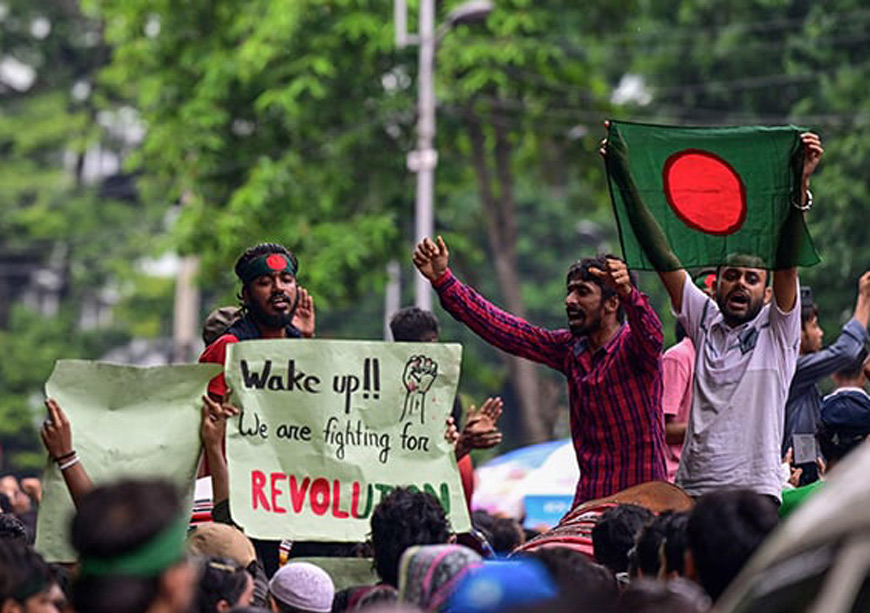
Dhaka– Bangladesh faces deep political uncertainty ahead of its next general election. Interim chief Muhammad Yunus has announced plans to hold the polls before Ramzan in February, leaving barely three months for preparation. Yet doubts loom large over whether the election will be fair—or even take place at all.
The current interim administration, formed after Sheikh Hasina’s fall in 2024, has banned the Awami League’s political activities through executive order. The Election Commission has also barred the party from contesting. The Jatiya Party’s participation remains unclear, raising fears of another one-sided election, reminiscent of Hasina’s 2024 vote.
If both Awami League and Jatiya Party stay excluded, over half of the nation’s electorate—nearly 56%—will have no representation. Analysts warn this would repeat Bangladesh’s long history of voterless polls, where results were pre-decided, and turnout stayed dismal.
During a recent interview, Yunus dismissed the Awami League’s influence, saying the party retains “only 20% support.” However, past electoral data contradicts that view. Since 1979, the Awami League has maintained a consistent vote base between 25% and 48%, even during political bans and internal splits. In the 2008 election, the party won nearly 48% of votes, while the BNP secured 32.5%.
Political observers note that the Awami League’s appeal lies not just in politics but in ideology. Its roots trace back to Sheikh Mujibur Rahman, Bangladesh’s founding leader, and the liberation struggle. Generations of “Awami families” continue to uphold that legacy, making the party’s influence hard to erase through administrative bans.
Meanwhile, tensions between the BNP and interim authorities are growing. Talks mediated by Turkey and Qatar have failed to bring peace. The BNP, though currently aligned with several smaller groups under the July Charter, remains trapped in a web of uncertainty—unsure if a real election will occur in February.
The situation mirrors Khaleda Zia’s one-sided election in 1996, when the Awami League boycotted the vote. That government survived just 12 days. In contrast, Hasina’s 2024 government lasted six months before collapsing. Both events showed that uncontested polls offer only temporary political survival.
On the ground, the law-and-order situation is worsening. Prices of daily goods have surged, while religious minorities and Awami supporters face persecution. Reports suggest that despite the crackdown, not one Awami worker has defected to rival parties—reflecting enduring loyalty at the grassroots.
Even BNP leaders admit that a proportional representation system could still favor the Awami League if free polls occur. “If the Awami League contests, none of us can stop them,” said opposition leader Mahmudur Rahman Manna. This anxiety underscores the BNP’s fragile unity and fear of a fair contest.
International observers now question whether Bangladesh can hold a peaceful and credible election in such a fractured state. Interim adviser Mahfuz Alam recently admitted that the country’s situation could worsen in coming months.