High-stakes Trump–Xi dialogue likely in South Korea during APEC
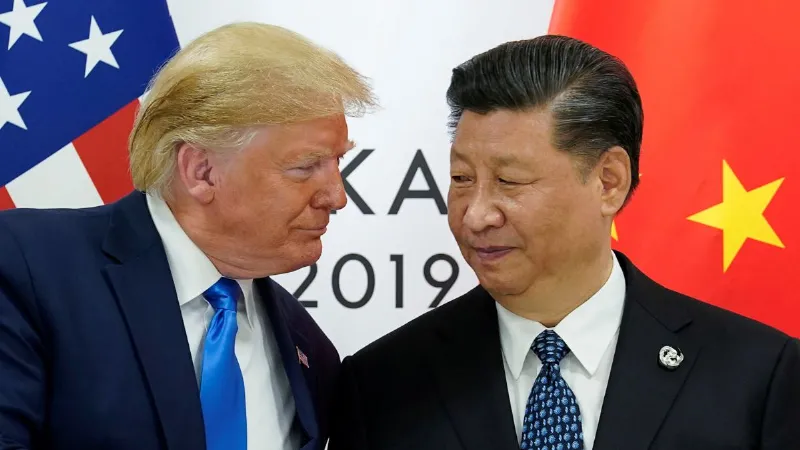
Gyeongju (South Korea) — U.S. President Donald Trump landed in South Korea on Wednesday for a crucial two-day visit. He plans to meet Chinese President Xi Jinping on Thursday on the sidelines of the Asia-Pacific Economic Cooperation (APEC) summit. Their meeting comes amid an ongoing trade war between the world’s two largest economies.
Trump arrived in Gyeongju, the host city of this year’s APEC summit, after visiting Malaysia and Japan. In Tokyo, he met Japan’s newly elected Prime Minister Sanae Takaichi and oversaw the signing of a peace deal between Cambodia and Thailand. South Korea marks the third stop of his Asia tour during his second term.
The Trump–Xi meeting will be their first face-to-face interaction in six years. Observers worldwide are watching closely, as the outcome could shape the next phase of U.S.-China trade relations. Tensions have grown over tariffs, supply chain disruptions, and disputes in the Indo-Pacific region.
Before departing for South Korea, Trump expressed optimism. “I think we’re going to have a great meeting with President Xi of China, and a lot of problems are going to be solved,” he told reporters aboard Air Force One. However, he appeared uncertain about discussing Taiwan. “I don’t know that we’ll even speak about Taiwan. He may want to ask about it. Taiwan is Taiwan,” Trump said.
On Wednesday, Trump will also meet South Korean President Lee Jae Myung in Seoul before heading to Gyeongju. Both leaders are expected to focus on strengthening trade cooperation and addressing regional security challenges. Trump will later address a CEO summit that brings together business leaders from across the Asia-Pacific region.
The APEC meetings will continue until Saturday. This year’s agenda focuses on supply chain resilience and progress on the proposed Free Trade Area of the Asia-Pacific (FTAAP). South Korea aims to push forward discussions that could eventually include all 21 APEC member economies.
APEC, founded in 1989, represents 21 economies that account for more than half of global GDP and about 40% of the world’s population — roughly 2.7 billion people. Major members include the United States, China, Japan, Russia, and Australia.
Trump’s visit to South Korea signals Washington’s intent to engage with Asian economies despite the recent trade strains. Xi’s participation reflects Beijing’s readiness to stabilize ties, at least temporarily, amid slowing global growth and supply chain disruptions.
Diplomatic analysts say the Gyeongju meeting could set the tone for future U.S.-China engagement. While both leaders remain firm on their core economic policies, any sign of dialogue or cooperation could calm global markets.
As the world’s attention turns to Gyeongju, expectations remain mixed. Trump hopes to project leadership and ease tensions, while Xi aims to defend China’s trade interests. Their conversation on Thursday may not end the disputes, but it could open a path to a more balanced dialogue between Washington and Beijing.