SIR expands to 12 states, UTs: What made 2003 pivotal for voter rolls—and why it matters now
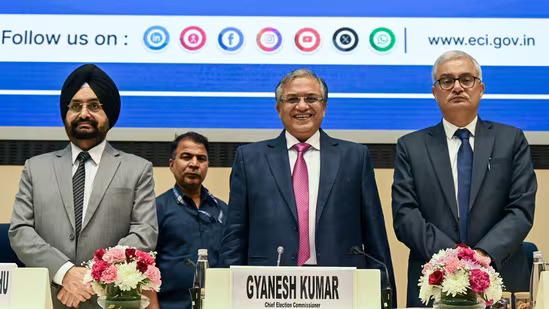
The Election Commission of India has launched Phase 2 of its Special Intensive Revision (SIR) across 12 states and Union Territories. After completing the first phase in Bihar earlier this year, the poll body will now recheck voter rolls in Andaman and Nicobar Islands, Chhattisgarh, Goa, Gujarat, Kerala, Lakshadweep, Madhya Pradesh, Puducherry, Rajasthan, Tamil Nadu, Uttar Pradesh, and West Bengal starting October 28.
Chief Election Commissioner Gyanesh Kumar announced the move at a press conference in Delhi on Monday. He said the year 2003 remains central to this exercise for two key reasons.
First, 2003 marked the last time the Commission carried out a nationwide SIR. Later revisions happened internally but didn’t require citizens to resubmit proof. So, the EC considers 2003—and in some states 2002 or 2004—as the cut-off year for verification.
Second, the Commission aims to confirm the citizenship of all voters. Since anyone listed in the 2002–04 rolls would have been born before July 1, 1987, they automatically qualify as citizens under India’s current laws. Hence, using those rolls helps complete the citizenship check without separate scrutiny.
The Commission clarified that voters whose names already appear in those older lists need not submit additional documents. They only have to fill an enumeration form to remain on the rolls.
But what if your name isn’t there?
Officials explained that the process will mirror Bihar’s SIR model, conducted just before its upcoming assembly polls. In such cases, you can refer to your parents’ names on the 2003 list and prove your relationship with an identity document.
If you can’t trace your family on the old lists, you must establish your identity and address through valid documents. The EC has released an indicative list of accepted proofs and may expand it as needed.
Citizens can check their status on their state or UT’s Chief Electoral Officer website.
However, the process has not been without controversy. Opposition parties in Bihar and beyond have accused the EC of using the SIR to exclude certain groups from the voter rolls. They claim the document requirements initially ruled out commonly used IDs like Aadhaar and ration cards.
The ruling BJP, on the other hand, has demanded that the revision extend across the country. Party leaders argue that a nationwide SIR will ensure cleaner rolls and prevent duplication or misuse.
Responding to criticism, the Election Commission said the SIR’s sole purpose is to make sure every eligible citizen stays on the list while removing ineligible names. It stressed that no genuine voter would lose their right to vote because of the revision.
The new round of verification, therefore, carries both technical and political weight. It links today’s voter roll clean-up with a process that began more than two decades ago.
As the SIR spreads to 12 regions, the year 2003 continues to shape how India counts and confirms its voters—one name at a time.SIR expands to 12 states, UTs: What made 2003 pivotal for voter rolls—and why it matters now