Mamdani mentions aunt’s fear in hijab after 9/11; JD Vance responds strongly
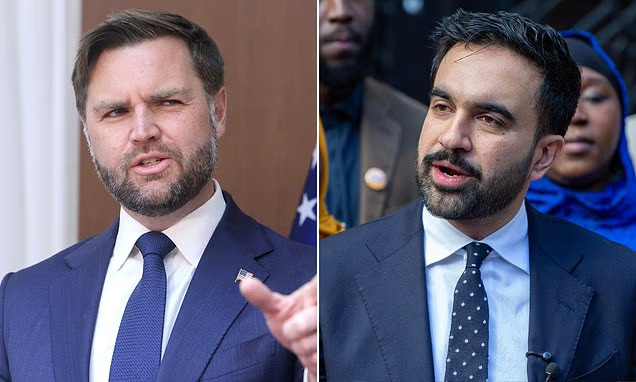
New York: A heated exchange erupted in the U.S. mayoral race after Democratic leader Zohran Mamdani’s remarks on Islamophobia following 9/11 drew a sarcastic response from Vice President JD Vance. Mamdani, the Democratic nominee for New York City mayor, recalled how his aunt stopped taking the subway after the September 11 attacks because she felt unsafe wearing a hijab.
JD Vance responded sharply. He said Mamdani’s comment implied that the “real victim of 9/11 was his aunt who got some bad looks.” His reaction stirred debate across political circles as the campaign season in New York intensifies.
Mamdani made the statement while addressing reporters outside a Bronx mosque. Standing with Muslim community leaders, he spoke about the discrimination many Muslim New Yorkers faced after the 9/11 attacks. “I want to honor my aunt’s memory,” he said. “She stopped riding the subway after September 11 because she didn’t feel safe in her hijab.”
He also revealed that he was once told to hide his faith when he entered politics. “These are lessons many Muslims in New York have been forced to learn,” he said. “Over these last few days, these same lessons have been echoed in the speeches of Andrew Cuomo, Curtis Sliwa, and Eric Adams.”
The three leaders—Cuomo, Sliwa, and Adams—are among Mamdani’s key rivals in the New York mayoral election. Cuomo, an Independent, and Sliwa, a Republican, have both targeted Mamdani in their campaign speeches. Adams, the outgoing mayor, has also faced criticism for using rhetoric that Democrats say fuels Islamophobia.
Curtis Sliwa has accused Mamdani of supporting “global jihad.” Cuomo recently appeared on a conservative radio show, where the host joked that Mamdani might “cheer” another 9/11 attack. Cuomo laughed during the segment but later distanced himself, saying he disagreed with the host’s remarks. Mayor Adams also made a controversial statement, saying, “New York can’t be Europe… you see what’s happening in other countries because of Islamic extremism.”
Democrats and civil rights groups condemned these statements, calling them divisive. They said such remarks endanger Muslim communities already dealing with fear and prejudice.
Mamdani responded with defiance. He said every Muslim deserves equal treatment and dignity. “For too long, we have been told to ask for less and accept whatever little we get,” he said. “No more.”
He admitted that he once tried to downplay his Muslim identity to avoid controversy. “I thought behaving well and ignoring racist attacks would let me rise above my faith identity,” he said. “I was wrong. No amount of silence is ever enough.”
Ending his speech, Mamdani declared that he would no longer hide who he is. “I will not change what I eat or how I pray. I will not live in the shadows. I will stand in the light,” he said.
As the New York mayoral race grows more heated, Mamdani’s message has sparked conversations about identity, faith, and inclusion in American politics—while JD Vance’s reaction has added a sharp partisan edge to the debate.