Former CIA officer: US anticipated India-Pakistan conflict post-2001 Parliament attack
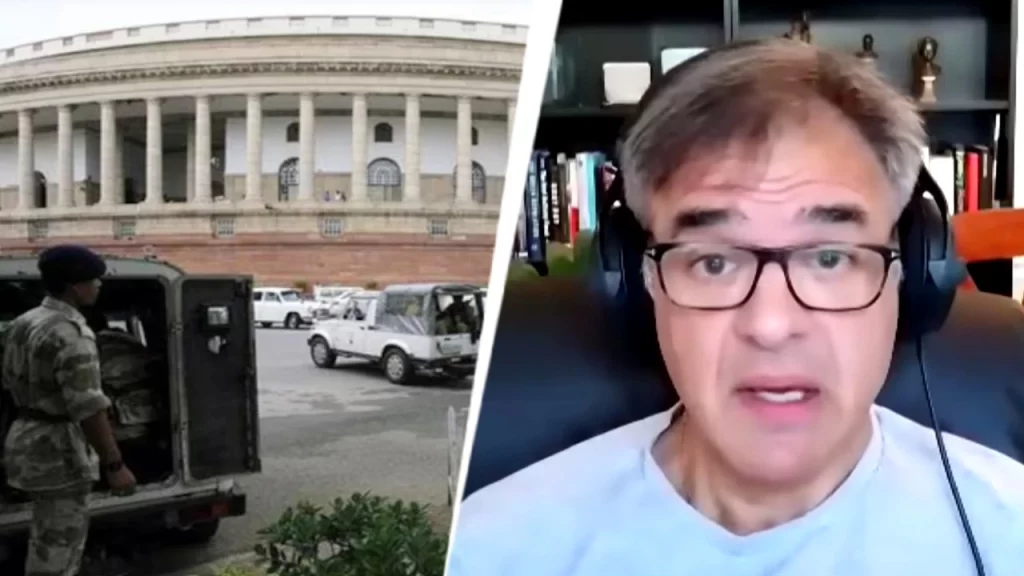
Former CIA officer John Kiriakou has revealed startling insights about US intelligence assessments following the December 2001 attack on the Indian Parliament. He said the United States believed India and Pakistan, both nuclear-armed, were on the verge of war. The threat became acute during the military standoff under Operation Parakram.
Kiriakou, who served as a CIA analyst for 15 years, spoke to news agency ANI. He said CIA officials stationed in Pakistan had their families evacuated. The move reflected Washington’s anticipation of a direct military confrontation. Evacuating officials’ families from potential conflict zones is a standard practice, he added.
He recalled a conversation with a young female CIA officer in Islamabad. She noticed an empty cafeteria at the US embassy. Kiriakou explained, “They have been evacuated because India and Pakistan could go to war any minute.” He pointed to a helicopter in the embassy parking lot, deployed for the evacuation.
Kiriakou highlighted the role of the US deputy secretary, who shuttled between India and Pakistan to negotiate de-escalation. He noted that America’s primary focus remained on Al-Qaeda and Afghanistan following the 9/11 attacks. Consequently, US attention did not fully shift to the escalating India-Pakistan tensions.
In the interview, Kiriakou also alleged that the US “purchased” Pakistan’s former president Pervez Musharraf by injecting millions of dollars into the country. He claimed Musharraf allowed Washington to gain operational control over Pakistan’s nuclear arsenal.
Kiriakou described US relations with Musharraf’s government as extremely cordial. “Our relations with the Pakistani government were very, very good. It was General Pervez Musharraf at the time,” he said. “The United States prefers working with dictators. You avoid public opinion and media scrutiny. In a way, we essentially purchased Musharraf.”
He added that Musharraf’s decision to let the US oversee Pakistan’s nuclear weapons stemmed from fear. “When I was stationed in Pakistan in 2002, I learned unofficially that the Pentagon controlled the nuclear arsenal. Musharraf handed control to the US to prevent nuclear weapons from falling into terrorist hands,” Kiriakou said.
The revelations underscore the high-stakes environment in South Asia during that period. Analysts believed even minor missteps could have triggered full-scale conflict between two nuclear nations. Kiriakou’s account also highlights the US strategy of influence in regional security matters and the leverage it gained over Pakistan under Musharraf.
Observers say these disclosures shed light on the secretive nature of nuclear diplomacy. They suggest Washington relied on both evacuation protocols and high-level negotiations to maintain stability in South Asia. Kiriakou’s statements also provide a rare insider perspective on US-Pakistan relations and the perceived risks of nuclear escalation.
As India-Pakistan tensions remain a sensitive issue, Kiriakou’s account offers a historical lens on how the US prepared for potential conflict while balancing its broader post-9/11 security objectives in the region.