Congress attacks Govt over MGNREGA Replacement Bill, flags removal of Gandhi’s name
New Delhi – The Congress on Monday launched a sharp attack on the government over a proposed bill that seeks to replace MGNREGA. The party said the move targets the core idea of rights-based welfare. It also accused the government of erasing Mahatma Gandhi’s legacy.
To begin with, the opposition objected to the renaming of the Mahatma Gandhi National Rural Employment Guarantee Act. The new bill carries the title Viksit Bharat Guarantee for Rozgar and Ajeevika Mission (Gramin), or VB-G RAM G Bill, 2025. Congress leaders said the change reflects a deeper ideological shift.
Congress president Mallikarjun Kharge led the charge. He said the issue goes beyond a name change. He alleged a larger attempt by the BJP and RSS to weaken and dismantle MGNREGA. He argued that removing Gandhi’s name exposes what he called the hollowness of the Prime Minister’s public tributes to the Father of the Nation.
Moreover, Kharge said only a government hostile to the poor would attack a scheme like MGNREGA. He asserted that the Congress would resist the move inside Parliament and on the streets. He added that the party would not allow the government to strip labourers and rural families of their rights.
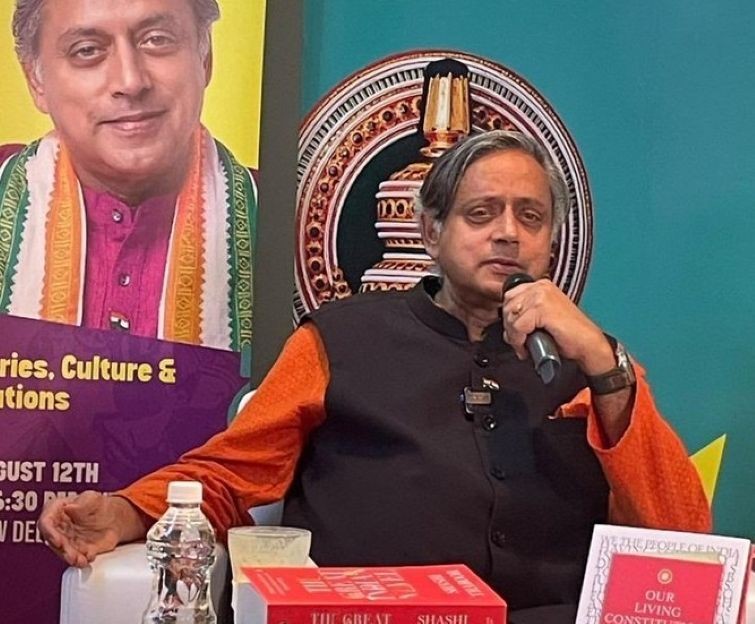
Meanwhile, Congress MP Shashi Tharoor raised a philosophical objection. He questioned the logic behind removing Gandhi’s name from a rural employment scheme. He said Gandhi’s ideas of Gram Swaraj and Ram Rajya never stood in opposition. Instead, he described them as twin pillars of Gandhi’s thought.
Tharoor added that replacing Gandhi’s name ignores this deep connection. He also said Gandhi’s last words reflected the same values now invoked by the government. Therefore, he urged leaders not to create divisions where none existed. Later, he clarified that he opposed the removal of Gandhi’s name itself, not just the controversy around it.
At the same time, Priyanka Gandhi Vadra criticised the government’s intent. She questioned the purpose behind changing the scheme’s name. She pointed out that renaming a programme forces offices to change records, stationery, and systems. She asked what benefit this exercise brings.
Further, Priyanka Gandhi said Mahatma Gandhi stands as a global moral figure. She questioned why any government would want to remove his name. She also accused the ruling party of wasting time and public money while ignoring real public issues.
In Parliament, Congress leader Jairam Ramesh widened the political challenge. He said the entire opposition wants the government to send three major bills to Standing Committees. These include the Higher Education Commission Bill, the Atomic Energy Bill, and the G-RAM-G Bill. He stressed the need for detailed scrutiny and wider consultation.
The government plans to introduce the bill during the ongoing Winter Session of Parliament. According to the draft, the new law promises 125 days of wage employment for rural households each year. Adult members who volunteer for unskilled work will qualify.
However, the funding structure marks a key shift. The Centre and states will share costs. Northeastern and Himalayan states will follow a 90:10 ratio. Other states will follow a 60:40 split. Union Territories without legislatures will depend fully on the Centre. Earlier, MGNREGA operated as a fully central scheme.
The bill also gives the Centre more control. It allows the government to fix state-wise allocations in advance. States will bear extra costs if demand exceeds limits. The Centre will also notify wage rates, though the bill promises wages will not fall below existing levels.
In response, Congress said the proposed scheme weakens the right to work. It argued that MGNREGA once acted as a lifeline for rural India. Now, the party claims, the government risks dismantling that guarantee itself.