Germany allows visa-free transit for Indians as New Delhi and Berlin deepen strategic ties
Germany has announced visa-free airport transit for Indian passport holders. The move signals a clear push to strengthen people-to-people ties. It also comes as India and Germany expand cooperation across defence, trade, and technology.
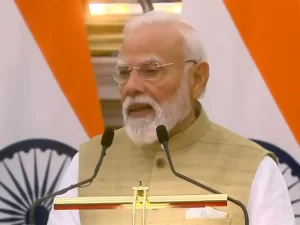
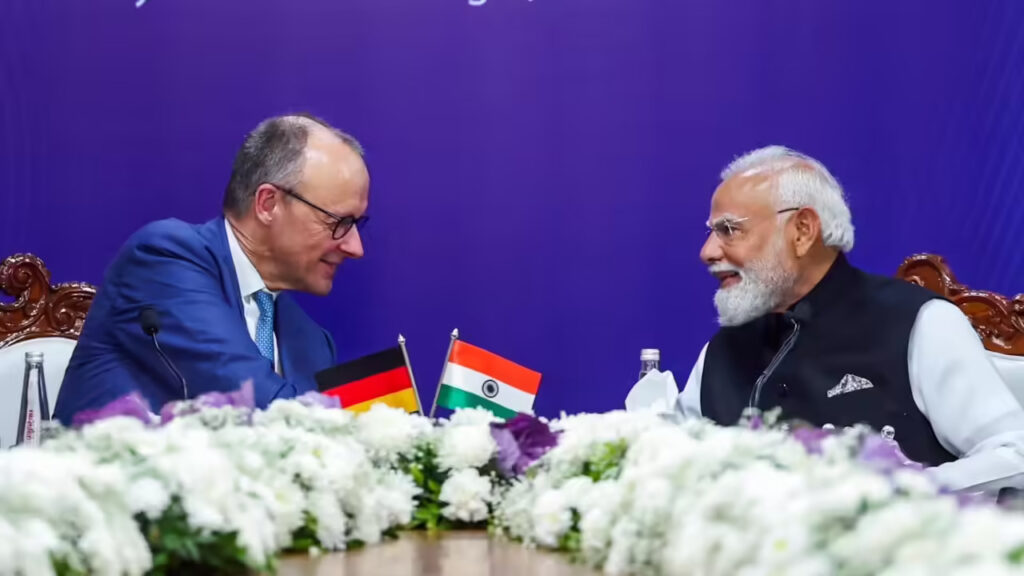
On Monday, Prime Minister Narendra Modi met German Chancellor Friedrich Merz in Ahmedabad. The talks set the tone for a broader partnership. Soon after, both sides signed 19 agreements. These pacts covered defence industry cooperation, higher education, telecommunications, and skilled mobility.
Meanwhile, Chancellor Merz arrived in India with a large business delegation. This marked his first Asia visit since taking office. The visit reflected Berlin’s growing focus on India amid global uncertainty.
First, defence cooperation took centre stage. PM Modi said the growing defence partnership reflects trust and a shared vision. He thanked Chancellor Merz for simplifying defence trade procedures. He also said both countries will draft a clear roadmap for defence co-development and co-production. This step aims to open new industrial opportunities.
Next, trade featured prominently in the talks. Both leaders pushed for early completion of the India–European Union free trade agreement. They argued that the deal can expand trade volumes and diversify supply chains. PM Modi said bilateral trade has already crossed a record USD 50 billion. He added that more than 2,000 German companies operate in India, showing strong confidence in the Indian market.
At the same time, mobility and talent exchange gained fresh momentum. Germany announced visa-free transit for Indian passport holders passing through German airports. Leaders said the move will ease travel and boost exchanges. In addition, both sides signed a skill partnership agreement. This pact aims to support the movement of Indian professionals, especially nurses and caregivers, to Germany. Chancellor Merz said Germany needs skilled workers from India at a fast pace.
Then, discussions shifted to technology and future industries. PM Modi said India and Germany are building secure and resilient supply chains together. He highlighted cooperation in critical minerals and semiconductors. He also pointed to a new green hydrogen mega project involving companies from both countries. He called it a game-changer for future energy needs.
Meanwhile, geopolitical issues framed the strategic dialogue. Both leaders reaffirmed support for a free and open Indo-Pacific. They stressed respect for international law and UNCLOS. They also announced a new bilateral Indo-Pacific consultation mechanism. The move comes amid rising tensions and military assertiveness in the region.
In addition, both sides backed the India–Middle East–Europe Economic Corridor. Leaders said the corridor can reshape global trade and connectivity. They described it as a transformational initiative for long-term prosperity.
Security concerns also featured strongly. PM Modi and Chancellor Merz jointly condemned terrorism in all forms. They described terrorism as a threat to all humanity. They pledged full cooperation to counter terror networks. Both leaders condemned recent terror attacks in India and called for action against safe havens and terror financing.
Later, talks covered global conflicts. Leaders exchanged views on the Ukraine war and the Gaza situation. PM Modi reiterated India’s support for peaceful dialogue and diplomacy. He also stressed the need to reform global institutions. He cited joint efforts through the G4 group to reform the UN Security Council.
Finally, education and innovation rounded off the agenda. PM Modi invited German universities to open campuses in India. He said a new higher education roadmap will give fresh direction to academic cooperation. Leaders agreed that youth and knowledge exchanges will anchor the partnership.
Overall, the visit underlined a shared goal. India and Germany aim to build a resilient, forward-looking partnership. The visa-free transit decision adds a practical boost to this growing relationship.