
Gold slides ₹700 as global jitters weigh; buyers turn cautious across cities
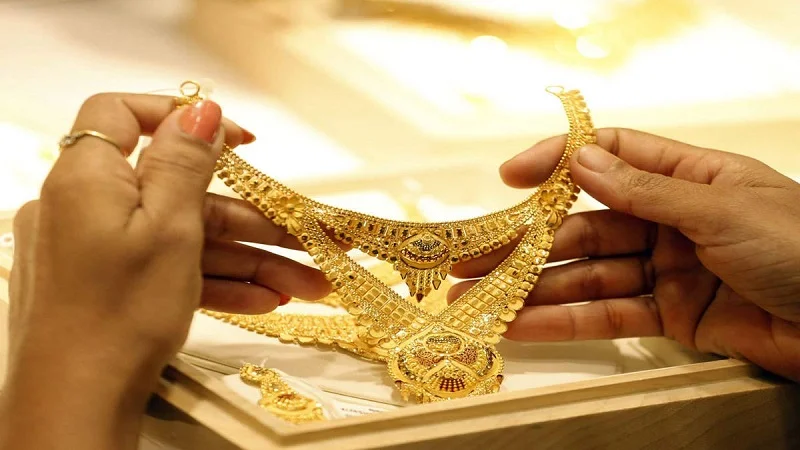
Gold prices fell across India on Tuesday, April 28. First, global uncertainty rattled commodity markets. Then, weak signals on a possible thaw between Iran and the United States pushed investors to reassess positions. As a result, domestic rates slipped, and retail sentiment turned cautious.
On the Multi Commodity Exchange of India, gold futures held near ₹1,51,600 per 10 grams. However, silver futures declined, reflecting broader pressure on precious metals. At the same time, physical markets in major cities showed a sharper dip. In Mumbai, traders quoted 24-carat gold at around ₹1,53,000 per 10 grams, while 22-carat gold hovered near ₹1,40,250. These prices excluded GST and making charges, which vary by jeweller.
Meanwhile, global cues continued to shape local trends. Crude oil prices rose sharply as tensions around the Strait of Hormuz persisted. Brent crude moved above $100 per barrel, while WTI crude stayed close behind. Rising oil prices often increase inflation concerns, which can influence gold demand. Yet, in the current cycle, volatility has led to mixed investor behaviour.
In another key development, the Bank of Japan held its interest rate steady at 0.75 per cent. It also raised its inflation outlook while cutting growth projections. Such global monetary signals affect currency movement and, in turn, gold pricing in import-heavy markets like India.
On the ground, jewellers reported slower footfall in key retail hubs. In Delhi’s Karol Bagh and Mumbai’s Zaveri Bazaar, shop owners said buyers paused purchases, expecting further corrections. “Customers track daily rates on phones. When prices fall suddenly, they wait instead of buying immediately,” said a Delhi-based trader. However, some small investors saw the dip as an entry point and picked up light quantities.
Industry watchers pointed to several factors driving the decline. International gold rates remain the primary trigger. In addition, import duties and rupee-dollar exchange movements directly impact domestic pricing. When the rupee weakens, gold becomes costlier. When global prices fall, local rates follow, unless currency shifts offset the drop.
Despite short-term swings, gold continues to hold strong cultural and financial value in India. Families still prefer it during weddings and festivals. Investors also treat it as a hedge against inflation and market risk. Therefore, even during corrections, demand rarely disappears; it simply slows or shifts timing.
Looking ahead, traders expect volatility to persist. Global geopolitical signals, central bank policies, and commodity trends will continue to guide prices. For now, buyers remain watchful. They track every dip and rise, waiting for the right moment to act in a market that rarely stays still for long.