Trump-Xi Summit puts Iran, AI and trade tensions at centre of US-China talks
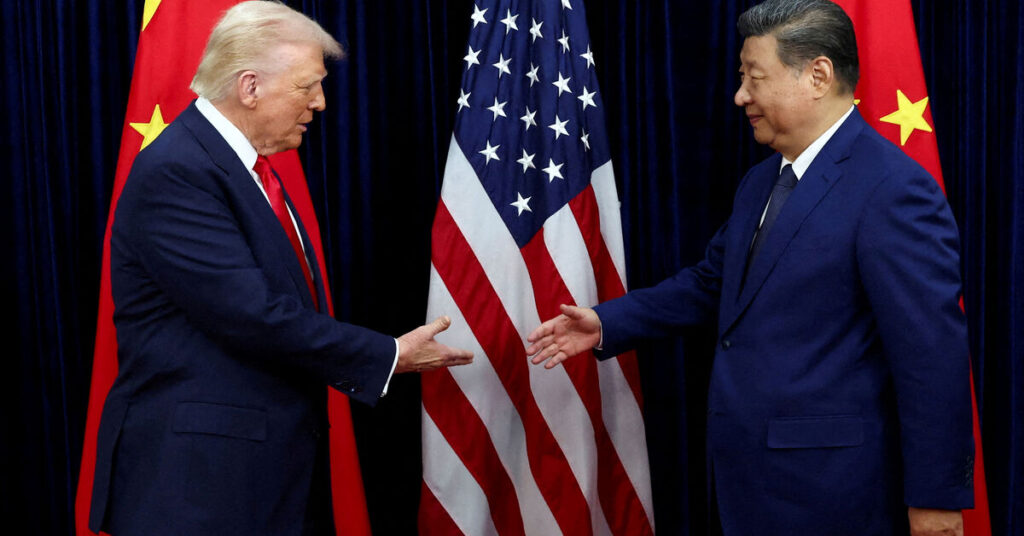
US President Donald Trump will arrive in Beijing this week for a crucial summit with Chinese President Xi Jinping as both powers attempt to manage rising tensions across trade, technology and global security.
The three-day visit, scheduled from May 13 to May 15, comes at a sensitive moment in international politics. Competition between Washington and Beijing has intensified sharply over the past year, while disputes around supply chains, military influence and emerging technologies continue to widen.
Senior White House officials say the administration wants concrete outcomes instead of symbolic diplomacy. American negotiators plan to push China on trade imbalances, artificial intelligence safeguards, cybersecurity risks and Beijing’s growing engagement with Iran.
Among all issues, Iran may dominate much of the conversation.
US officials remain concerned about China’s economic and strategic relationship with Tehran. Washington recently imposed sanctions on firms that American authorities linked to Chinese intelligence and satellite operations connected with Iran. The Trump administration now wants Beijing to reduce cooperation that Washington believes strengthens Iran’s regional position.
The issue carries wider geopolitical importance because the United States continues efforts to isolate Iran economically and diplomatically. Meanwhile, China has steadily expanded its influence across West Asia through energy deals, infrastructure projects and strategic partnerships.
Diplomatic circles in Washington and Beijing now view the summit as more than a bilateral meeting. Many analysts believe the talks could shape future alignments in the Gulf region and the broader Indo-Pacific.
Artificial intelligence will also remain high on the agenda.
American officials worry about the rapid growth of advanced AI systems without clear communication channels between the world’s two largest powers. Washington wants direct mechanisms for crisis management and technological coordination to avoid misunderstandings during cyber incidents or military escalation.
The concern has grown stronger after both countries accelerated investments in AI-driven defence systems, surveillance tools and autonomous technologies. Several experts in strategic affairs now compare the AI competition to an earlier nuclear arms race because both sides fear technological surprise and loss of strategic advantage.
Nuclear security discussions may also return during the summit despite years of limited progress. US officials admit previous attempts to involve China in formal arms control dialogue produced little movement. However, Washington still wants direct engagement on missile systems, military transparency and long-term strategic stability.
On Taiwan, the White House has repeated that America’s broader policy position remains unchanged. However, tensions around the island continue to shadow every major US-China interaction. Chinese military activity near Taiwan and growing American support for regional allies have increased friction across the Indo-Pacific in recent months.
Trade and economic negotiations could become another defining part of the visit.
The Trump administration wants broader market access for American companies and seeks stronger protection for domestic industries. Officials say Washington aims to rebalance trade ties while protecting American farmers, manufacturers and technology sectors from unfair competition.
Business groups in both countries now watch the summit closely because trade uncertainty has already affected global supply chains and investment decisions. Exporters, chip manufacturers and energy firms especially expect signals about future policy direction.
On the ground in Beijing, security preparations have already intensified ahead of Trump’s arrival. Diplomatic convoys, police deployment and restricted movement zones have appeared around major government areas and summit venues.
Trump will attend bilateral meetings, ceremonial events and a working lunch with Xi before departing on Friday. Even before formal talks begin, expectations around the summit have risen sharply across global markets and diplomatic circles.
For now, the meeting represents more than a routine state visit. It has become a high-stakes attempt by the world’s two biggest powers to prevent rivalry from sliding into deeper confrontation.