Twin blasts in Punjab: Police cite cross-border angle, CM targets BJP
Punjab – Twin explosions jolted Punjab late Tuesday night. Then, top leaders clashed over who stands behind the attacks. As a result, the state now faces both a security probe and a sharp political divide.
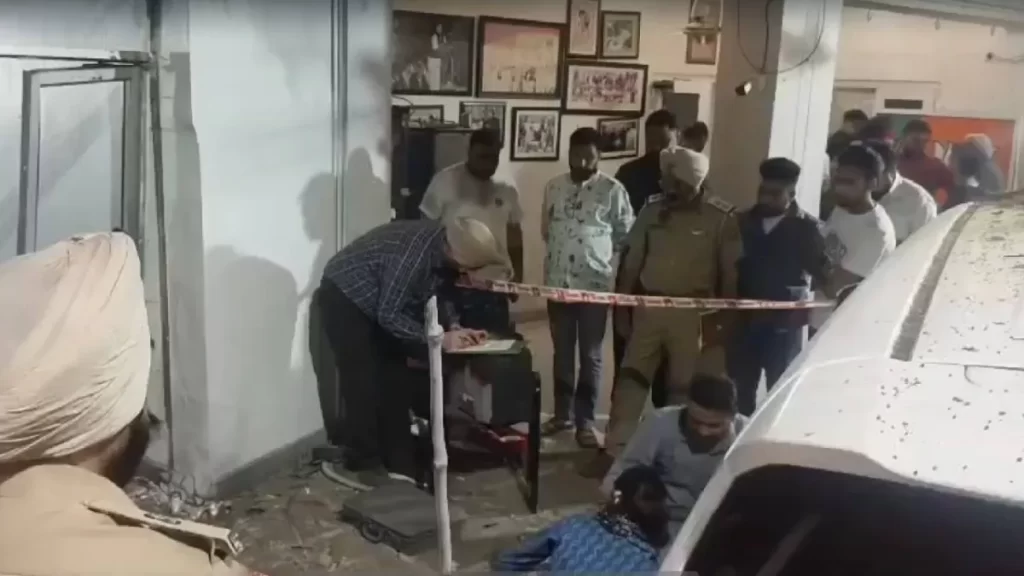
On the ground in Jalandhar, panic spread within seconds. A parked scooter burst into flames near a busy stretch close to a BSF facility. Eyewitnesses ran as debris scattered across the road. Shopkeepers pulled shutters down, while locals rushed to safer corners. Soon after, police teams sealed the area and began scanning CCTV footage frame by frame.
Hours later, Amritsar reported another blast. This time, the explosion occurred near an Army camp in the Khasa belt, not far from key border installations. Residents heard a loud bang between 10:30 pm and 11 pm. Security personnel moved in quickly. They cordoned off the site and called forensic teams. Officers started collecting fragments and mapping the sequence of events.
Meanwhile, Punjab Chief Minister Bhagwant Mann stepped in with a political charge. He linked the blasts to the Bharatiya Janata Party and alleged a pattern ahead of elections. He argued that such incidents surface where the party plans to expand. He also referred to a past political message that hinted at Punjab as the next electoral target.
However, Punjab’s Director General of Police Gaurav Yadav took a different line. He pointed to a cross-border angle and flagged the role of Pakistan-based handlers. He said initial inputs suggest the use of improvised explosive devices. He added that some elements may act under the influence of external agencies to disturb peace and create fear. At the same time, he warned against attempts to project Punjab as unstable through a coordinated narrative.
As political reactions poured in, both opposition and ruling camps hardened their stance. BJP leaders attacked Mann’s remarks and accused him of deflecting from governance. They demanded accountability and questioned the state’s security preparedness. On the other hand, Congress voices also criticised the Chief Minister’s claim and called it premature and politically driven.
Back at the sites, investigators focused on evidence. In Jalandhar, officials questioned the scooter owner and another individual linked to the vehicle. They reviewed CCTV clips that captured the exact moment of the blast. In Amritsar, teams examined the possibility of a grenade-like device thrown near the camp perimeter. Officers continued to verify each detail before drawing firm conclusions.
Importantly, authorities confirmed no casualties in either incident. Still, the blasts raised concern due to their proximity to sensitive installations. Security agencies responded by increasing surveillance across border districts. They also stepped up coordination with central forces to track any wider network.
In the background, Punjab has faced sporadic security challenges linked to cross-border smuggling and extremist attempts. Agencies have often flagged efforts to revive dormant networks through small, targeted actions. Therefore, even low-intensity blasts draw serious attention due to their potential intent.
For now, the investigation continues on multiple tracks. Police teams analyse forensic samples, trace communication links, and follow leads from both incidents. At the same time, political leaders continue their war of words.
Two blasts have opened two narratives. One points inward to politics. The other looks outward to external threats. The final answer will depend on evidence, not claims.