Landslide in Gujarat: BJP wins all 15 corporations in Civic Elections
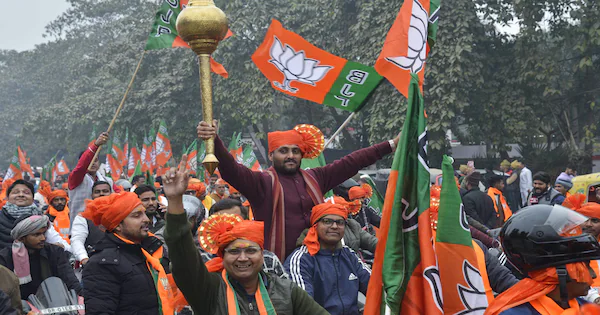
Gujarat delivered a clear political message as the Bharatiya Janata Party stormed local body polls with a record-breaking mandate. First, counting trends showed an early surge for the ruling party. Then, results confirmed a clean sweep across all 15 municipal corporations. As the day progressed, the scale of victory expanded across municipalities, district panchayats, and taluka panchayats.
The BJP secured over 7,400 seats across tiers, including a large number of uncontested wins. In contrast, the Congress trailed far behind, while the Aam Aadmi Party struggled to retain its earlier momentum. At the same time, smaller players like AIMIM and the Samajwadi Party marked their entry into Gujarat’s civic space with limited but notable wins.
On the ground, party workers celebrated across cities like Ahmedabad, Surat, and Rajkot. Saffron flags filled streets as supporters credited development work and strong organisation. Voters in several areas pointed to roads, water supply, and welfare delivery as key reasons behind their choice. However, some pockets reflected local dissatisfaction, especially where opposition candidates managed to break through.
In Ahmedabad, the BJP secured a dominant majority, leaving little space for rivals. Similarly, Surat witnessed a sharp turnaround. The AAP, which made headlines in 2021, lost ground significantly this time. Meanwhile, new corporations like Morbi and Porbandar-Chhaya saw complete victories for the BJP, underlining its expanding base.
Across municipalities and पंचायत tiers, the trend stayed consistent. The BJP maintained a strong lead in rural and semi-urban belts. However, the Congress held on in select areas like Dhanera, where it registered a convincing win. These isolated results highlighted that local factors still influence outcomes despite broader political waves.
A striking feature of this election involved the rise in uncontested seats. Hundreds of candidates secured victories even before polling began. This trend reflected the BJP’s organisational depth but also raised questions among opposition leaders about electoral competitiveness.
Leaders reacted quickly after the results. Prime Minister Narendra Modi thanked voters and linked the mandate to development politics. Chief Minister Bhupendra Patel echoed the sentiment and said people rejected negativity. On the other hand, Congress leaders acknowledged the setback but promised to rebuild. AAP leaders, meanwhile, faced tough questions after their limited gains.
Background plays a crucial role in understanding this outcome. The BJP has governed Gujarat since 1998 and continues to build its narrative around growth and stability. Over the years, it has strengthened booth-level networks and expanded its reach across communities. These local polls, therefore, acted as a mid-term test ahead of the विधानसभा elections expected next year.
Voter turnout remained steady across categories, with higher participation in rural bodies. This pattern often benefits parties with deeper grassroots presence. In this case, the BJP capitalised on that advantage effectively.
A few results stood out beyond party lines. Independent candidates won key wards in places like Godhra, where voters focused on local issues over party identity. Similarly, AIMIM and SP opened their accounts, signalling small but emerging shifts in urban pockets.
The results send a strong signal ahead of the 2027 Assembly elections. The BJP has tightened its grip on Gujarat’s political landscape. However, opposition parties now face a clear challenge: rebuild structure, regain voter trust, and sharpen local strategies.
Gujarat’s civic verdict speaks in one voice. It rewards continuity, organisation, and delivery. The next political battle will test whether this momentum holds or begins to shift.