Shah turns up heat in Bengal as Phase 2 nears, voters defy fear with record turnout
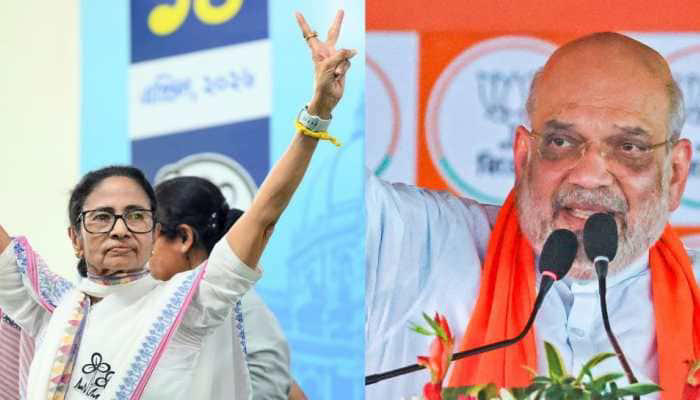
Union Home Minister Amit Shah sharpened his pitch in West Bengal. Then, he issued a direct warning to alleged troublemakers linked to the Trinamool Congress. As a result, the political temperature rose ahead of Phase 2 polling on April 29.
Shah spoke soon after Phase 1 voting ended across 152 constituencies. He said voters came out in huge numbers and kept the process strong. He also claimed that “goons” stayed off the streets during the first phase. Next, he warned them not to disrupt the second phase. He said they should not step out or face strict action.
At the same time, Chief Minister Mamata Banerjee and her party remained under attack from the BJP’s top leadership. Shah repeated his charge of corruption and street violence. He pushed the message that the ruling party’s influence had started to fade.
Meanwhile, the Election Commission of India reported a record turnout. Chief Election Commissioner Gyanesh Kumar confirmed that voting crossed 92 percent by late night. This marked the highest participation in the state since Independence. Officials said strong security and voter awareness drove the surge.
On the ground, voters lined up early in both urban and rural belts. In districts like Murshidabad and Birbhum, long queues formed before sunrise. Many voters said they wanted stability and safety. Others said they came out to protect their vote amid intense rivalry. Women and first-time voters showed strong participation.
However, tension did not disappear completely. Reports of clashes came from pockets of Murshidabad, Birbhum, Cooch Behar, and Dakshin Dinajpur. In some areas, miscreants allegedly hurled crude bombs. In others, party workers accused rivals of intimidation. Security forces stepped in quickly and tried to contain the situation.
In Birbhum’s Kharisaol, local voters raised concerns over vote recording. They claimed their votes did not reflect correctly, which triggered protests. Authorities paused polling briefly and then resumed after checks. In Naoda, a convoy linked to a regional leader faced stone pelting. Soon after, rival groups clashed. Central forces used mild force to disperse the crowd and restore order.
Security remained tight throughout the day. The Centre deployed Central Armed Police Forces across sensitive booths. State police also coordinated with them to prevent escalation. Officials monitored hotspots through live feeds and rapid response teams.
Looking back, West Bengal elections have seen violence in past cycles. However, authorities tried to reduce risk this time through heavy deployment and strict monitoring. Political rivalry between the BJP and TMC has shaped the campaign narrative. Both sides have accused each other of fear tactics and misuse of power.
As Phase 2 approaches, the focus now shifts to maintaining calm. Shah’s remarks signal a hard line, while the ruling party continues to push back. Voters, meanwhile, appear determined to participate despite tension.
Bengal stands at a crucial point. High turnout shows strong public engagement. Yet, scattered violence reminds everyone of the fragile ground reality. The next phase will test both administration and political leadership as the state moves deeper into the election cycle.