Women’s quota push stalls in Lok Sabha, Modi govt reworks strategy after setback
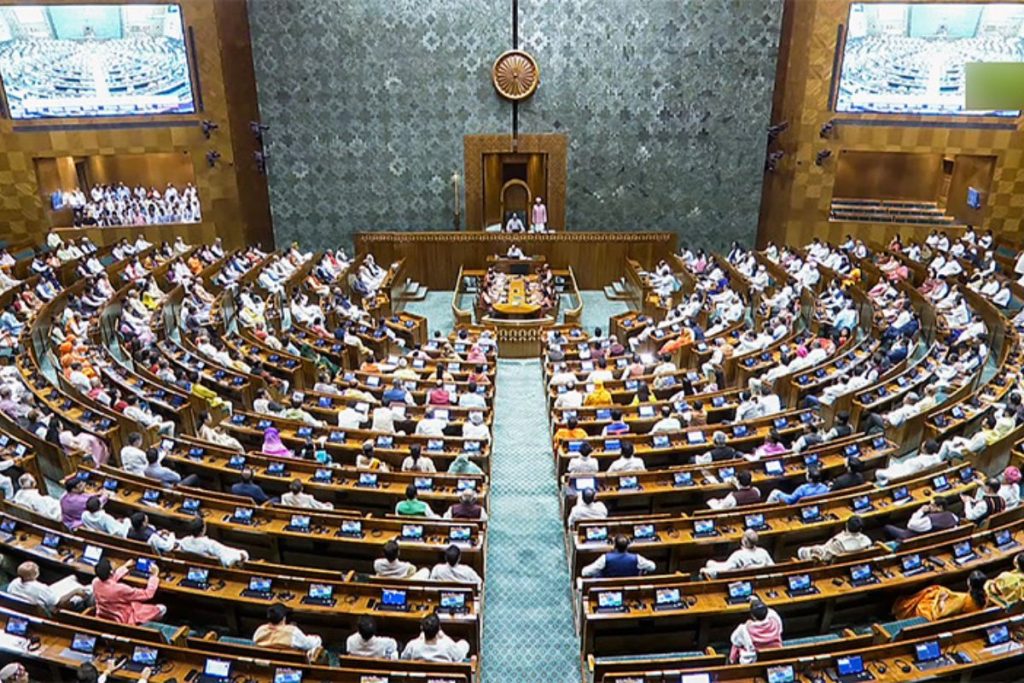
The Bharatiya Janata Party-led government hit a rare roadblock in the Lok Sabha. Then, it quickly shifted course. On Friday evening, the proposed Constitution (131st Amendment) Bill failed to secure the required two-thirds majority. The bill drew 298 votes in favour and 230 against, but it needed 352 to pass. As a result, the measure fell short by 54 votes and marked the first such defeat for the government since Narendra Modi took office in 2014.
Next, the government pulled back two linked proposals. It withdrew the Delimitation Bill 2026 and the Union Territories Laws (Amendment) Bill 2026. Parliamentary Affairs Minister Kiren Rijiju said all three bills formed a single framework. Therefore, he confirmed that the government would not move ahead with the remaining drafts after the main amendment failed.
At the core, the amendment aimed to fast-track the women’s quota rollout. It sought to expand Lok Sabha seats from 550 to 850 and detach the quota timeline from the next census. Earlier, the 2023 law—Nari Shakti Vandan Adhiniyam—linked implementation to post-census delimitation, which could delay it until 2034. In contrast, the new proposal targeted a 2029 rollout using 2011 census data. However, that approach triggered concerns over regional balance and caste representation.
Meanwhile, the government made a final push on the floor. Union Home Minister Amit Shah appealed to the Opposition and offered to revise the bill within an hour. He promised safeguards to protect proportional representation for all states. Yet, Opposition leaders rejected the offer. Akhilesh Yadav said the Opposition did not trust the government’s assurances.
On the other side, the Opposition held a consistent line. Rahul Gandhi backed women’s reservation but opposed linking it to delimitation based on old data. He argued that the move would reshape India’s electoral map. Similarly, Priyanka Gandhi Vadra raised concerns about the absence of updated OBC data. She called the outcome a win for democratic process.
On the ground, political signals grew sharper. Several Opposition parties accused the government of timing the push ahead of key state elections. They pointed to upcoming contests in southern and eastern states, where seat redistribution remains a sensitive issue. At the same time, regional parties feared that reliance on the 2011 census could shift political weight away from certain states.
In the background, India stands on the verge of a fresh census that may include caste data for the first time since 1931. This factor adds complexity to any delimitation exercise. It also raises stakes for parties that rely on caste-based representation.
Now, the road ahead remains uncertain. The original 2023 law stays in force, but it still depends on delimitation for rollout. Therefore, the government must explore new options. It may consider reserving one-third of the current 543 seats as an interim step. A cabinet meeting scheduled for Saturday could shape the next move.
In conclusion, the defeat has not ended the women’s quota debate. Instead, it has reset the strategy. The government must now rebuild consensus, while the Opposition seeks clarity on data and fairness.