From ‘Airport samosas’ to Data plans: Raghav Chadha pitches everyday issues, triggers political pushback
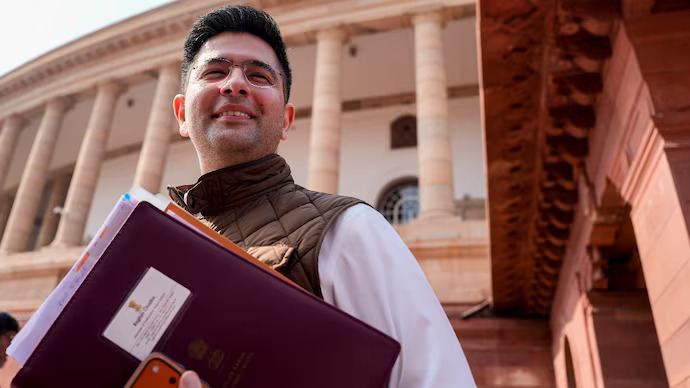
New Delhi – First, a shift in tone has stirred debate inside the Aam Aadmi Party. Then, a string of everyday concerns has placed Raghav Chadha at the centre of a fresh political clash.
Chadha, once seen as a close aide to Arvind Kejriwal, now faces sharp questions from his own party. He asks a direct question: did he commit any offence? Meanwhile, party leaders argue that he avoids aggressive political attacks.
However, Chadha stands firm. He says he raises issues that affect daily life. He insists that Parliament must reflect real struggles on the ground.
Ground reality shapes his pitch
Across cities like Delhi, Mumbai, and Bengaluru, commuters spend hours in traffic. Chadha highlights this daily frustration. He argues that long jams drain productivity and energy. He calls for a national mission to ease congestion.
On the ground, office workers leave early yet reach late. Delivery workers lose time and income. Small delays pile up into economic loss. Chadha links this everyday stress to policy gaps in urban planning.
Focus on household economics
Next, he targets telecom practices. He questions prepaid plans that expire every 28 days. He says companies market them as “monthly” despite shorter cycles. As a result, users pay for an extra recharge each year.
He also flags unused data loss. He argues that consumers pay for full data but lose unused portions at midnight. He demands rollover benefits. This issue resonates with students and low-income users who track every rupee.
Social concerns enter the debate
At the same time, Chadha raises gender-related issues. He pushes for legal recognition of paternity leave. He argues that caregiving must not fall only on women. He frames it as a matter of equality, not convenience.
Further, he highlights menstrual health gaps. He points to schools that lack basic facilities. He stresses that poor infrastructure forces girls to skip classes. He links this to education loss and dignity.
Airport pricing sparks wider conversation
Then comes the issue that drew the most attention—airport food prices. Chadha questions high costs at terminals. He supports the government’s Udaan Yatri Cafes but demands wider access and better placement.
At Chhatrapati Shivaji Maharaj International Airport, he interacts with travellers. He highlights affordable tea and snacks as proof that low-cost options can work. For frequent flyers and middle-class families, this issue reflects a larger concern about hidden travel costs.
Political reform and worker rights
Beyond daily expenses, Chadha pitches structural changes. He backs the “right to recall.” He argues that voters must hold leaders accountable before elections.
He also turns to gig workers. He spends time with delivery personnel to understand their routine. He flags long hours and tight deadlines. He calls for fair wages and safer conditions. This connects with the rise of app-based jobs in urban India.
Background tension within the party
Meanwhile, criticism grows within the party. Leaders like Saurabh Bharadwaj accuse Chadha of focusing on “soft” topics. They expect sharper attacks on the central government led by Narendra Modi.
Chadha rejects this framing. He argues that so-called “soft” issues shape real lives. He says policy must address both macro politics and daily struggles.
A wider political question
Finally, this episode raises a broader question. Should Parliament prioritise high-voltage politics or everyday governance? Chadha’s approach suggests a shift toward lived experiences. His critics see it as a dilution of political edge.
For now, the debate continues. Yet, the issues he highlights—traffic, data costs, caregiving, and basic amenities—continue to affect millions every day.