Owaisi targets Sarma in Assam, urges voters to reject “Regressive politics”
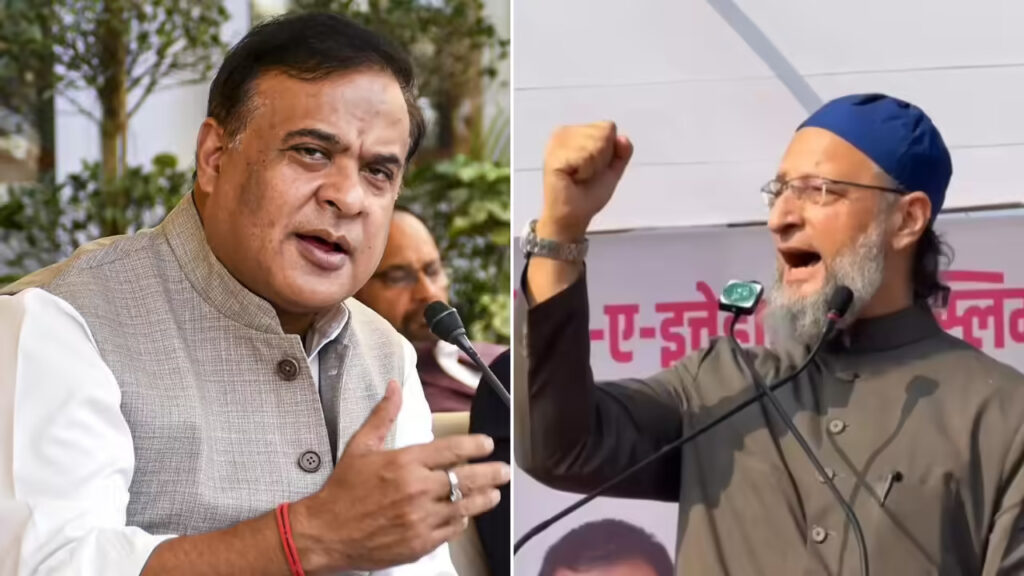
Guwahati – Asaduddin Owaisi sharpened his attack on Himanta Biswa Sarma during a high-energy rally in Guwahati. He framed the upcoming Assembly elections as a decisive moment. He urged voters to challenge what he called “regressive politics” through the ballot.
Owaisi spoke directly to the crowd. He highlighted concerns over recent eviction and demolition drives. He argued that these actions created fear among sections of society. Therefore, he called for a strong political response. He insisted that slogans alone cannot change outcomes. Instead, he pushed voters to act with clarity and purpose.
He then shifted focus to electoral strategy. He backed the All India United Democratic Front (AIUDF) as a key force. He asked supporters to consolidate behind the party. He stressed that unity would translate into legislative strength. As a result, he said, the community could secure a stronger voice inside the Assembly.
At the same time, Owaisi rejected claims of an easy win for the BJP. He dismissed the narrative of a one-sided contest. He said the ground tells a different story. He pointed to local dissatisfaction and rising political awareness. Consequently, he argued that voters still hold the power to reshape the outcome.
Earlier in the day, Owaisi landed in Assam to begin campaigning. Supporters welcomed him at the airport with slogans and traditional gestures. They offered Assamese gamosas and showed visible enthusiasm. This reception set the tone for his campaign push. It also signaled AIUDF’s attempt to energize its base ahead of voting.
During the rally, Owaisi kept his message simple and direct. He told people to prioritize representation. He framed the election as a choice about leadership and voice. He said voters must decide who will speak for them in difficult times. He repeated that unity would remain the deciding factor.
He also addressed criticism that his involvement could polarize voters. He countered that argument with a political pitch. He said every democracy thrives on participation and choice. He urged voters to use their “political awareness” while casting ballots. In doing so, he positioned voting as both a right and a responsibility.
Meanwhile, Assam’s political climate has grown increasingly competitive. The ruling BJP continues to rely on governance and development claims. On the other hand, opposition parties attempt to build alliances and consolidate support. In this context, Owaisi’s entry adds a new layer to the contest. It introduces sharper messaging and targeted outreach.
On the ground, voters weigh multiple issues. They talk about jobs, identity, and security. They also discuss government actions and their local impact. These concerns shape political conversations across constituencies. Therefore, campaign narratives now reflect both emotion and calculation.
As the election approaches, leaders intensify their outreach. They hold rallies, engage with communities, and sharpen their arguments. Owaisi’s speech fits into this broader pattern. He combines criticism with mobilization. He pushes for a clear electoral message.
In the end, the focus returns to voters. They will decide the direction of Assam’s politics. Their choices will determine who enters the Assembly and who stays out. Owaisi’s call aims to influence that decision. However, the final verdict will emerge only on counting day.