Brace for Impact: Modi flags West Asia shock, urges ‘Team India’ response
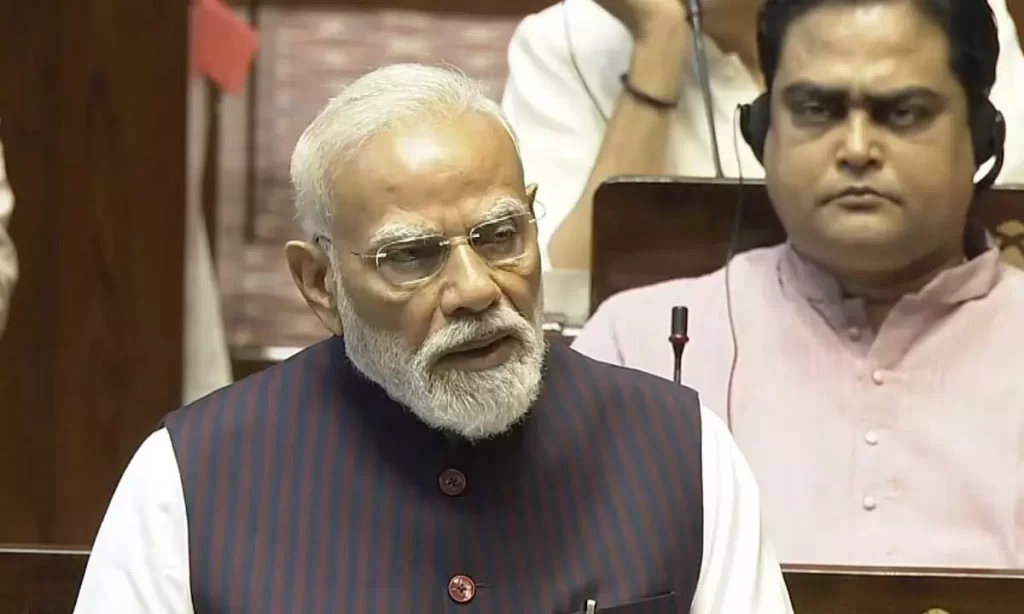
New Delhi – Prime Minister Narendra Modi on Tuesday delivered a clear warning in the Rajya Sabha. He said the ongoing crisis in West Asia has already shaken global stability. Moreover, he stressed that the fallout could stretch over a long period. He urged unity at home and vigilance across sectors as India navigates uncertain terrain.
First, Modi outlined the scale of disruption. He noted that the conflict has crossed three weeks. Consequently, it has begun to strain energy supplies and choke critical trade corridors. He pointed out that fuel flows and fertiliser shipments now face irregular movement. As a result, supply chains show visible stress. He added that India feels the pressure alongside the rest of the world.
At the same time, Modi sought to calm concerns. He said India’s economic base remains steady. He explained that officials track every shift in the crisis. Then, they respond with measured steps. He emphasised that the government acts with seriousness and speed. Therefore, it aims to limit shocks before they spread across sectors.
Ground Angle: Markets, Transport, and Households Feel the Heat
On the ground, signs of strain have started to emerge. Transport operators report rising uncertainty in fuel availability. In several wholesale markets, traders speak of cautious buying. They prefer smaller inventories as prices fluctuate. Meanwhile, logistics firms adjust routes and timelines to avoid bottlenecks.
In industrial clusters, manufacturers watch input costs closely. Fertiliser-dependent sectors, in particular, remain alert. Farmers and small businesses express concern about future price spikes. However, many also say they trust government intervention to stabilise supply. This mix of caution and expectation defines the current mood.
Background: Why the Crisis Matters
The crisis holds global importance due to the region’s role in energy supply. West Asia remains a major source of crude oil and gas. In addition, it hosts key maritime routes. Among them, the Strait of Hormuz stands out as a vital artery. A large share of the world’s oil shipments passes through this narrow channel.
Therefore, any disruption in this corridor quickly affects global prices. It also slows shipping movement. Over time, such delays raise costs for import-dependent economies like India. That is why policymakers now treat the situation with urgency.
Warning of Long-Term Impact
Modi did not downplay the risks. Instead, he said the consequences may linger. He explained that prolonged conflict often leaves deep economic scars. For instance, it can push up energy costs for months. It can also weaken global demand. Hence, recovery may take time even after tensions ease.
Even so, he urged patience. He asked citizens to remain calm and disciplined. He said the situation requires restraint and clear thinking. According to him, steady action will help India manage the crisis better than panic.
Call for States: Act Early, Prevent Shortages
Next, Modi turned to state governments. He called for strict monitoring of essential goods. He asked authorities to act quickly against hoarding and black marketing. At the same time, he stressed support for the poor and migrant workers.
He recalled India’s coordinated response during the pandemic. Then, he pushed for a similar “Team India” approach now. He said cooperation between the Centre and states will ensure smooth supply. In turn, that will prevent artificial shortages and price shocks.
Shipping and Energy Concerns Rise
Meanwhile, maritime risks continue to grow. Modi flagged the situation around the Strait of Hormuz. He said several global vessels remain stranded. Many of them carry Indian crew members. Therefore, the government treats their safety as a priority.
He added that India has intensified diplomatic engagement. Officials now work with multiple countries to ease tensions. Their immediate goal focuses on safe passage for ships. At the same time, they push for de-escalation across the region.
Indians Abroad: Safety Takes Centre Stage
Another key concern involves Indian citizens overseas. Nearly one crore Indians live and work in Gulf nations. Modi said their safety remains central to policy decisions. He confirmed that over 3,75,000 Indians have already returned safely since the crisis began.
Among them, more than 1,000 came back from Iran. Notably, 700 of these returnees were medical students. The government continues evacuation and support efforts. It coordinates closely with local authorities and Indian missions abroad.
Diplomacy in Motion
India has also stepped up global outreach. Modi said he has spoken with leaders from several countries. These include Iran, Israel, and the United States. Through these talks, India seeks a peaceful resolution.
He stressed a clear principle. He said any threat to human life harms humanity as a whole. Therefore, India continues to advocate dialogue and restraint. It aims to reduce tensions and restore stability.
Securing Supplies, Building Resilience
Finally, Modi outlined steps to protect India’s energy needs. The government now explores multiple sources for crude oil and gas. This approach aims to reduce dependence on any single route. It also strengthens supply security during disruptions.
He highlighted progress in strategic reserves. India has built storage capacity of 53 lakh metric tonnes over the past decade. Moreover, it plans to expand this by another 65 lakh metric tonnes. This buffer will help manage future shocks.
In addition, Modi pointed to a major push in shipbuilding. A Rs 70,000 crore project aims to boost domestic capacity. He said India must reduce external dependence in critical sectors. According to him, self-reliance remains the only sustainable path.