West Asia conflict escalates as Iran hits US Base in Bahrain, Hezbollah strikes Israel
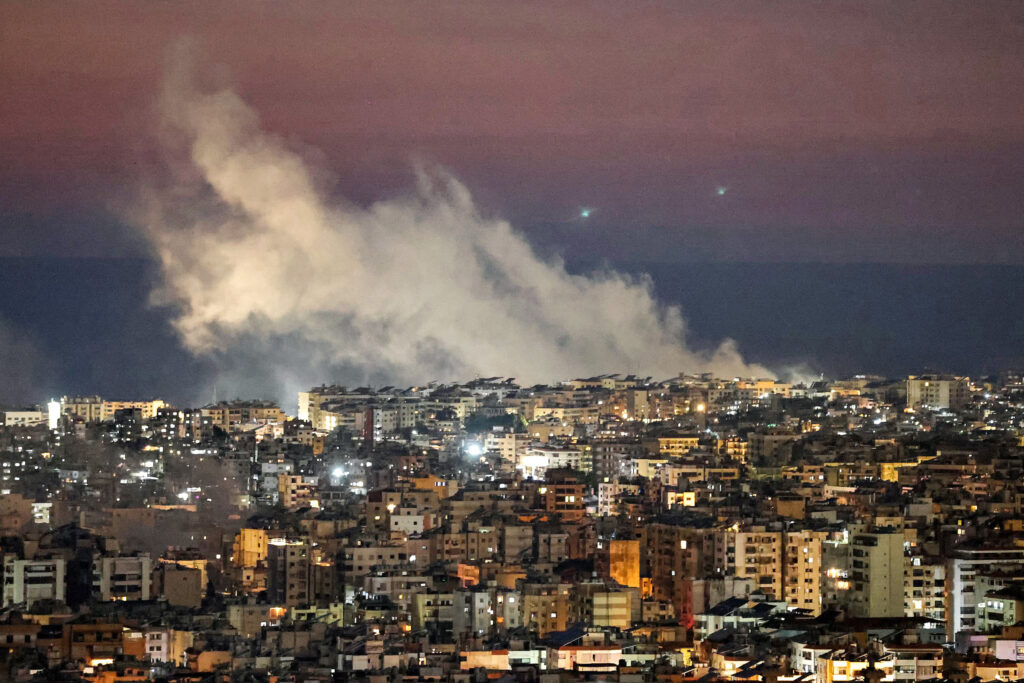
The conflict in West Asia entered a dangerous new phase as Iran targeted a US air base in Bahrain and Hezbollah launched fresh strikes on Israel. The region moved closer to a wider war as fighting intensified between the United States, Israel, and Iran.
First, drones struck US embassies in Saudi Arabia and Kuwait. In response, the US State Department urged American nationals to leave the Middle East immediately. The warning came even as limited flights resumed in Abu Dhabi and Dubai. However, four days of airspace closures and mass cancellations had already stranded thousands across the region.
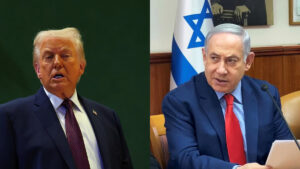
Meanwhile, US President Donald Trump signaled that Washington would continue its military campaign. He told reporters that operations in Iran could last four to five weeks. He added that he stood ready to extend the campaign if needed. At the same time, Secretary of State Marco Rubio briefed Congress on “Operation Epic Fury.” He warned lawmakers that the US military planned even stronger strikes in the coming days.
As Washington stepped up pressure, Israel expanded its own offensive. Israeli forces carried out strikes in central Tehran as part of coordinated action with the United States. In addition, Israel renewed attacks in Lebanon after Hezbollah sent a drone toward Haifa. Hezbollah launched the strike after the reported assassination of Iran’s Supreme Leader, Ayatollah Ali Khamenei.
Following the escalation, Lebanon imposed a ban on all Hezbollah military activity inside the country. Authorities moved quickly to contain fallout from the renewed confrontation. Residents in southern Lebanon fled their homes as airstrikes intensified near the border.
Across the region, explosions and air raid sirens marked another deadly day. In Iran, state media cited Red Crescent figures and reported that at least 555 people died in ongoing strikes. Officials said more than 700 others suffered injuries. In Minab, strikes hit a girls’ school and killed around 180 people, according to Iranian sources.
At the same time, the US military confirmed losses of its own. Officials said four American service members died during operations in Iran. Four others suffered serious injuries.
In Lebanon, Israeli strikes killed at least 52 people in the south, according to the health ministry. Authorities also recorded 154 injuries linked to clashes between Israeli forces and Hezbollah fighters.
Elsewhere in the Gulf, violence spread beyond primary battle zones. In the United Arab Emirates, strikes in Dubai and Abu Dhabi killed three people, including citizens of Pakistan, Nepal, and Bangladesh. Officials reported 58 additional injuries.
In Israel, Iranian strikes killed around 10 people across different cities. In Iraq, two people lost their lives amid related attacks. Kuwait, Oman, and Bahrain each reported one fatality. In Qatar, Iranian strikes injured at least 16 people.
As a result, the humanitarian toll continued to rise across multiple countries. Governments tightened security and reinforced critical infrastructure. Airlines reviewed flight paths and contingency plans.
Overall, leaders on all sides signaled resolve rather than restraint. Military operations continued, and neither camp indicated readiness for de-escalation. With attacks spreading across borders and civilian casualties mounting, the risk of a broader regional war grew by the hour.