Bangladesh on edge after Osman Hadi killing sparks protests, arson, and diplomatic tension
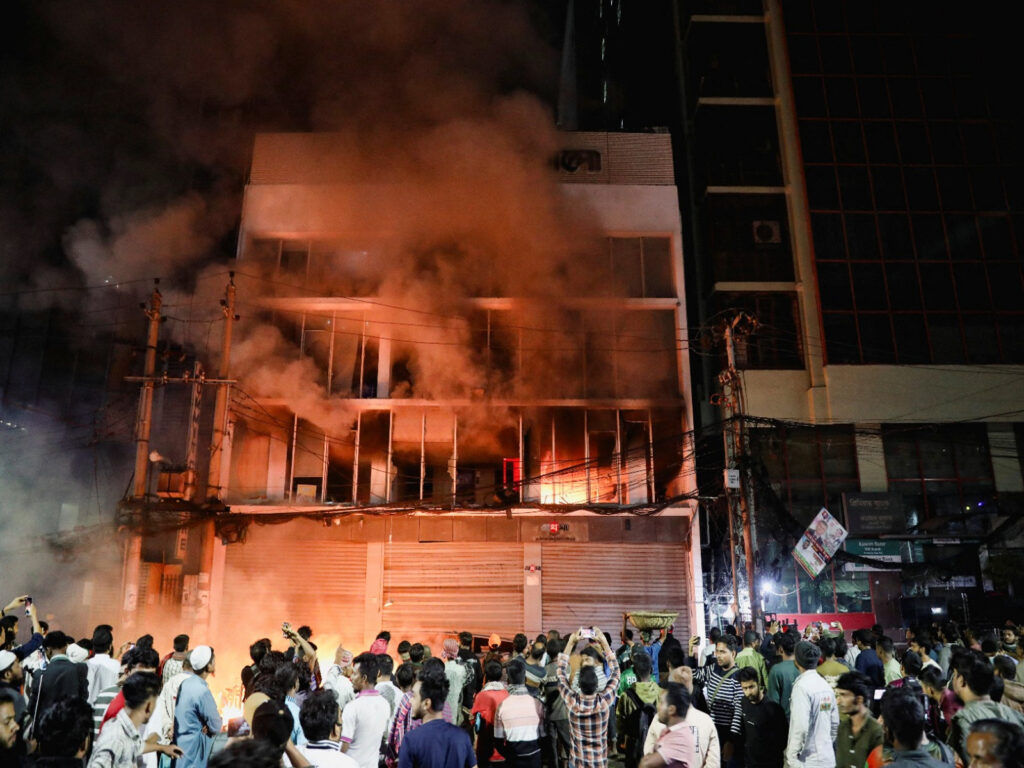
Bangladesh has slipped into fresh turmoil after the death of youth leader Sharif Osman Hadi. Violence spread across several cities within hours. Protesters torched media offices. Streets turned tense. The unrest comes at a sensitive time, just months before the February 2026 national elections.
Hadi died late Thursday after battling critical injuries for days. Masked attackers shot him in Dhaka last week. He collapsed during an election outreach event. Supporters rushed him to a local hospital. Doctors later airlifted him to Singapore. He remained on life support for six days. He died without regaining consciousness.
Hadi played a key role in Bangladesh’s July 2024 uprising. That movement forced then prime minister Sheikh Hasina out of power. Hasina later fled to India. Hadi emerged as a prominent face of the post-uprising political space. He served as spokesperson of Inquilab Mancha, a socio-cultural platform born from the protests. He also announced plans to contest the general election as an independent candidate from Dhaka-8.
Soon after news of his death broke, anger spilled onto the streets. Protesters raised slogans in Hadi’s name. They demanded swift justice. They vowed to continue his movement. Police rushed reinforcements into sensitive areas. Paramilitary forces joined them. Despite this, violence escalated.
In Dhaka, mobs attacked media institutions. Protesters set fire to the offices of Prothom Alo and The Daily Star while staff remained inside. Firefighters struggled to reach the buildings. Crowds blocked access roads. Crews finally controlled the blaze at the Daily Star office after midnight. Authorities rescued journalists hours later.
Protesters accused the newspapers of siding with India. They linked the outlets to Sheikh Hasina, who remains in exile there. This anger reflected a wider wave of anti-India sentiment that has grown since her exit.
Meanwhile, vandals targeted cultural and political symbols. In Dhaka, attackers ransacked and burned parts of Chhayanaut, a leading Bengali cultural institution. In Rajshahi, protesters used a bulldozer to demolish an Awami League office. Elsewhere, demonstrators blocked highways and clashed with police.
The violence also reached key cities. In Chittagong, protesters attacked the Indian Assistant High Commission. They threw stones and tried to breach security. They also set fire to a house owned by a former Awami League education minister. Police intervened and pushed the crowd back.
Reports also confirmed fresh damage to the home of Sheikh Mujibur Rahman, Bangladesh’s founding president and Hasina’s father. Mobs vandalised and torched the house again. Earlier attacks had already scarred the site last year. The repeated targeting underlined the depth of public rage.
Against this backdrop, the interim administration moved to signal control. It declared Saturday a day of state mourning. Authorities ordered flags to fly at half-mast. Religious institutions planned special prayers nationwide.
Chief adviser Muhammad Yunus addressed the nation late Thursday night. He confirmed Hadi’s death. He praised him as a frontline figure of the July uprising. Yunus promised swift action. He vowed to hunt down the killers. He warned that the state would show no leniency.
At the same time, Yunus appealed for calm. He urged citizens to show restraint. He asked people to give investigators space to work. He stressed the government’s commitment to the rule of law.
Still, tension continues to grip Bangladesh. Political fault lines have sharpened. Anti-India protests have returned to the streets. With elections approaching, the fallout from Hadi’s killing now threatens to reshape the country’s fragile transition.