Delhi Air Quality | SC seeks answers from CAQM on faulty monitoring stations
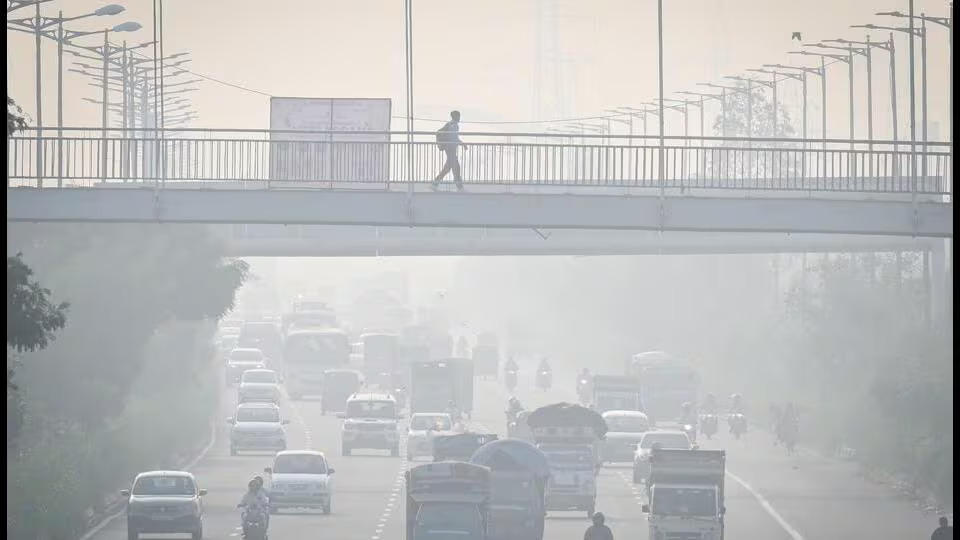
New Delhi — The Supreme Court today directed the Commission for Air Quality Management (CAQM) to submit an affidavit detailing steps taken to stop Delhi-NCR’s air pollution from worsening. The directive came as reports surfaced that several air monitoring stations across the capital are not working.
A bench of Chief Justice BR Gavai and Justice K Vinod Chandran heard the matter during ongoing proceedings in the MC Mehta environmental case. Senior Advocate Aparajita Singh, appearing as amicus curiae, urged the court to seek immediate action from the CAQM. She reminded the bench that earlier orders had called for pre-emptive steps, not reactive measures. “You will not wait for the pollution to turn severe,” she said, emphasizing the urgency.
The bench agreed and instructed the CAQM to file an affidavit listing the preventive measures. The CAQM’s counsel informed the court that the body had already filed a report but the bench could not review it earlier.
Singh, however, raised serious concerns about media reports showing many air quality monitors in Delhi were non-functional. She said that without data from these stations, authorities cannot decide when to implement the Graded Response Action Plan (GRAP). “Out of 37 stations, only nine worked continuously on Diwali,” she told the court.
The CAQM’s counsel responded that the Central Pollution Control Board (CPCB) handles air quality data and should file the report. The amicus questioned this stand, accusing the CAQM of avoiding responsibility. Additional Solicitor General Aishwarya Bhatti, appearing for state agencies, assured the court that all required reports would be filed soon.
Meanwhile, the bench recalled its October 14 order that temporarily allowed the sale and use of green firecrackers in the NCR during Diwali. The relaxation came with strict monitoring and control measures. The court directed the CPCB and state pollution boards to track air quality between October 14 and 25 and submit daily reports.
The order also set specific conditions for green firecracker sales — only licensed traders could sell them at designated locations identified by district collectors. Patrolling teams were told to monitor sites, verify QR codes on green crackers, and seize banned ones. The court warned that anyone selling non-approved or series-linked firecrackers would face penalties, including license cancellation.
The bench further directed authorities to restrict cracker use between 6–7 a.m. and 8–10 p.m. on Diwali and the day before. It also barred imports of firecrackers into the NCR and banned online sales through e-commerce platforms.
Today’s hearing showed the court’s growing concern about the worsening smog and the system’s weak enforcement. By seeking a fresh CAQM affidavit, the bench aims to ensure early intervention before Delhi’s air turns “severe” again.
With rising pollution levels and malfunctioning monitors, the court stressed that authorities must act fast, share data, and enforce existing laws — not wait for another health emergency to hit the capital.