US pulls Board of Peace invite as Trump–Canada tensions escalate
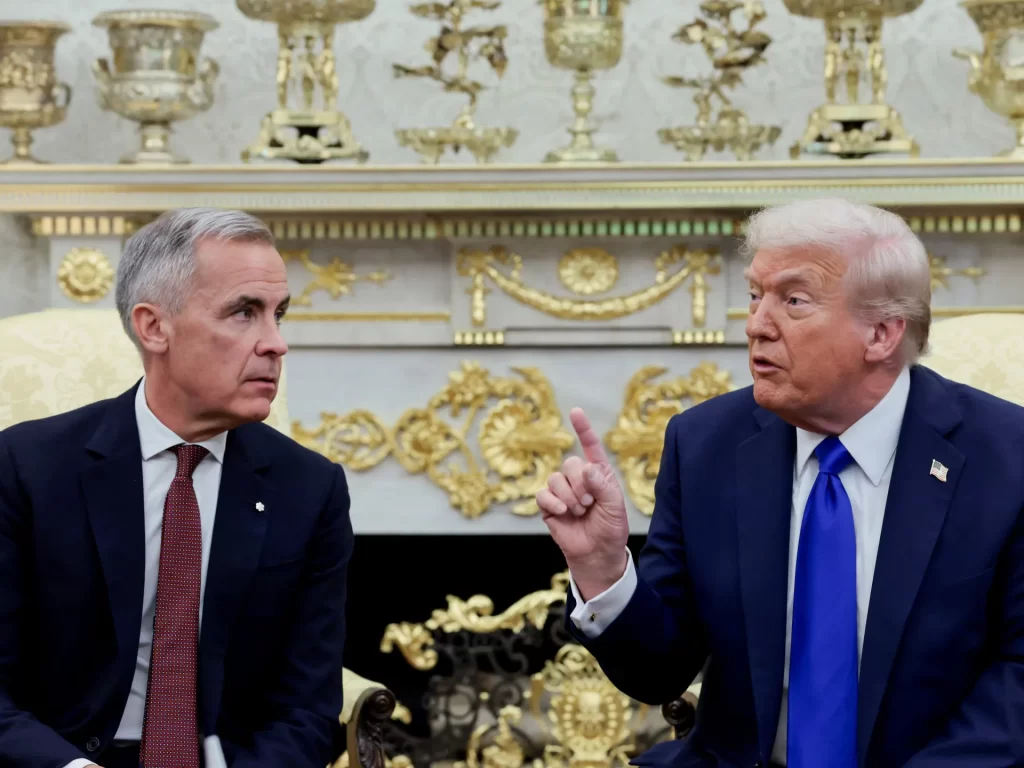
Tensions between the United States and Canada sharpened this week. The rift widened after President Donald Trump withdrew Canada’s invitation to join his proposed “Board of Peace.” The move followed a public exchange with Canadian Prime Minister Mark Carney that exposed growing strain between two long-time allies.
First, the clash began at the World Economic Forum. Trump claimed that “Canada lives because of the United States” during remarks at Davos. The statement drew swift pushback. Soon after, Carney responded in a national address from Quebec City. He rejected Trump’s claim outright. He said Canada thrives because of its own strength and institutions. At the same time, he acknowledged the deep partnership between the two countries.
Next, Trump responded through social media. He posted on Truth Social and announced that the Board of Peace would withdraw its invitation to Canada. He addressed the message directly to Carney. Trump said the letter formally ended Canada’s chance to join the body. He framed the decision as final and public.
Meanwhile, Canadian officials signaled restraint. A government source said Canada would not pay to sit on the board. Carney had earlier said he would consider joining if invited. However, Ottawa showed little appetite to escalate the dispute further.
The exchange highlighted a broader shift. Carney had already warned global leaders about cracks in the US-led order. Earlier in the week, he spoke at Davos to political and financial elites. He described a “rupture” in the rules-based global system. He avoided naming Trump. Still, many observers linked the remarks to Washington’s recent actions. The speech earned Carney a standing ovation and global attention.
Trump took offense the next day. During his own Davos appearance, he mocked Carney’s tone. He said the Canadian leader showed little gratitude. Trump repeated his claim that Canada depends on the United States. The remarks added fuel to an already tense moment.
Then, Carney turned to a domestic audience. In his Quebec City speech, he urged Canadians to see their country as a democratic model. He said Canada could not fix every global problem. However, he argued that Canada could prove another path exists. He warned against a world sliding toward authoritarianism and exclusion.
At the same time, economic realities loomed large. Canada relies heavily on trade with the United States. More than three-quarters of Canadian exports head south. Key sectors feel the pressure. Auto, aluminum, and steel industries face US tariffs. Still, a North American free trade pact has softened the blow so far.
Looking ahead, more friction seems likely. Negotiations to revise the trade agreement begin early this year. Trump has insisted the United States does not need Canadian products. Such a stance could reshape the Canadian economy. It could also strain supply chains across the continent.
Security issues also entered the debate. Trump has repeatedly joked about annexing Canada. This week, he shared a map online that showed Canada under a US flag. The image sparked concern and criticism in Ottawa.
Finally, Carney addressed the stakes. He said Canada holds no illusions about global instability. He warned that alliances now face redefinition or collapse. He pointed to plans for higher defense spending. He stressed the need to defend sovereignty and secure borders. In closing, he said Canada aims to serve as a beacon in a divided world.
Together, these events mark a clear turning point. The rhetoric grew sharper. The symbolism grew louder. And the relationship now faces a test unlike any in recent decades.