Under fire at home, Yunus targets India and China in defiant farewell speech
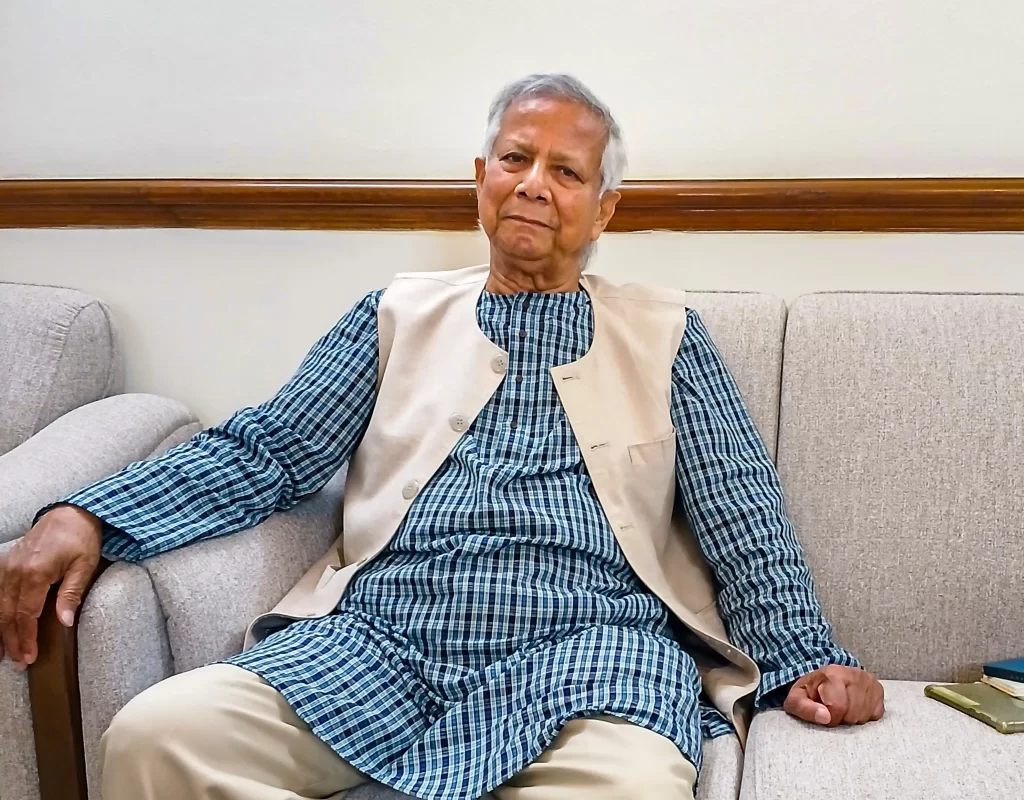
As criticism mounted at home, Bangladesh’s outgoing Chief Adviser Muhammad Yunus used his farewell address to strike a defiant tone. First, he defended his record. Then, he shifted focus abroad. Finally, he framed his exit as a statement of sovereignty and strength.
Yunus led the interim government during a turbulent period. He took charge after years of political centralisation, weakened institutions, and public anger. The July 2024 uprising reshaped the country’s political landscape. It also raised expectations of reform, stability, and inclusion. However, many citizens argue that his administration failed to meet those goals.
From the start of his speech, Yunus leaned on nationalist language. He repeatedly said Bangladesh had restored its “dignity and independence.” He stressed that the country no longer followed “external directives.” While he did not name any country, observers saw a clear message for India.
Next, he outlined a regional economic vision. He spoke about Nepal, Bhutan, and India’s northeastern states, often called the “Seven Sisters.” He described them as part of a shared economic space linked to Bangladesh’s ports and seas. He presented Dhaka as a regional gateway for trade and manufacturing.
Then, he went further. By grouping Indian states with sovereign countries, he blurred political boundaries. As a result, many analysts viewed the remarks as provocative. They also saw them as an attempt to reshape regional influence in Bangladesh’s favour.
For years, India has invested in roads, railways, and waterways through Bangladesh to connect its northeast. Yunus tried to reverse that narrative. He suggested that access and opportunity would depend more on Dhaka’s choices than on New Delhi’s plans. Consequently, his comments raised concerns in Indian policy circles.
After that, Yunus turned to global partnerships. He spoke about “strategic balance.” He highlighted ties with China, Japan, the United States, and Europe. He also praised progress on China-backed projects, including work on the Teesta River and a major hospital in Nilphamari.
These references carried weight. The Teesta region lies close to sensitive Indian territory. Therefore, India has long watched Chinese involvement there with caution. Instead of offering reassurance, Yunus signalled independence from Indian security concerns.
He then addressed defence policy. He said Bangladesh had begun modernising its armed forces. He added that the country must prepare to “counter any aggression.” Though vague, the phrase sounded firm. Placed beside his sovereignty rhetoric, it suggested a tougher posture.
However, what Yunus did not say drew equal attention. He offered no detailed review of domestic failures. He did not address communal violence. He did not acknowledge fears among minority groups. He did not accept responsibility for security lapses.
During his tenure, attacks on Hindu communities increased in several districts. Reports described vandalised temples, targeted assaults, and intimidation. Rights groups accused the government of slow action and selective enforcement. They also warned about the rise of extremist groups after the uprising. Yet, the farewell speech remained silent on these issues.
Instead, Yunus portrayed his 18 months in office as a period of reform and recovery. He emphasised foreign policy achievements. He highlighted confidence and balance. He avoided painful questions about governance.
Meanwhile, critics argue that the interim administration missed its main mission. They say it failed to rebuild democratic trust. They say it failed to guarantee safety for all citizens. They say it failed to calm social divisions.
As Yunus leaves office, his final address reflects pressure more than reconciliation. It sounds defensive rather than reflective. It looks outward rather than inward. By stressing geopolitics over accountability, he leaves behind unresolved doubts about democracy, minority protection, and national unity.
In the end, his farewell reads less like closure and more like a warning sign. Bangladesh now faces the task of restoring confidence at home while managing sensitive ties abroad—without the shield of defiant rhetoric.