Trump’s Most Favoured Nation Policy Could Reshape India-US Drug Trade
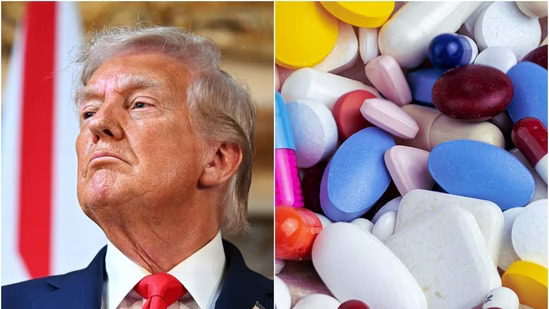
Washington – US President Donald Trump announced major prescription drug price cuts under a “Most Favoured Nation” (MFN) policy, drawing global attention, especially from India’s pharmaceutical industry. The policy links US drug prices to prices paid in other countries, using trade tools to enforce changes.
In a national address on Wednesday, Trump said his administration directly negotiated with pharmaceutical companies and foreign governments to slash prices. “I negotiated directly with the drug companies and foreign nations, which were taking advantage of our country for many decades to slash prices by 400, 500, even 600 per cent,” he said.
Trump emphasized that MFN would reverse decades of rising drug costs in the US. “There has never been anything like this in the history of our country. Prices have only gone up, but now they’ll go down by numbers never conceived possible,” he said. He added that the first round of reductions would take effect in January through a government website, TrumpRx.gov.
Indian pharmaceutical companies play a key role in supplying affordable medicines to the US. They provide a large share of off-patent and generic drugs and remain integral to US healthcare supply chains. Trump highlighted the use of trade pressure, including “the threat of tariffs,” to force foreign countries to absorb part of the cost of lowering US drug prices.
“I used the threat of tariffs to get foreign countries, who would never have done it, to pay the cost of this giant dollar reduction,” he said. Experts note that linking trade tools with healthcare policy could reshape international drug price negotiations and impact exporters’ strategies.
Trump also criticized health insurance companies for profiting while drug costs burden American families. He argued that lower drug prices would significantly reduce overall healthcare costs. “These big price cuts will greatly reduce the cost of healthcare,” he said.
For Indian pharma, the MFN model raises strategic questions. Companies must assess whether pricing pressure will target branded drugs, generics, or both. Indian firms have invested heavily in US-compliant manufacturing facilities to maintain quality standards. MFN could challenge their pricing while testing their role in providing affordable medicines to American consumers.
Trump first raised this issue in his earlier term, claiming Americans subsidized lower drug prices abroad and demanding global price parity. The renewed push signals a continued focus on restructuring US healthcare pricing, with direct consequences for India-US trade.
As the MFN policy rolls out, Indian pharmaceutical companies face the dual challenge of complying with potential pricing cuts while retaining market share. Observers say the policy could redefine the economics of global drug trade and place India at the center of negotiations impacting millions of US patients relying on affordable generics.
In short, Trump’s MFN policy combines trade, diplomacy, and healthcare reform. It pressures foreign suppliers, including Indian pharma, to adjust pricing structures, potentially reshaping one of the world’s largest pharmaceutical markets. India must navigate these changes carefully to protect both its export interests and its position as a global supplier of cost-effective medicine.