Trump orders first U.S. nuclear tests in 33 years amid rising Russia-China threat
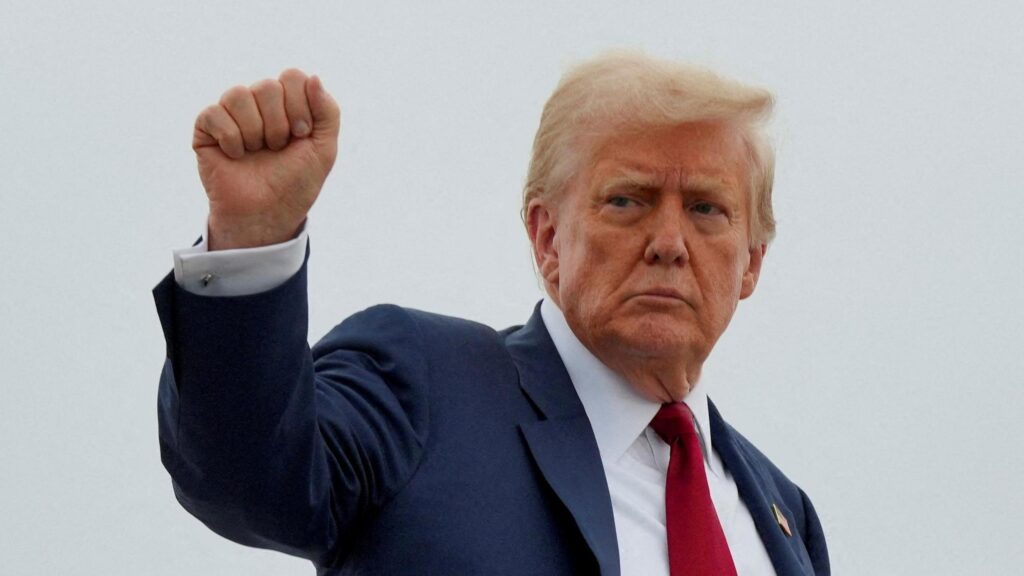
Busan, South Korea – In a dramatic policy shift, US President Donald Trump on Thursday announced that America will restart nuclear weapons testing immediately. The move ends a 33-year moratorium that began in 1992. Trump made the announcement moments before meeting Chinese President Xi Jinping in Busan, giving the decision both strategic and symbolic weight.
Trump said he ordered the tests to match Russia and China’s nuclear advances. He accused both nations of expanding their atomic programs while the US “stood still.” “The United States has more nuclear weapons than any other country. Russia is second, and China a distant third—but they’ll catch up within five years,” Trump wrote on Truth Social. “Because of their testing, I’ve directed the Department of War to begin testing ours immediately.”
Trump said he had already modernized the US nuclear arsenal in his first term. “I hated to do it, but I had no choice,” he added, citing “tremendous destructive power.”
A Historic Break
The announcement marks America’s first live nuclear test plan in over three decades. The US last conducted a full-scale nuclear test in September 1992 at Nevada’s desert range. Since then, it has depended on computer simulations and subcritical testing to maintain its stockpile.
If carried out, Trump’s directive could unravel decades of nuclear restraint. Experts warn it may fuel a new arms race and weaken global non-proliferation norms under the Comprehensive Nuclear-Test-Ban Treaty (CTBT). Though Washington signed the CTBT, it never ratified it.
Analysts say the timing is critical. The world’s nuclear balance is shifting, and Trump’s order could reshape global deterrence strategies.
Rising Nuclear Tensions
Russia recently announced new nuclear weapons tests, including the Burevestnik missile and Poseidon nuclear torpedo—systems designed to evade US defences. Putin has openly emphasized Russia’s nuclear readiness, personally overseeing launch drills in October.
China, too, has doubled its arsenal within five years—from 300 warheads in 2020 to about 600 today. The Center for Strategic and International Studies (CSIS) predicts China could exceed 1,000 by 2030. Beijing’s September military parade displayed five new delivery systems capable of hitting the US mainland, signaling a major leap in capability.
Trump’s decision, therefore, sends a direct message to both Moscow and Beijing. He called Russia’s missile activity “provocative” and urged Putin to “focus on ending the war in Ukraine instead of testing weapons.”
Strategic Repercussions
Trump’s announcement follows his earlier call for a trilateral arms deal involving the US, Russia, and China. In February, he proposed talks to cap nuclear growth among the three powers. Beijing rejected the idea as “unrealistic,” while Moscow called for “equal footing” negotiations.
The decision to resume tests could heighten tensions but also reassert Washington’s dominance in nuclear deterrence. For now, the world watches closely as the US prepares to reignite its nuclear era after 33 years of restraint.