Tripura student death triggers racism debate, police reject racial angle
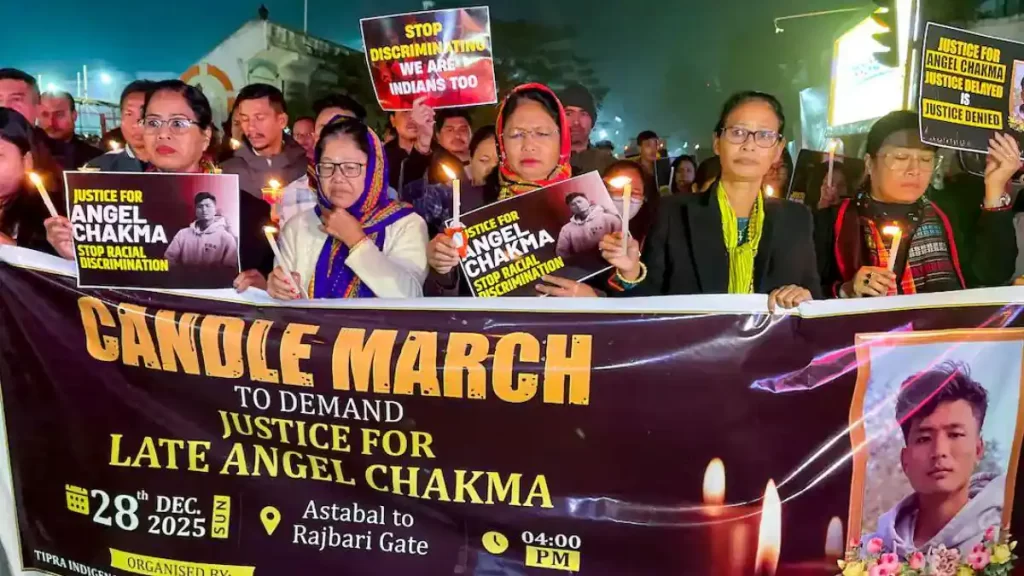
Authorities and family members now stand on sharply different sides in the death of Anjel Chakma. He came from Tripura’s Unakoti and studied MBA in Dehradun. He died after a violent clash in early December. His family claims racism fueled the attack. However, Dehradun Police say they find no racial motive so far. The gap between these versions drives anger, doubt, and grief.
First, look at the timeline. Anjel suffered serious injuries on December 9. Doctors treated him for 17 days. He died on December 26. His father serves in the BSF in Manipur. He rushed home and demanded answers. He says attackers taunted his sons with the label “Chinese” and mocked their looks. He says Anjel stepped in to defend his brother. According to the family, the fight escalated and knives came out. They believe racism triggered the violence and deepened the assault. Relatives repeat the charge. They say the slurs cut first. The blows followed.
Now shift to the police version. Officers say tempers rose near a liquor shop. A group gathered after a birthday celebration. Words flew. Then a scuffle broke out. Investigators claim they see no proof of racial abuse. They cite statements, CCTV footage, and digital records. They note that no one filed a formal complaint about racism between December 9 and December 26. They also say the FIR contains no mention of a racial motive. According to the police, the fight began after offensive banter, not targeted hate.
Meanwhile, officers continue the hunt for evidence. They recorded witness statements. They tracked phones and cameras. They arrested five suspects. Courts sent three to judicial custody. Juvenile authorities took two minors into care. One accused still evades arrest. Police announced a reward and issued legal notices. Teams search for him across multiple locations. Officials promise a fair inquiry. They also promise strict legal action after the probe.
Families from Tripura now follow every update. Students in Dehradun also seek clarity. They worry about safety. They worry about prejudice. Civil society groups ask tougher questions. Did the remarks carry racial intent? Did fear silence witnesses? Did anger blur truth? These questions still hang over the case.
Context matters here. Communities from the Northeast often report discrimination in mainland cities. Many recount slurs. Many describe suspicion and stereotyping. Governments repeatedly launch awareness drives. Yet distrust often lingers. This case touches that larger anxiety. Therefore emotions run high.
At the same time, investigators warn against rushed conclusions. They argue for evidence. They say speculation can inflame tensions. They ask for patience. They insist on facts, not rumor.
So the debate continues. The family seeks acknowledgement of racial abuse. The police stress the absence of proof. Courts now hold the next steps. Justice demands clarity. Justice also demands speed.
For now, one truth remains firm. A young student lost his life. A family grieves. A city confronts uncomfortable questions. And a country looks for answers that balance empathy, law, and trust.