Trade talks loom as Delhi sidesteps Trump’s tariff jibe
India has chosen not to respond to former U.S. President Donald Trump’s claim that it agreed to lower tariffs. Officials in Delhi see his remark as a negotiation tactic rather than a policy shift. Instead of engaging publicly, India remains focused on advancing trade discussions with the U.S.
Trump’s Statement and India’s Reaction
On Friday, Trump accused India of imposing massive tariffs that restricted U.S. exports. He claimed India had now agreed to reduce them after facing pressure. However, Indian officials refrained from reacting, emphasizing ongoing bilateral trade negotiations.
Foreign Ministry spokesperson Randhir Jaiswal pointed to recent meetings between Commerce Minister Piyush Goyal and U.S. counterparts. He stressed that both governments were actively working on a multi-sector trade deal rather than responding to political rhetoric.
Key Developments in Trade Talks
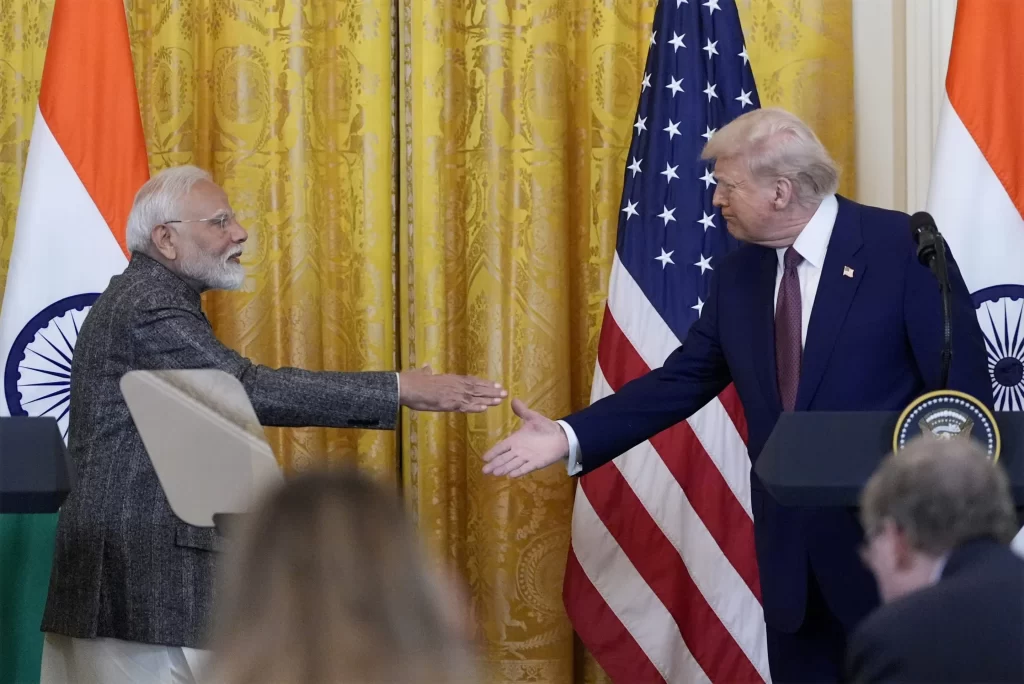
Negotiations gained momentum after Prime Minister Narendra Modi met Trump at the White House on February 13. Both leaders agreed to finalize the first phase of a Bilateral Trade Agreement (BTA) by fall 2025. The agreement aims to boost market access, reduce trade barriers, and integrate supply chains.
India took a strategic approach, delaying detailed discussions until the U.S. appointed its Trade Representative. After the Senate confirmed Jamieson Greer on February 26, Goyal led an Indian delegation to Washington from March 3 to 6. Talks with Greer and U.S. Commerce Secretary Howard Lutnick set the stage for further negotiations.
Lutnick, speaking at the India Today Conclave, expressed optimism, saying, “It’s time for a grand, all-encompassing trade agreement, not just sectoral fixes.” This aligns with India’s goal of strengthening bilateral trade across multiple industries.
Challenges and Strategic Approach
Despite progress, negotiations will take time. India and the U.S. have different priorities, and multiple rounds of talks will be necessary to address concerns on tariffs, regulations, and trade balances.
India remains cautious, avoiding premature commitments on tariff reductions. Officials acknowledge that every sector must be evaluated before making concessions. They insist on a balanced deal that benefits both nations without compromising domestic industries.
India’s Broader Trade Strategy
India has already lowered tariffs for key partners, including Australia, UAE, Switzerland, and Norway, under recent trade agreements. Ongoing negotiations with the European Union and the UK follow a similar path. Talks with the U.S. are part of this larger strategy, ensuring India secures favorable terms in global trade.
No Shortcuts in Negotiations
Officials dismissed Trump’s remarks as a pressure tactic. They emphasized that trade deals are not made through public statements but through careful negotiations behind closed doors. India intends to maintain this disciplined approach and avoid being drawn into political maneuvering.
For now, India will continue discussions with U.S. negotiators, seeking to prevent new reciprocal tariffs while finalizing the broader agreement. The deadline for the first phase remains set for fall 2025. As one senior official said, “The negotiations have just begun. Watch this space.”