Thailand–Cambodia conflict intensifies as diplomacy stalls
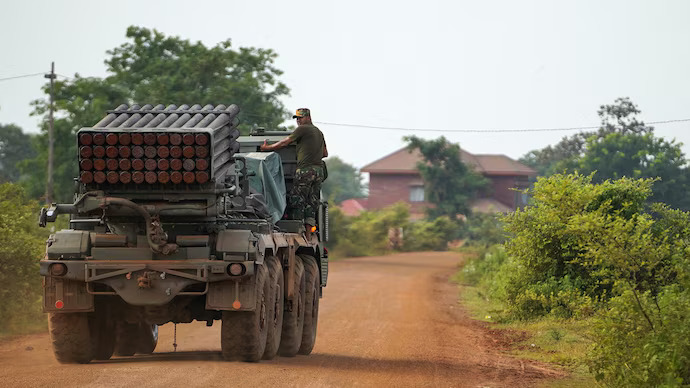
Thailand and Cambodia continue to trade fire along their tense border, and the violence now claims more civilian and military lives. The conflict escalates each day, and both governments harden their stance. As the clashes grow deadlier, Thailand rejects the possibility of diplomacy, and Cambodia shows no sign of stepping back.
Thai Foreign Minister Sihasak Phuangketkeow set the tone on Wednesday. He said Thailand wants peace talks, but he sees no real intent from Cambodia. He stressed that diplomacy needs space, and the current situation offers none. He also said Cambodia sends mixed signals. Cambodian leaders speak of readiness for talks, yet their actions on the battlefield contradict those words. He argued that Thailand wants clarity and commitment before it reopens the door to negotiations.
Sihasak explained that the fighting hurts both armies and nearby border villages. Yet he said Thailand still expects Cambodia to halt its offensives first. If Cambodia shows restraint, Thailand will review the possibility of talks. For now, both sides continue to push troops, artillery, and armored vehicles into forward positions, and both face mounting casualties.
The conflict unfolds against the backdrop of a sharp military imbalance. Thailand commands one of Southeast Asia’s largest forces, with a defence budget of $5.73bn in 2024. Its armed forces include more than 360,000 active personnel. The army alone fields 245,000 troops, with 115,000 conscripts and a heavy inventory of around 400 battle tanks, 1,200 armored carriers, and 2,600 artillery systems.
Thailand also controls a powerful air force. It deploys 46,000 personnel and more than 100 combat-ready aircraft, including 28 F-16s and 11 advanced Swedish Gripen fighter jets. The service also flies dozens of helicopters and an expanding fleet of drones. On the maritime side, the Thai navy commands nearly 70,000 personnel. It operates one aircraft carrier, seven frigates, and more than 60 patrol vessels. It also maintains marine units, coastal defense teams, and landing craft capable of carrying hundreds of troops.
Cambodia, though smaller, mobilizes substantial strength. It operates with a defence budget of $1.3bn in 2024 and fields 124,300 active personnel. Its army controls more than 200 tanks and about 480 artillery pieces. However, Cambodia lacks air superiority. Its air force has only 1,500 personnel and a modest fleet of transport aircraft and helicopters. It does not own fighter jets, relying instead on 16 multi-role helicopters, including Soviet Mi-17s and Chinese Z-9s.
Cambodia’s navy is also limited. It has around 2,800 personnel and a small fleet of 13 patrol boats and one landing craft. Yet Cambodia continues to commit troops along the border and intensifies operations where terrain favors infantry and artillery fire.
As the conflict deepens, both sides face rising pressure to de-escalate. However, neither government signals a strategic shift. Thailand demands a halt to Cambodian operations, and Cambodia refuses to pull back. With diplomacy frozen and violence rising, the region braces for more clashes and higher human costs in the days ahead.