Supreme Court rejects Justice Yashwant Varma’s challenge over parliamentary panel
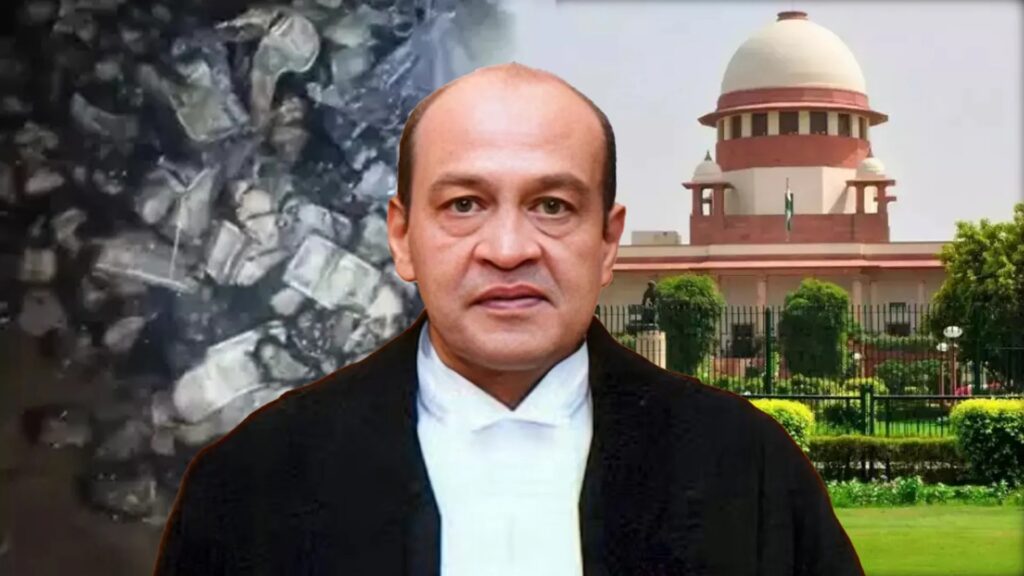
New Delhi – The Supreme Court delivered a major blow to Allahabad High Court judge Yashwant Varma on Friday. The top court dismissed his petition challenging the Lok Sabha Speaker’s decision to admit a motion seeking his removal. It also rejected his challenge to the legality of the parliamentary panel probing corruption charges against him.
A bench of Justices Dipankar Datta and SC Sharma, which reserved its judgment on January 8, pronounced the verdict. The court refused to entertain Varma’s arguments, noting that his conduct failed to inspire confidence.
Justice Varma had approached the Supreme Court after the Lok Sabha Speaker “unilaterally” constituted a committee under the Judges (Inquiry) Act, 1968. He claimed that this violated his right to equality before the law. Represented by senior advocate Mukul Rohatgi, Varma argued that notices for his removal had been filed in both Houses of Parliament on the same day. Yet, the Speaker proceeded alone, raising questions over procedural fairness.
The controversy surrounding Justice Varma first erupted on March 15 last year. Firefighters responding to a blaze at his Delhi bungalow found piles of money that had been burnt in the fire. The discovery sparked nationwide outrage and raised serious questions about corruption within the judiciary.
Justice Varma denied any connection to the cash and described the allegations as “preposterous.” Despite this, the Supreme Court set up an in-house panel to examine the matter. The panel recommended Varma’s impeachment. The report went to President Droupadi Murmu and Prime Minister Narendra Modi, via then Chief Justice of India Sanjiv Khanna, urging his removal.
Following the recommendation, Justice Varma filed a petition to challenge the in-house panel’s findings. In the petition, he had concealed his identity, and court documents referred to him as ‘XXX’.
Varma presented five reasons to the two-judge bench, questioning the jurisdiction and authority of the committee investigating a sitting judge. He also challenged the procedural fairness and legality of the Speaker’s unilateral action.
However, the Supreme Court rejected all these claims. It ruled that the petition had no merit and labeled it “not worth entertaining.” The court criticized Varma for what it described as “not confidence-inspiring conduct,” signaling its disapproval of his handling of the controversy.
The verdict ends a key chapter in the legal battle surrounding Justice Varma. It reinforces Parliament’s authority to set up investigative committees under the Judges (Inquiry) Act. Legal observers note that this decision may also set a precedent for future cases involving judicial accountability and parliamentary oversight.
With the Supreme Court ruling, the parliamentary panel can now continue its probe without further legal hindrance. The focus now shifts to the committee’s findings and the next steps in Parliament regarding Varma’s removal.
Justice Varma’s challenge, which sought to stall the process, has failed. The Supreme Court has made it clear that the in-house panel’s recommendations and Parliament’s actions stand firm. As the investigation progresses, the judiciary and legislature remain under intense public scrutiny.