Sonia Gandhi questions Centre’s silence on Khamenei killing, reminds Govt of Iran’s support on Kashmir
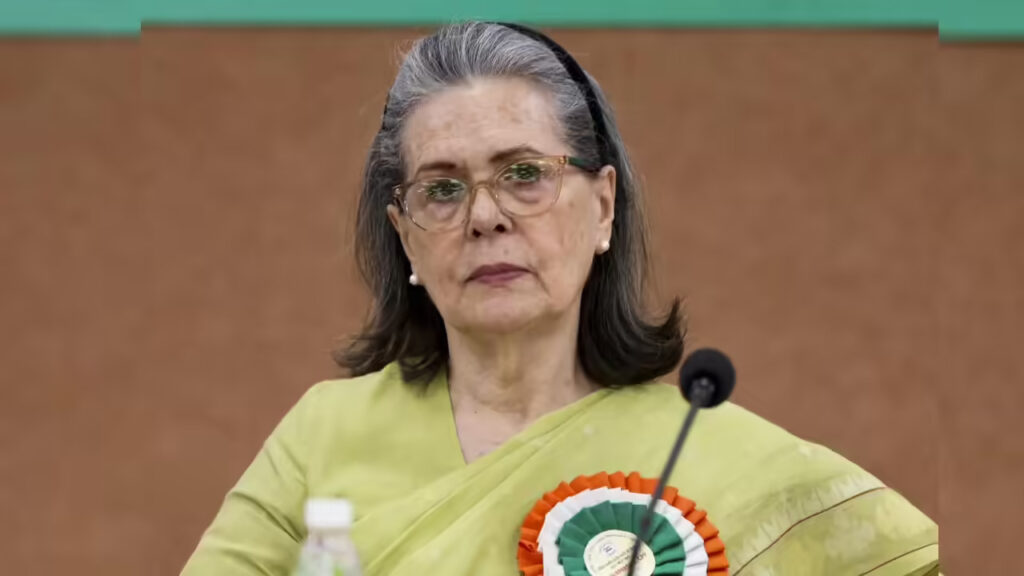
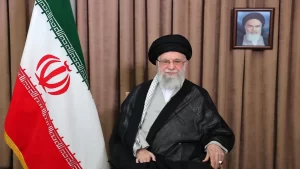
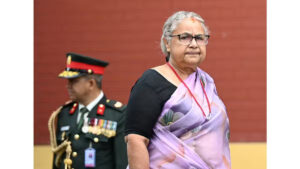
Senior Congress leader Sonia Gandhi has sharply criticised the Centre over its response to the killing of Iran’s Supreme Leader Ayatollah Ali Khamenei. She said the government’s silence does not reflect neutrality. Instead, she called it an abdication of responsibility.
In an opinion piece, she argued that India shares civilisational and strategic ties with Iran. Therefore, she said, New Delhi cannot ignore such a major development. She pointed out that Iran confirmed Khamenei’s assassination after targeted strikes by the United States and Israel. She described the killing of a sitting head of state during negotiations as a serious break from established global norms.
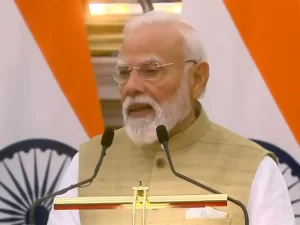
Meanwhile, the Narendra Modi government has not issued a direct statement on Khamenei’s death. However, it has called for restraint and de-escalation in West Asia. Government sources said India’s measured approach aligns with the response of major global powers. They added that New Delhi frames its diplomatic steps around national interest.
However, Gandhi questioned this approach. She said Prime Minister Narendra Modi first condemned Iran’s retaliatory strike on the UAE but did not address the earlier US-Israeli action. Later, she noted, he spoke about dialogue and diplomacy. She argued that negotiations had already been underway before the strikes occurred.
Furthermore, she warned that India risks weakening its foreign policy credibility. If India does not defend sovereignty and international law in such cases, she said, doubts will grow about its diplomatic direction. She stressed that the assassination occurred without a formal declaration of war and during an active diplomatic process. According to her, if the world’s largest democracy does not object on principle, global norms may erode further.
She also flagged the timing. Just 48 hours before the assassination, Prime Minister Modi returned from Israel. During that visit, he reiterated support for the government of Benjamin Netanyahu. Gandhi said the Gaza conflict continues to trigger global concern over civilian casualties. Against that backdrop, she argued, India’s silence appears more striking.
In addition, Gandhi reminded the government of Iran’s past support on Kashmir. She recalled that in 1994, sections within the Organisation of Islamic Cooperation sought to move a resolution against India at the UN Commission on Human Rights over Kashmir. She said Tehran played a key role in blocking that effort. That move, she argued, prevented the internationalisation of the Kashmir issue at a sensitive time for India’s economy.
She also highlighted Iran’s role in facilitating India’s diplomatic presence in Zahedan near the Pakistan border. She said that presence provides a strategic counterbalance to Gwadar port and the China-Pakistan Economic Corridor.
Moreover, she recalled that former Prime Minister Atal Bihari Vajpayee reaffirmed India’s deep ties with Iran during a 2001 visit to Tehran. She suggested that the current government seems to overlook that legacy.
At the same time, Gandhi acknowledged that India has expanded ties with Israel in defence, agriculture, and technology. Precisely because India maintains relations with both Tehran and Tel Aviv, she argued, it holds diplomatic space to urge restraint. However, she stressed that credibility sustains that space. Credibility, she added, depends on principled positions rather than convenience.
Finally, she underlined the strategic stakes. Nearly 10 million Indians live and work across the Gulf. In past crises, India protected its citizens by acting as an independent player. If India appears hesitant now, she warned, countries in the Global South may question its commitment to territorial integrity and international law.
Gandhi concluded that India often invokes “vasudhaiva kutumbakam” in diplomacy. That ideal, she said, demands justice, restraint and dialogue. At moments of global strain, she asserted, silence sends the wrong signal.