SC demands response from Centre, Ladakh on petition questioning Sonam Wangchuk’s detention
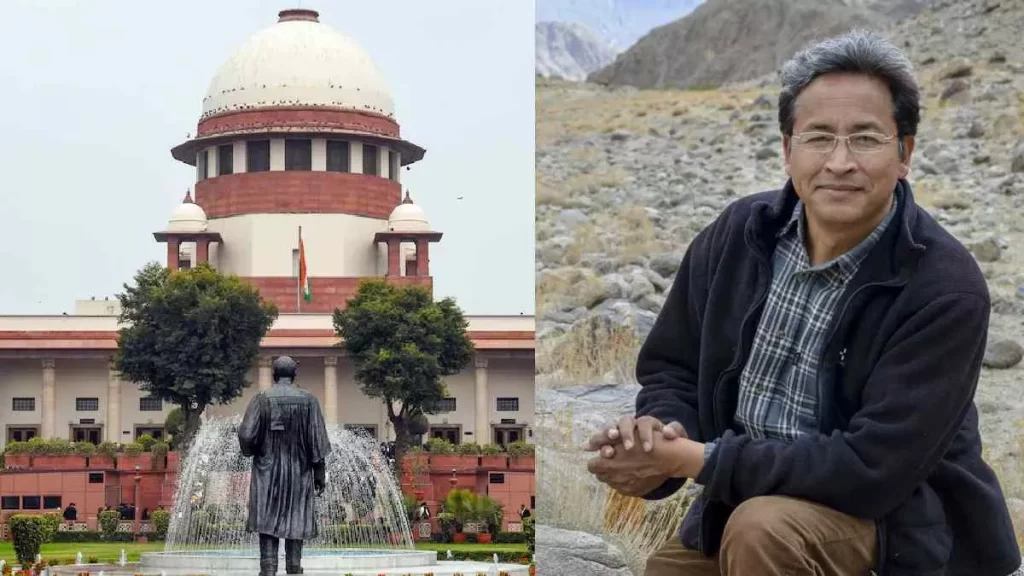
New Delhi – The Supreme Court on Wednesday directed the Centre and Ladakh administration to respond to Gitanjali Angmo’s amended plea challenging the detention of her husband and climate activist Sonam Wangchuk. A bench of Justices Aravind Kumar and N.V. Anjaria scheduled the next hearing for November 24.
Angmo filed a habeas corpus petition seeking Wangchuk’s release. She argued that his arrest under the National Security Act (NSA) was an attempt to silence a respected reformer who raised his voice for Ladakh’s democratic and ecological causes.
Earlier, on October 16, the top court had allowed Angmo to amend her petition after she sought to question the grounds cited by the Ladakh administration to justify Wangchuk’s detention. She called the move “illegal and politically motivated.”
The controversy began after protests erupted across Ladakh in late September. Demonstrators demanded full statehood for the Union Territory and inclusion under the Sixth Schedule of the Constitution. The protests, initially peaceful, turned violent on September 24, leaving four civilians dead and several others injured.
Two days later, on September 26, authorities arrested Wangchuk in Leh. They later transferred him to Jodhpur Central Jail, where he remains lodged.
The Ladakh administration defended the arrest. In its affidavit submitted before the Supreme Court, it claimed that the detention followed due process. Officials said the Leh district magistrate issued the order only after confirming Wangchuk’s involvement in activities “prejudicial to public order and state security.”
The affidavit dismissed allegations of mistreatment or procedural lapses. It said Wangchuk was informed of the reasons for his detention and his right to appeal against it. The administration maintained that the decision was lawful and necessary to restore calm in the region.
Meanwhile, a three-member advisory board, set up by the Leh administration, visited Jodhpur Central Jail last week. The panel reviewed the case and heard both sides. During the three-hour hearing, Angmo personally presented her case before the board’s chairman and members, reiterating that her husband’s detention violated fundamental rights.
The hearing comes amid growing concerns over Ladakh’s political climate. Since its separation from Jammu and Kashmir in 2019, the region has seen periodic protests demanding constitutional safeguards and greater autonomy.
Activist Sonam Wangchuk, known for his environmental innovations and advocacy for sustainable Himalayan development, had become a key voice in that movement. His arrest sparked widespread criticism from civil society and environmental groups across India.
As the Supreme Court prepares for the next hearing in November, the case continues to draw national attention. Legal experts say the outcome could have wider implications for the use of preventive detention laws in politically sensitive regions like Ladakh.
For now, Wangchuk remains behind bars in Jodhpur, while his wife leads the legal fight for his release—one that has become symbolic of Ladakh’s larger struggle for representation and rights.