Ratle hydel project hiring row deepens as police flag workers with terror, criminal links
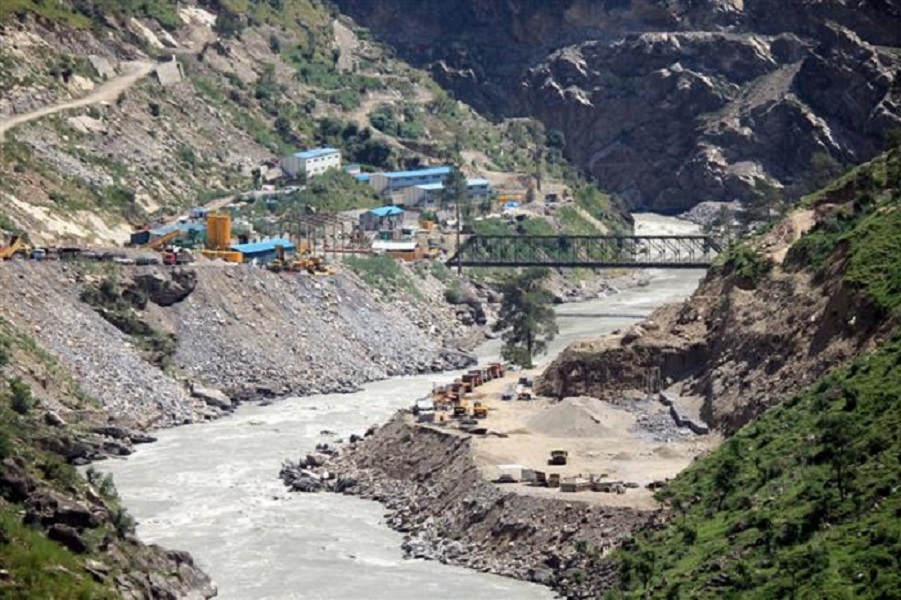
A fresh police letter has added a new turn to the controversy surrounding the under-construction Ratle Hydel Power Project in Jammu and Kashmir’s Kishtwar district. Last month, the Jammu and Kashmir Police formally warned the project contractor about security risks linked to the engagement of 29 workers with alleged militant or criminal backgrounds.
On November 1, the Kishtwar Senior Superintendent of Police (SSP) wrote to Megha Engineering and Infrastructure Limited (MEIL), which is executing the 850 MW Ratle project in the Drabshalla area. The letter followed routine police verification of local residents employed at the site. According to the SSP, station house officers submitted reports that flagged 29 individuals for alleged involvement in subversive, anti-national activities or criminal cases.
In the letter addressed to MEIL’s general manager, SSP Naresh Singh underlined the strategic importance of hydroelectric projects. He described such installations as high-risk targets and warned that engaging these individuals could compromise the project’s security. He urged the company to reconsider their engagement, maintain close surveillance, and alert the police immediately if any suspicious activity surfaced.
Meanwhile, BJP Kishtwar MLA Shagun Parihar said the police communication validated concerns she had raised earlier. The issue gained public attention after MEIL Chief Operating Officer Harpal Singh accused Parihar of disrupting work at the project site. The emergence of the police letter has now intensified the political and administrative standoff.
According to police records cited in the letter, five of the 29 workers allegedly have militancy links. This group includes relatives of a long-time militant, the son of a suspected overground worker, and the son of a surrendered militant. In addition, police accused one worker of contaminating water sources and forging documents. The remaining 23 face criminal cases involving charges such as trespass and mischief intended to cause damage or loss.
SSP Singh remained unavailable for comment.
In response, MEIL COO Harpal Singh confirmed receipt of the police advisory. He said the company replied last week and assured the police that it would monitor the workers and report any suspicious conduct. However, Singh questioned the legal basis for terminating their services. He argued that family links to militancy do not constitute an offence and that courts have not established guilt in pending criminal cases. He also warned that retrenchment could trigger litigation and further delay the project.
Earlier, Singh had publicly stated that the Ratle project, estimated at ₹3,700 crore and scheduled for completion by September 2026, already faces a two-year delay. He blamed repeated disruptions and political pressure, particularly from Parihar. Singh alleged that local leaders pushed the company to hire preferred candidates and that the retrenchment of nearly 200 workers in September escalated tensions.
He also claimed that although MEIL recruited 1,434 local workers, nearly half lacked the required skills or willingness to work. Singh added that the 29 flagged workers joined the project before he assumed charge in July 2024 and had served for several years. He further alleged that local BJP leaders influenced most recruitments.
Parihar rejected these claims. She said she consistently raised security concerns and questioned why MEIL retained the 29 workers while removing nearly 200 others. She termed Singh’s allegations irresponsible and accused him of deflecting attention from the company’s failures. She also alleged biased hiring practices and warned of attempts to inflame communal tensions.
The Ratle project itself carries a troubled history. Work began in 2008 under the Jammu and Kashmir Power Development Corporation. After unrest forced contractors to abandon the site in 2014, the project later shifted into a joint venture with the Government of India. Now, amid security warnings and political sparring, the project once again stands at the centre of controversy.