Penguin clarifies rights over Naravane’s memoir as political row deepens
A fresh controversy has erupted in New Delhi over the unpublished memoir of former Army chief General MM Naravane. The dispute centres on the book titled Four Stars of Destiny. Reports of leaked copies have triggered legal action and political confrontation.
First, Penguin Random House India stepped in to clarify its position. On Monday, the publisher said it holds exclusive rights to the memoir. It stressed that the book has not entered the market in any form. It added that it has not released any print or digital copies.
Meanwhile, social media and political circles circulated claims about the book’s availability. Some reports suggested that parts of the manuscript had reached the public. As a result, concerns over copyright violations grew. The issue soon moved beyond publishing and entered Parliament.
Therefore, Penguin issued a detailed statement. The company said it has not printed, sold, or shared the book. It warned that any circulating version violates copyright law. It also announced plans to pursue legal remedies against those involved in unauthorised distribution.
At the same time, Delhi Police began an investigation. Officials registered an FIR and handed the case to the Special Cell. They started examining how any draft or extract entered public circulation. They are now tracing digital and physical sources linked to the suspected leak.
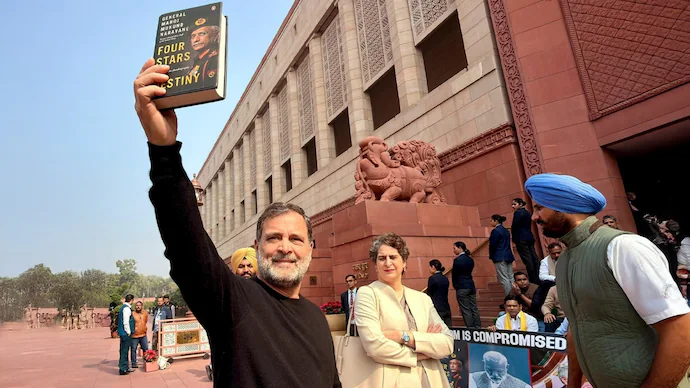
Meanwhile, the controversy turned into a political flashpoint. Congress leader Rahul Gandhi referred to the unpublished memoir inside the Parliament complex. He claimed he possessed a copy of the book. He tried to cite passages during Lok Sabha proceedings.
However, the House did not allow him to quote from the memoir. The Speaker cited the book’s unpublished status. The government also maintained that no official version exists. As a result, tensions rose between the opposition and the ruling side.
Later, Gandhi repeated his claims before reporters. He said the book “exists” despite official denials. He argued that young Indians should know about its contents. He linked the memoir to the 2020 India-China standoff in Ladakh. He said the former Army chief had recorded key events in detail.
Subsequently, protests broke out in the Lok Sabha. Opposition MPs objected to restrictions on Gandhi’s speech. The House witnessed repeated disruptions. On Tuesday, authorities suspended eight MPs for unruly conduct. Seven belonged to the Congress. One represented the CPI(M).
Furthermore, Gandhi wrote to Lok Sabha Speaker Om Birla. He protested against the restrictions. He called the episode a setback for parliamentary democracy. He said the House had never earlier stopped a Leader of the Opposition from speaking on national security.
In response, the government defended its position. Leaders argued that members cannot cite unpublished or unauthorised material. They said such references could mislead the House and the public. They also pointed to legal risks linked to copyright violations.
Meanwhile, Penguin maintained a firm stand. The publisher repeated that it controls all rights. It said no authorised edition exists. It urged platforms and individuals to stop sharing any versions immediately. It stressed that it will act against further violations.
As the investigation continues, police are questioning potential sources. They are checking digital trails and document transfers. They are also reviewing whether insiders or external actors leaked the manuscript.
In conclusion, the Naravane memoir row now stands at the crossroads of law, politics, and national security debate. The publisher insists the book remains unpublished. The police are probing alleged leaks. The opposition continues to raise questions. Together, these developments have turned a private manuscript into a major public controversy.