Pakistan announces open war on Afghanistan after escalating cross-border strikes
None
Tensions between Pakistan and Afghanistan have sharply escalated. Leaders on both sides now trade direct threats. Pakistan’s defence minister has declared “open war” after days of airstrikes and cross-border attacks along the disputed frontier.
Explosions Rock Kabul as Conflict Intensifies
Early Friday, residents in Kabul reported loud explosions. They also heard aircraft flying overhead. The blasts came hours after Afghan officials said their forces struck Pakistani border posts.
Soon after, Pakistan’s Defence Minister Khawaja Asif posted a strong message on X. He said Pakistan’s patience had ended. He declared that open war had begun.
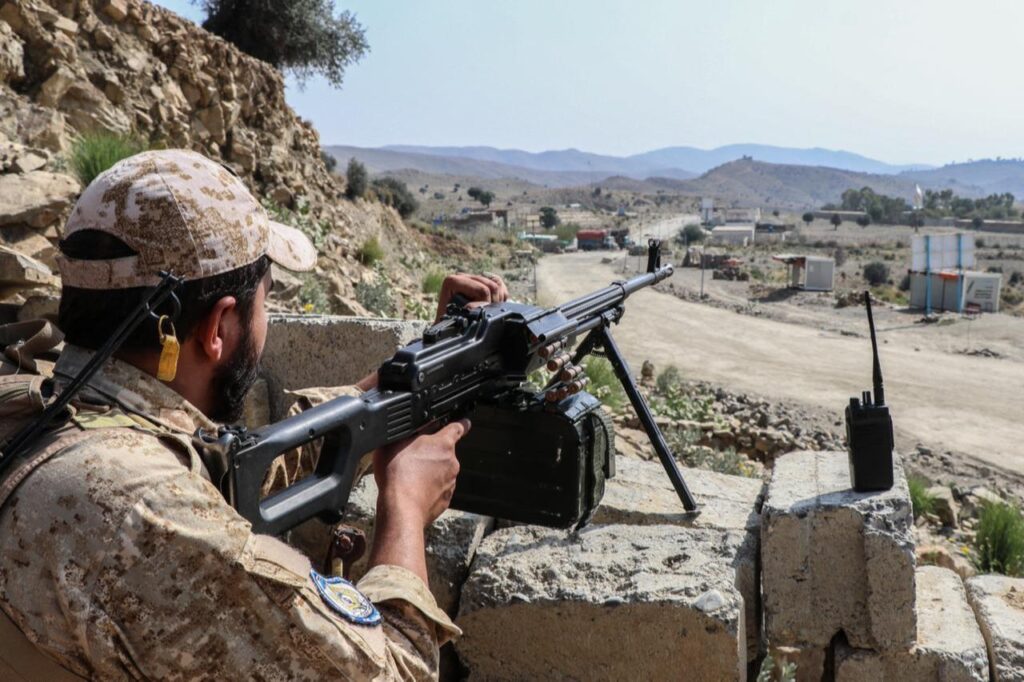
In response, Pakistan’s military launched an operation it named “Ghazab Lil Haq.” Military officials said they acted after what they described as unprovoked firing from across the border. Meanwhile, Afghan authorities said their troops carried out large-scale offensive operations against Pakistani positions along the disputed Durand Line.
Both Sides Claim Heavy Damage
As fighting spread, both governments released competing claims.
Afghanistan’s Defence Ministry said its forces captured more than a dozen Pakistani posts. Officials also said they destroyed 19 check posts and two military bases. Afghan leaders stated that fighting stopped at midnight after intense exchanges.
However, Pakistan rejected those claims. Information Minister Attaullah Tarar said two Pakistani soldiers died and three others suffered injuries. He added that Pakistani forces killed 36 Afghan fighters during the clashes.
On the other side, Afghan officials claimed that 55 Pakistani soldiers died. They also said Afghan troops captured several Pakistani personnel. Afghan authorities reported eight of their own soldiers died and 11 suffered injuries.
Independent sources have not verified casualty figures from either side. As a result, the true scale of losses remains unclear.
How the Latest Crisis Began
The current escalation began last Sunday. At that time, Pakistan launched airstrikes along the Afghan border. Islamabad said it targeted camps belonging to the Tehrik-i-Taliban Pakistan, also known as Tehrik-i-Taliban Pakistan. Pakistani officials have long accused the group of carrying out attacks inside Pakistan from Afghan territory.
However, Afghan leaders strongly rejected Pakistan’s claims. They said the strikes hit civilian areas. They also accused Pakistan of violating Afghan sovereignty.
Afghan spokesperson Zabihullah Mujahid said Afghan forces responded to repeated Pakistani actions. He framed the cross-border assault as a defensive move rather than an act of aggression.
Airstrikes Expand to Major Cities
As tensions rose, Pakistan said it carried out additional strikes targeting Afghan military facilities in Kabul, Kandahar and Paktia. Afghan officials reported civilian injuries near the Torkham border crossing after shelling hit a camp housing returnees.
Meanwhile, authorities on both sides moved residents away from frontline areas. Security forces increased patrols near key crossings. Border trade slowed sharply as transport routes closed.
Situation Remains Volatile
At present, both governments accuse each other of starting the violence. Each side claims military success. However, neither side shows signs of backing down.
The disputed Durand Line has long fueled tensions between the two neighbors. Now, direct airstrikes and ground assaults have pushed relations to a dangerous point.
For now, the region remains on edge. Residents near the border brace for further clashes as leaders continue to exchange warnings and military pressure intensifies.