Operation Hawkeye Strike: Why the US hit 70 Islamic State targets in Syria
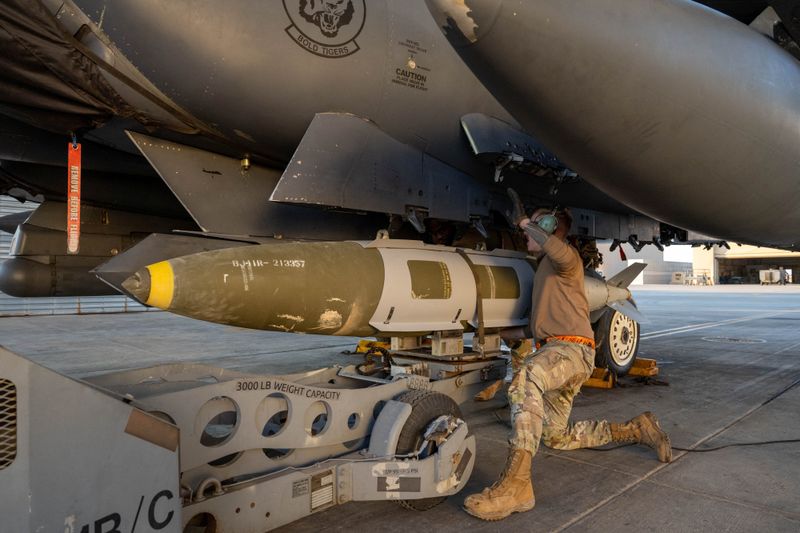
The United States launched a major military operation in Syria after a deadly ambush killed American personnel. On Friday, US forces carried out coordinated air and ground strikes against Islamic State positions across central Syria. The Pentagon named the mission Operation Hawkeye Strike and described it as a direct response to last week’s attack near Palmyra.
Earlier, an assailant targeted a convoy supporting US-led counterterrorism operations. The attack killed two US soldiers and a civilian interpreter. It also injured three other American troops. US forces later shot the attacker dead. In response, Washington decided to escalate pressure on Islamic State networks operating in the region.
Accordingly, the US military struck about 70 targets linked to Islamic State infrastructure. Officials said the strikes focused on weapons depots, command nodes, and logistics hubs. The targets spread across central Syria, an area where IS cells continue to operate despite territorial losses in recent years. US officials confirmed that the operation marked one of the largest recent strike packages against IS inside Syria.
Meanwhile, US Defense Secretary Pete Hegseth framed the operation as a decisive warning. He said the strikes aimed to punish those responsible and deter future attacks. He also stressed that the action did not signal a new war but showed Washington’s readiness to defend its personnel without hesitation.
At the same time, President Donald Trump echoed that message. He said the US acted after what he described as the brutal killing of American patriots. Trump added that US forces would hit IS strongholds hard and repeatedly. He argued that removing IS from Syria remains essential for long-term stability in the region.
To understand the background, US troops in Syria operate under Operation Inherent Resolve, the international campaign launched in 2014 to defeat Islamic State. That campaign helped roll back the group’s control over large parts of Syria and Iraq. However, IS shifted to insurgent tactics and continues to stage ambushes and bombings, especially in remote desert areas.
In parallel, Syria’s political landscape has changed sharply. Former rebel groups toppled President Bashar al-Assad last year after more than a decade of civil war. The current government includes factions that once fought under Islamist banners but later broke away and clashed with Islamic State. As a result, Damascus now positions itself as an opponent of IS.
Notably, Syria has increased coordination with the US-led coalition. Last month, President Ahmed al-Sharaa visited the White House, where both sides discussed counterterrorism cooperation. Syrian officials later reiterated their commitment to denying IS any safe haven on Syrian soil.
Nevertheless, Washington remains cautious. Trump has long questioned the value of a large US military presence in Syria. During his first term, he ordered troop withdrawals, although US forces ultimately stayed. More recently, the Pentagon announced plans to cut troop levels by about half. US officials also signaled that they intend to reduce American bases to a single site over time.
Currently, US troops operate mainly in northeast Syria and at the Al-Tanf base near the Jordanian border. Despite plans to scale down, Operation Hawkeye Strike shows that the US will still respond forcefully to direct threats. For now, Washington aims to weaken Islamic State networks while protecting its personnel during a gradual drawdown.