Mumbai gets its second global gateway as Modi inaugurates new airport
Social Observer 5 months ago
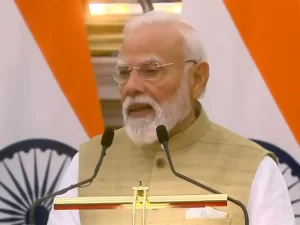
Prime Minister Narendra Modi inaugurated Navi Mumbai International Airport on Wednesday, giving India’s financial capital its second international gateway. The new airport marks a major milestone in India’s rapidly expanding aviation network.
Modi said the project reflects India’s vision of world-class infrastructure and stronger connectivity. The airport, built by the Adani Group for about $2.2 billion, showcases India’s growing ambition to modernize transport systems as air travel surges nationwide.
Navi Mumbai International Airport will start operations in December. Once functional, Mumbai will become India’s only metro city with two international airports. The new hub will handle passenger and cargo traffic, easing pressure on the overburdened Chhatrapati Shivaji Maharaj International Airport.
India’s aviation industry has grown sharply in the past decade. The government has built or upgraded dozens of airports to connect smaller cities and boost regional development. Official data show the number of airports has more than doubled—from 74 in 2014 to 160 today. This expansion supports faster cargo movement and increases business opportunities across the country.
India now ranks as the world’s third-largest aviation market after the United States and China. According to the International Air Transport Association, nearly 174 million passengers flew within and from India in 2024, representing about 4.2% of global air traffic.
The new Navi Mumbai facility will begin with one terminal but will eventually expand to four. It can initially serve 20 million passengers a year and scale up to 90 million in the coming years, the Adani Group said. The developers aim to make it a key aviation hub for Asia.
The project also highlights India’s effort to diversify transport options. For the first time, an Indian airport will connect with water taxis, in addition to high-speed rail, metro lines, and expressways. This multimodal integration will allow travelers to move easily between Mumbai, Navi Mumbai, and nearby regions.
Beyond convenience, the new airport aims to boost trade and tourism. With more international connections, India expects higher foreign investment and stronger economic growth. The airport’s design features modern terminals, sustainable infrastructure, and advanced cargo handling systems to meet global standards.
While journalists did not gain full access during the inauguration, officials said construction is nearing completion. Once opened, the airport will transform Mumbai’s airspace and support India’s broader vision of becoming a global logistics and aviation hub.
The new facility comes at a time when India’s middle class is flying more than ever before. Rising incomes, competitive ticket prices, and expanding routes have made air travel accessible to millions. Consequently, airports nationwide are witnessing record passenger volumes.
As Modi emphasized, the Navi Mumbai International Airport stands as a symbol of a confident and connected India. It signals progress, promotes growth, and prepares the country for a future where aviation drives both mobility and economic momentum. With this launch, India takes another decisive step toward building the infrastructure of a global power.