Mumbai bus tragedy sparks anger over crowded roads and hawker encroachment
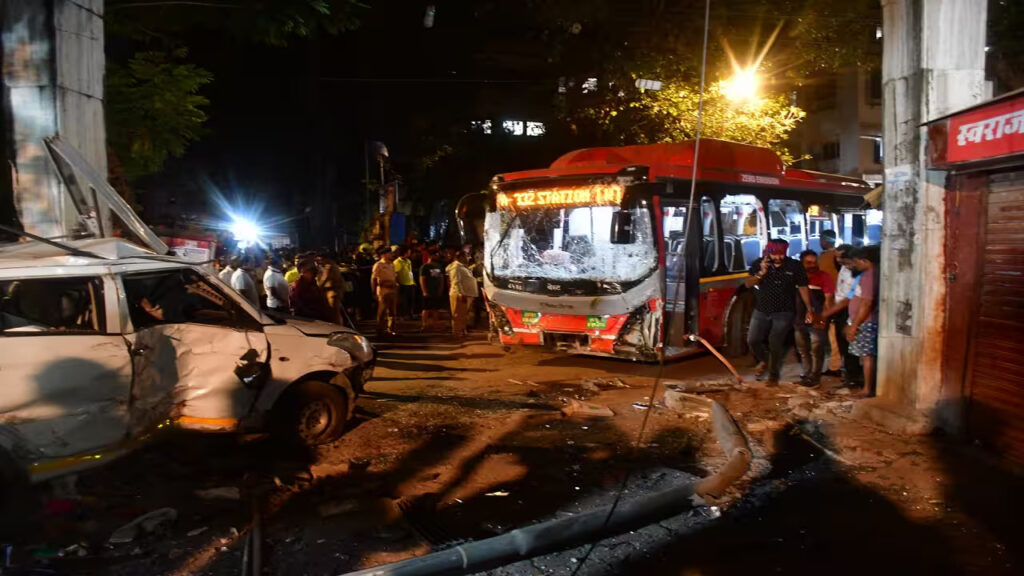
A late-night accident shook Bhandup on Monday. A BEST bus hit a line of waiting passengers outside the railway station. The impact turned the busy lane into a scene of chaos. Families rushed to the spot. Police sealed the area and began inquiries.
The accident killed four people. Three women lost their lives. One man also died. Meanwhile, doctors treated nine injured passengers at nearby hospitals. Some victims suffered head injuries. Others reported fractures and shock. Relatives gathered through the night and demanded answers.
Investigators moved fast. Police questioned the 52-year-old driver. Officers said he attempted a U-turn toward the depot. Then he pressed the accelerator instead of the brake. The bus surged forward. It plowed into the queue near the curb. Therefore, the situation escalated within seconds.
Officials confirmed key facts. The bus ran on route 606 between Nagardas Nagar and Bhandup station. A private operator supplied the vehicle under a wet lease. The model featured air-conditioning and a nine-metre frame. Mechanics later inspected the bus for mechanical faults. However, early findings pointed to driver error.
Witnesses shared dramatic accounts. Shopkeepers heard the thud and ran out. Several men lifted injured passengers and carried them inside nearby stores. One sweet-shop owner called ambulances and informed police. Volunteers passed water to the wounded and phoned family members. Their quick action created a lifeline before emergency crews arrived.
Residents then turned to the broader problem. They pointed at hawker encroachment. Footpaths disappeared under stalls and carts. Therefore, pedestrians walked on the road. Commuters described a daily squeeze near the station. Crowds swelled at night. Buses struggled to maneuver. Drivers edged around people, vendors, bikes, and pushcarts.
A pharmacist who uses the area every evening explained the pattern. Buses end trips at the station. Drivers attempt U-turns in cramped conditions. Meanwhile, hawkers block lanes. Cars pile up. Tempers rise. One mistake can trigger tragedy. Monday night proved that fear real.
Authorities acknowledged the concern. Senior officers visited the site. Civic workers assessed the narrow lane. Traffic police mapped trouble spots. Next, teams planned removal drives against illegal stalls. They also discussed stricter lane management and clearer pedestrian corridors. The goal: create room for buses and protect commuters.
Political leaders reacted quickly. The chief minister expressed grief. He announced ₹5 lakh ex-gratia aid for each bereaved family. He also promised strong action after the investigation. Families welcomed the support. Still, they asked for lasting reforms, not just compensation.
The tragedy revived memories of another disaster. In December last year, a BEST bus hit a crowd in Kurla. That accident killed nine people and injured dozens. Since then, officials promised safer roads and tighter oversight. Yet accidents continue. Therefore, pressure on transport agencies keeps rising.
Road safety advocates raised tough questions. They urged better driver training. They demanded regular health checks. They also sought technology like automatic braking and collision alerts. At the same time, they pressed municipal bodies to clear pavements and enforce rules.
The night closed with grief and frustration. Bhandup residents lit candles and prayed. Police continued statements and evidence collection. Meanwhile, commuters prepared for another morning at the same crowded junction. The lesson sounds urgent: cities must protect people first. Roads need order. Footpaths need space. And buses need safe room to turn — before another family suffers.