Khawaja Asif warns Pakistan prepared for ‘two-front war’ as tensions rise with Afghan Taliban, India
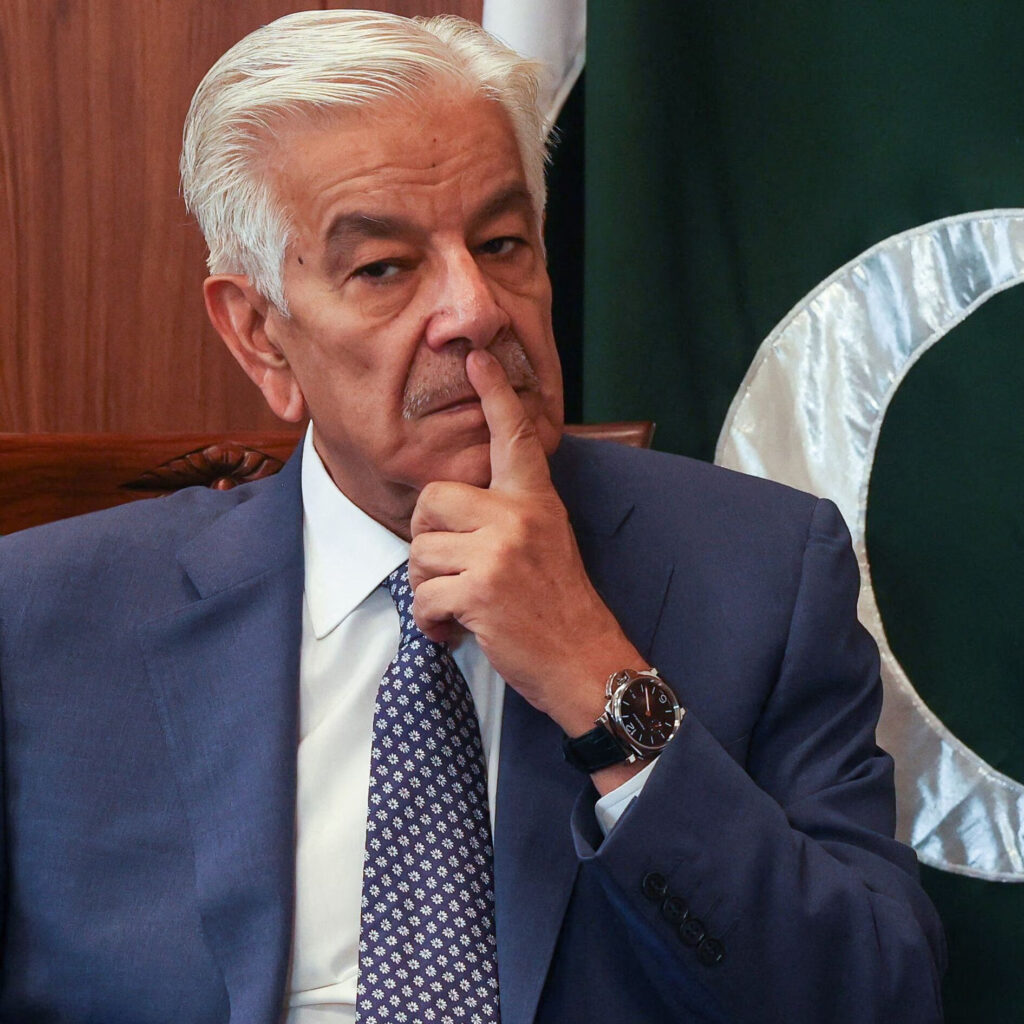
Pakistan’s Defence Minister Khawaja Muhammad Asif has issued a sharp warning amid mounting tensions with Afghanistan, saying the country is ready for a “two-front war.” He accused India of “playing dirty at the border” and suggested that New Delhi could exploit Pakistan’s current instability.
Speaking to Samaa TV, Asif said India might attempt a “vile act” along the border, claiming “absolutely, there is a possibility of this.” He offered no evidence to back the statement but insisted Pakistan’s forces are on alert. The comments came as border clashes between Pakistan and the Afghan Taliban intensified following Islamabad’s reported airstrikes in Kabul.
Asif recalled a previous confrontation with India months ago, likely referring to India’s Operation Sindoor against terror camps in Pakistan and Pakistan-occupied Kashmir. He said Pakistani troops remained positioned at the Afghan border during that period. “The situation is not very good,” he said, describing Pakistan’s security environment as tense and unstable.
When asked if the government had held strategy meetings on managing simultaneous conflicts with India and Afghanistan, Asif said both the civilian and military leadership were prepared. “There is a strategy for this,” he said. “We are not discussing it publicly, but we are ready for any eventuality.”
His remarks followed reports that Pakistan carried out airstrikes inside Afghanistan, allegedly targeting Tehreek-e-Taliban Pakistan (TTP) chief Noor Wali Mehsud. Kabul condemned the strikes as a violation of its sovereignty, escalating the diplomatic rift between the two neighbours.
Meanwhile, India responded strongly to the unfolding situation. On Thursday, New Delhi expressed open support for Afghanistan and criticised Pakistan for provoking the border crisis. External Affairs Ministry spokesperson Randhir Jaiswal said India was “closely monitoring” the situation and reaffirmed its support for Afghanistan’s sovereignty and territorial integrity.
Jaiswal accused Pakistan of “hosting terrorist organisations and sponsoring cross-border terrorism.” He added that Islamabad’s actions had caused the current conflict and that it was now trying to shift blame onto its neighbours. “It is an old practice of Pakistan to blame others for its own internal failures,” Jaiswal said. He further noted that Islamabad appeared unsettled by Kabul’s assertion of sovereignty over its territories.
Clashes along the Afghanistan-Pakistan border began last week during Taliban Foreign Minister Amir Khan Muttaqi’s visit to New Delhi. Muttaqi assured India that the Taliban would not allow Afghan soil to be used against any country, a statement viewed as a diplomatic signal to ease India’s concerns about regional terrorism.
Back in Islamabad, Prime Minister Shehbaz Sharif called for talks with Afghanistan to resolve the crisis. He said Pakistan agreed to a 48-hour ceasefire at Kabul’s request and expected the Taliban government to respond with “mutual respect and legitimacy.” “The ball is now in Kabul’s court,” Sharif said, urging dialogue over confrontation.
Asif’s remarks about a “two-front war” have drawn attention across the region. While the Defence Minister projected strength, his comments also reflect Pakistan’s growing anxiety over isolation and instability. With tensions rising on both eastern and western borders, Pakistan now faces a delicate balance between military posturing and diplomatic restraint.