Jaishankar warns that politics now drives global economics, points to rising risks
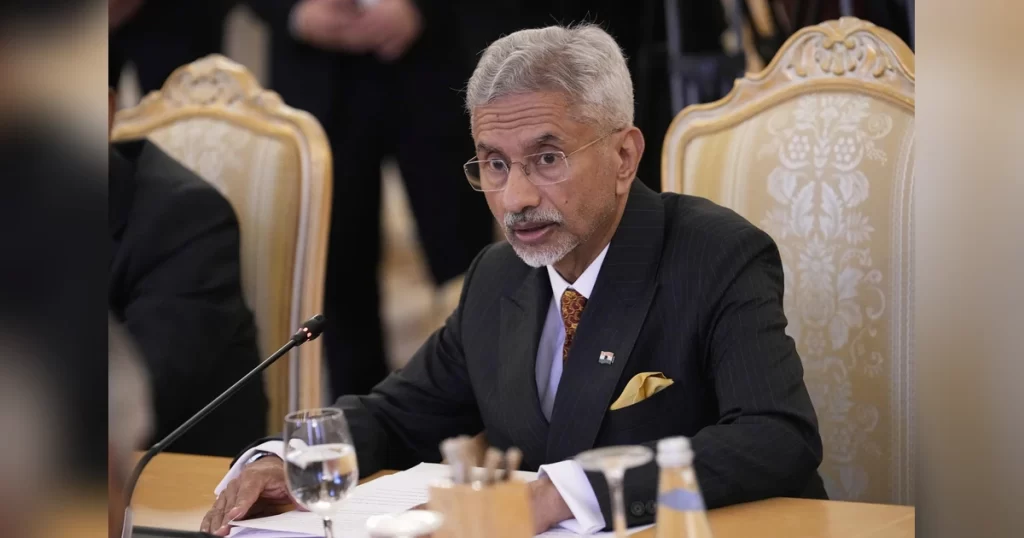
External Affairs Minister S. Jaishankar sharpened India’s concerns over global economic stability on Sunday. He spoke at IIM-Calcutta after receiving an Honorary Doctorate and linked rising geopolitical friction to economic uncertainty. He also delivered a thinly veiled message to the United States as trade tensions between New Delhi and Washington intensify.
To begin with, Jaishankar said the world has entered a phase where politics drives economics. He stressed that nations now prioritise strategic interests over traditional market logic. He argued that India must adjust to this reality. Therefore, he urged the country to diversify supply sources to strengthen national security and economic resilience.
He then turned to the United States. He said the US, once the principal architect of the global economic order, now operates with new and tougher terms of engagement. He noted that Washington increasingly deals with countries on a one-on-one basis rather than through multilateral frameworks. His remarks came as India faces fresh tariffs—50% on multiple Indian goods and an additional 25% linked to Russian oil purchases—imposed by President Donald Trump.
Next, Jaishankar pointed to China’s behaviour in global trade. He said China has always followed its own rules and continues to do so. He observed that China currently accounts for nearly one-third of global manufacturing, which raises major questions about supply chain reliability. He warned that conflicts and extreme climate events have already disrupted global flows and may worsen supply insecurity.
After that, he explained how other countries react. He said governments across the world now hedge against every possible contingency. They invest in alternative supply routes, diversify partnerships, and reduce over-dependence on any single market. He said this new defensive posture shapes the future of globalisation.
Jaishankar then shifted focus to India’s economic progress. He said India has narrowed its infrastructure gap with advanced Asian economies. He cited rapidly expanding highways, modernising rail networks, rising aviation capacity, upgraded ports, and stronger energy assets. He argued that India is now advancing at a pace that the world cannot ignore.
Furthermore, he said India is forging new trade arrangements to capture emerging opportunities. He said the government is investing in fresh connectivity initiatives that support secure and diversified supply chains. He called this approach essential to navigating global turbulence.
In conclusion, Jaishankar presented a world undergoing sharp shifts. He said politics drives financial decisions, major powers rewrite the rules, and supply chains face continuous threats. He argued that India must prepare by expanding partnerships, reducing vulnerabilities, and asserting its role in a changing global order.