Istanbul talks collapse as US Drone pact exposes Pakistan’s weak hand
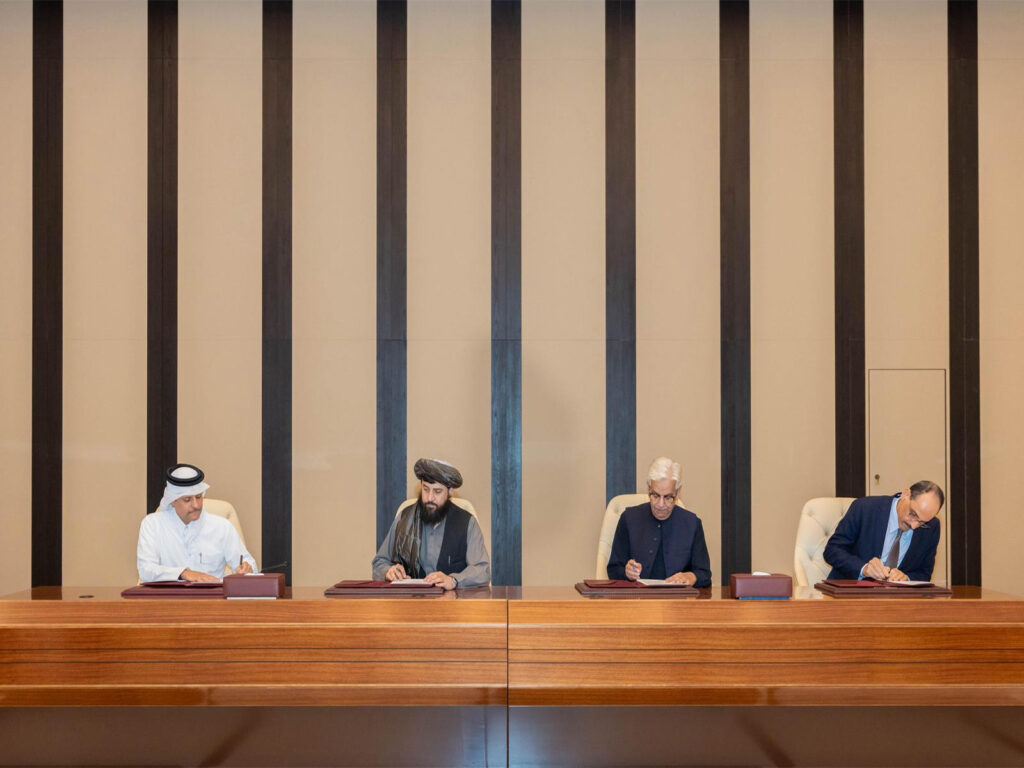
Istanbul – Talks between Afghanistan and Pakistan in Istanbul collapsed after four tense days, despite mediation by Qatar and Turkey. The discussions aimed to reinforce a shaky ceasefire along the border, where clashes in September and October killed hundreds.
Pakistan blamed the Taliban-led Afghan government, accusing it of taking cues from India. But Afghan negotiators said Islamabad’s own deal with the United States over drone operations caused the deadlock.
According to TOLO News, the Afghan side offered to stop cross-border attacks if Pakistan ended its airspace violations and blocked US drones from using its territory. Pakistan refused, admitting during talks that it had a binding agreement with Washington.
Kabul-based journalist Tameem Bahiss posted that Islamabad had allowed the US to operate surveillance and strike drones inside Afghan territory. TOLO News later confirmed this, quoting sources who said Pakistan’s delegation reversed its earlier stance after a call from senior officials in Rawalpindi.
Qatari and Turkish mediators were reportedly stunned by Pakistan’s sudden U-turn. The call, sources said, made it clear Pakistan could not defy its US pact.
After the talks broke down, Pakistani Defence Minister Khwaja Asif accused India of influencing the Taliban. “People in Kabul are being controlled by Delhi,” he told Geo News. Yet, he did not mention Pakistan’s shift in position after the phone call about the US drone deal.
Asif went further, threatening the Taliban with a repeat of the 2001 Tora Bora offensive. “Pakistan doesn’t need its full arsenal to crush the Taliban,” he warned, in comments reported by Dawn.
Under President Donald Trump, Islamabad has deepened military and strategic coordination with Washington. Prime Minister Shehbaz Sharif and Army Chief Asim Munir visited the Oval Office recently, reinforcing the US-Pakistan defence axis. Trump has demanded the return of Bagram airbase and praised Sharif for his “peace efforts,” even as tensions persist along the Durand Line.
The Afghan side refuses to recognise the colonial-era border, which divides Pashtun tribes between the two countries.
Violence reignited in early September when Pakistan launched airstrikes inside Afghanistan after Tehrik-i-Taliban Pakistan (TTP) attacks killed dozens of its soldiers. Those strikes, supported by drones and JF-17 jets, killed more than 200 people on both sides, including Afghan civilians.
The Taliban called the raids a violation of sovereignty. Afghan journalist Ali M. Latifi called Pakistan’s admission of facilitating US drone strikes “deeply ironic,” noting Pakistan’s own suffering under American drone wars during the Obama years.
Analysts say Pakistan’s fragile economy and heavy US dependence have left it cornered. “Islamabad is renting out its territory for drone launches,” one Afghan negotiator said. “That’s the real reason these talks failed.”
As of now, both sides remain locked in mistrust. The fragile ceasefire along the Durand Line hangs by a thread, with drones still circling Afghan skies.