ISRO launches Anvesha Spy Satellite, signals comeback for PSLV and rise of private space firms
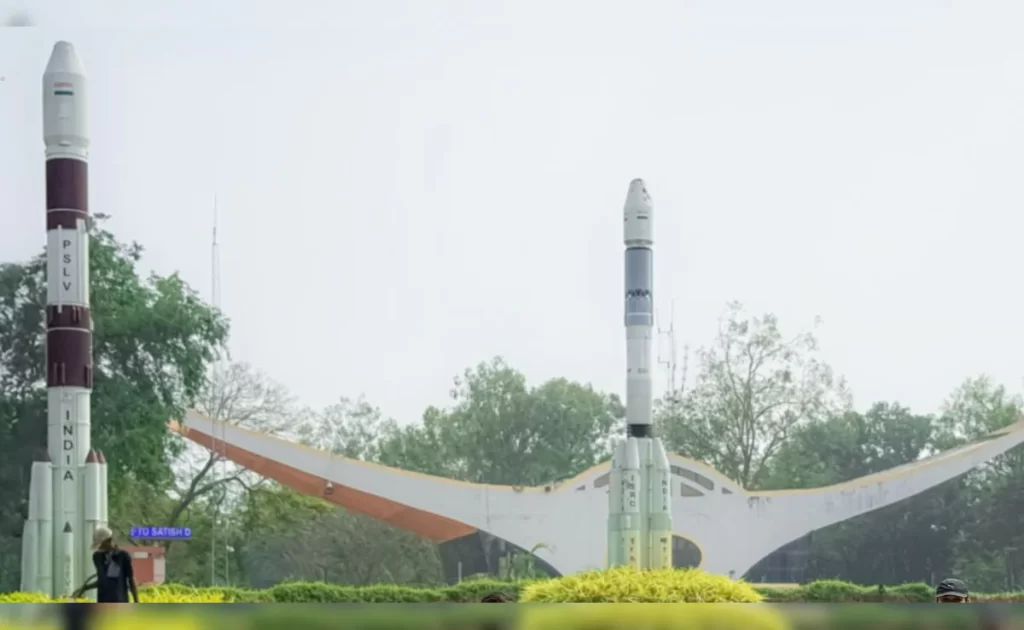
Sriharikota – ISRO on Tuesday launched its trusted workhorse rocket, the Polar Satellite Launch Vehicle, marking a strong return after last year’s setback. The mission boosted India’s surveillance capability and highlighted the growing role of private firms in the space sector.
First, PSLV-C62 lifted off from the Satish Dhawan Space Centre at 10:18 am. The mission marked the 64th flight of the PSLV rocket. ISRO named the mission PSLV-C62/EOS-N1. Scientists tracked a smooth ascent and stable flight.
Next, the rocket carried a total of 15 satellites into space. The payload included a highly classified surveillance satellite called Anvesha. The Defence Research and Development Organisation developed Anvesha for strategic use. Officials said the satellite will strengthen India’s intelligence and monitoring capabilities.
Importantly, Anvesha brings advanced imaging power. The satellite can capture high-resolution images. It can help India map hostile positions with precision. Defence planners view the system as a major boost to national security.
Meanwhile, the mission also deployed the Earth Observation Satellite EOS-N1. ISRO planned EOS-N1 and 14 co-passenger satellites for injection into a Sun Synchronous Orbit. The launch sequence followed a precise timeline. About 17 minutes after lift-off, the rocket released the satellites into their planned paths.
In addition, the mission carried international payloads. Satellites from Thailand and the United Kingdom flew onboard. This collaboration underlined ISRO’s global launch credentials and commercial appeal.
Then came another key milestone. The mission included the Kestrel Initial Demonstrator, or KID. A Spanish startup developed the 25-kg capsule. ISRO planned a controlled re-entry demonstration for the payload.
Later, scientists restarted the rocket’s fourth stage, PS4. They used the restart to de-boost the stage. This step placed the KID capsule on a re-entry trajectory. After separation, both the PS4 stage and the capsule re-entered Earth’s atmosphere. ISRO confirmed a planned splashdown in the South Pacific Ocean.
Beyond technology, the launch carried symbolic weight. The previous PSLV mission in May 2025 failed due to an anomaly in the third stage. That failure raised concerns over reliability. This successful mission helped restore confidence in India’s most dependable launch vehicle.
At the same time, the mission marked a turning point for India’s private space industry. For the first time, a single Indian private firm contributed seven satellites to one PSLV launch. Hyderabad-based Dhruva Space supplied these satellites.
As a result, private participation took centre stage. Dhruva Space showcased its growing capability in satellite design and integration. The company also offers launch support and ground station services. Industry observers called the development a sign of maturity in India’s commercial space ecosystem.
Moreover, ISRO officials stressed collaboration over competition. They said private players now complement the national programme. Together, they aim to scale launches and attract global clients.
Overall, the PSLV-C62 mission delivered on multiple fronts. It placed strategic and commercial payloads in orbit. It demonstrated recovery after failure. It also reinforced India’s position as a reliable launch partner.
In conclusion, the launch of Anvesha did more than boost surveillance. It marked a renewed phase for PSLV and a new chapter for private space firms. With confidence restored and partnerships expanding, India’s space ambitions now aim higher than ever.