Iran warns of “All-out war” after Trump says US Armada is heading to the Middle East
Tensions between the United States and Iran flared again on Friday. The brief calm of recent days faded fast. Strong warnings from both sides brought the standoff back into focus.
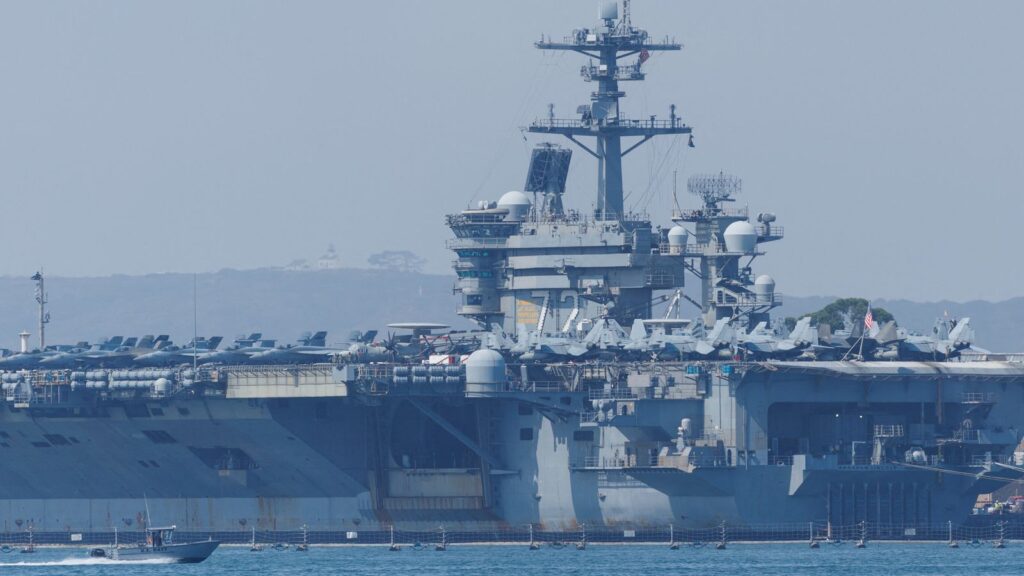
First, US President Donald Trump spoke aboard Air Force One on Thursday. He said the United States had moved an aircraft carrier strike group and other military assets toward the Middle East. He described the deployment as an “armada.” He added that he hoped he would not need to use it. However, he repeated sharp warnings to Tehran.
Trump said Washington watched Iran closely. He said US ships moved “just in case.” He stressed that a large force now headed in Iran’s direction. At the same time, he said he preferred to avoid conflict. Still, his remarks signaled clear military pressure.
Soon after, Iran issued its strongest warning yet. A senior Iranian official spoke on Friday. The official said Iran would treat any attack as a full-scale war. The official spoke anonymously but used blunt language.
“This time, we settle,” the official said. “With all-out war.” The official added that Iran’s military had moved to high alert. He said the buildup caused serious concern in Tehran. Yet he also said Iran prepared for the worst-case scenario.
He warned that Iran would not accept limited or symbolic strikes. He rejected terms like “surgical” or “kinetic” action. Instead, he said Iran would see any strike as total aggression. He promised a harsh response.
Meanwhile, background tensions remain high inside Iran. Anti-government protests that began late last year had fueled global concern. However, the pace of protests slowed last week. No fresh videos or reports emerged. A communication blackout limited information flow.
Even so, the human cost remains severe. Rights groups say the government crackdown caused massive casualties. Activists told the Associated Press that at least 5,032 people died. Some groups believe the real number stands much higher. Security forces reportedly used lethal force across multiple cities.
Against this backdrop, Trump has issued repeated warnings. He has said the United States could intervene if Iran crossed certain lines. These lines included mass executions and the killing of peaceful protesters. His statements drew reactions from leaders worldwide. Many urged restraint and dialogue.
However, analysts say the military buildup still matters. Experts argue that Trump wants options on the table. So far, he has not ordered strikes. Yet the presence of US forces keeps pressure on Tehran.
The Soufan Center, a New York-based think tank, shared its assessment on Friday. Analysts said Trump appeared to step back from immediate action. They cited pressure from regional leaders. They also noted doubts that airstrikes alone could topple Iran’s leadership. Still, they said continued troop movements left room for military action.
Another dispute added fuel to the standoff. Trump has repeatedly claimed Iran stopped the execution of 800 detained protesters. He has not cited sources for this claim. On Friday, Iran flatly rejected it.
Iran’s top prosecutor, Mohammad Movahedi, responded sharply. He called Trump’s claim “completely false.” Iran’s judiciary-run Mizan news agency carried his comments. The denial deepened mistrust between the two sides.
For now, both nations hold firm positions. The United States signals force while urging restraint. Iran promises severe retaliation if attacked. As a result, the region once again stands on edge.