Iran says it will decide end of war, rejects Trump’s claims as conflict intensifies
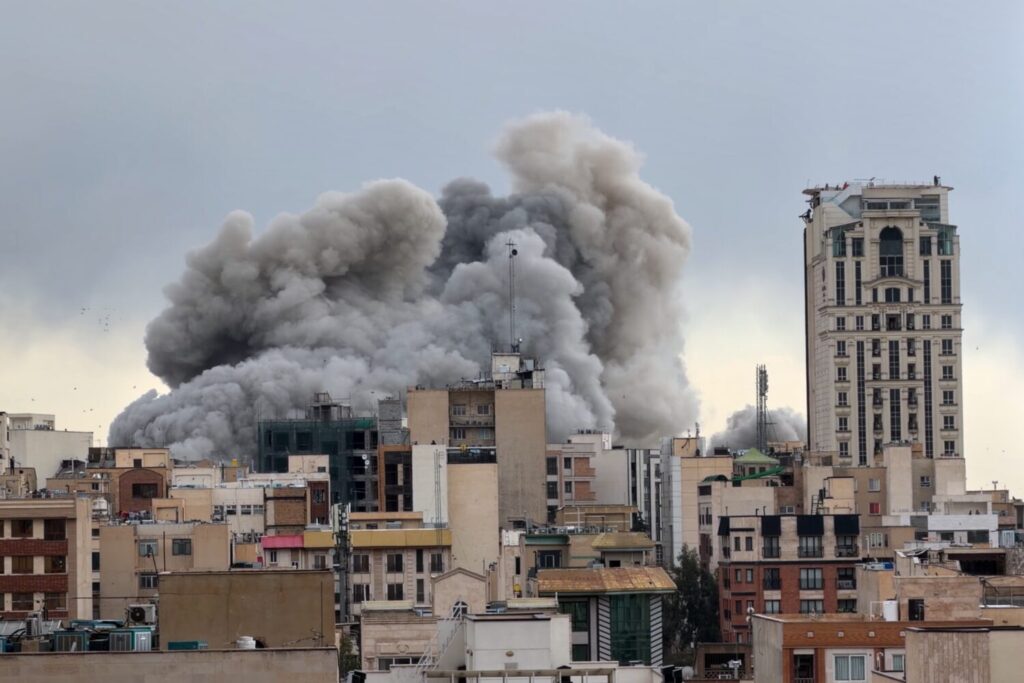
Tensions between Iran and the United States have escalated again after strong statements from both sides. Iran’s Islamic Revolutionary Guard Corps (IRGC) declared that Tehran—not Washington—will decide when the war ends. The statement came as a direct response to comments by US President Donald Trump about the progress of the conflict.
First, Trump spoke to American media on Monday and suggested that the war had almost reached its conclusion. He told reporters that the conflict stood “pretty much complete” and claimed the United States had already achieved major success. According to him, American operations had severely weakened Iran’s military strength.
Trump also argued that Iran had lost key defence capabilities. He said the country no longer had an effective navy, communication network, or air force. These remarks created the impression that the war had nearly finished.
However, Trump later changed his tone. While addressing members of the Republican Party during a political conference, he delivered a more aggressive message. He said the United States had already won in several ways, yet the victory remained incomplete.
Trump then declared that the war would continue until Iran faced a total and decisive defeat. His statement suggested that military pressure on Tehran could continue for some time.
Soon after these remarks, the IRGC issued a strong response. Iranian state media reported that a spokesperson for the powerful military force rejected Trump’s claims. The spokesperson described the comments as “nonsense” and insisted that Iran would determine how and when the war ends.
The IRGC also warned that Iran would take further steps if attacks from the United States and Israel continued. According to the statement, Tehran could block oil exports from the region. The spokesperson said Iran would not allow “even one litre of oil” to leave the Gulf if the strikes persisted.
This warning raised concerns about energy security. The Persian Gulf serves as one of the world’s most critical oil supply routes. Any disruption there could affect global energy markets and increase fuel prices worldwide.
Furthermore, the IRGC issued a broader warning about regional stability. The spokesperson stated that security in the region must exist “for everyone or for no one.” With this remark, Iran hinted that escalating attacks could destabilize the entire Gulf region.
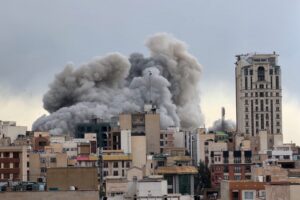
Meanwhile, military activity on the ground has intensified. Over the weekend, US and Israeli forces carried out new strikes on Iranian energy infrastructure. Iranian officials reported that the attacks targeted several oil depots in Tehran and the nearby Alborz province.
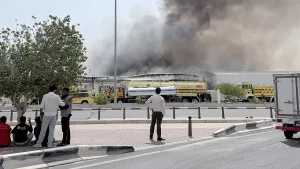
According to local authorities, the strikes hit five major fuel storage sites late Saturday night. The explosions triggered large fires that burned for hours. Thick smoke spread across parts of Tehran and remained visible in the sky through Sunday morning.
The attacks also disrupted fuel distribution in the capital region. Authorities acknowledged temporary shortages in some areas of Tehran province. However, officials said supply systems could recover within two to three days.
At the same time, Iran signaled readiness for a prolonged conflict. An IRGC spokesperson said the country has prepared for a long war scenario. According to him, Iran has stockpiled large numbers of ballistic missiles, cruise missiles, drones, and attack boats.
The spokesperson also stated that Iranian forces could sustain high-intensity combat for at least six months. He added that the military could soon introduce new battlefield tactics and deploy longer-range missiles with advanced technology.
The human cost of the conflict has also increased. The Iranian Red Crescent Society released updated figures about the damage inside the country. According to the organization, US and Israeli strikes have killed 1,332 people since the war began.
In addition, the attacks have damaged 9,669 civilian facilities across Iran. Thousands of homes and commercial buildings have suffered destruction or severe structural damage.
As the war continues, both sides appear determined to maintain pressure. Washington speaks of total victory, while Tehran insists it will control the outcome of the conflict.
For now, the exchange of threats and ongoing strikes indicate that the confrontation may continue for months. The situation remains highly volatile, and global markets and governments continue to watch the crisis closely.