Iran briefly closes airspace as military tensions rise, disrupting India–West Asia flights
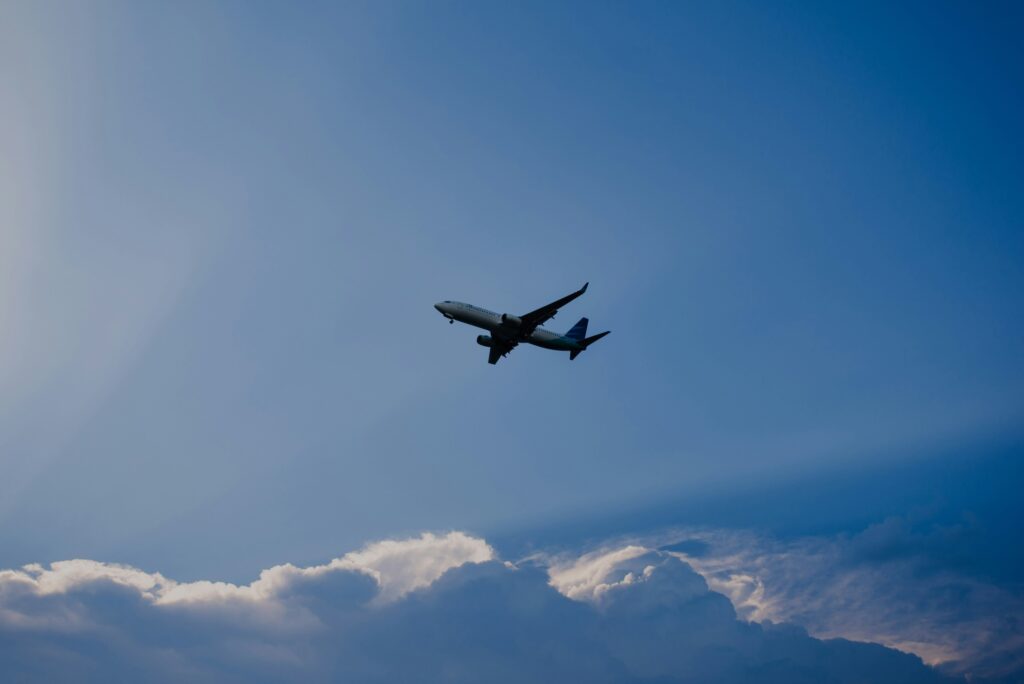
Iran shut its airspace for nearly two hours early Thursday as military tensions escalated, triggering widespread disruption to international flights. The sudden move forced airlines to reroute aircraft and caused delays on key corridors linking India with West Asia and Europe.
The Tehran Flight Information Region closed to all traffic around 3:45 am IST. As a result, no overflights moved through Iranian skies during the shutdown. However, authorities allowed limited international civil flights to land or depart with prior clearance from Iran’s Civil Aviation Authority.
Meanwhile, regional air traffic controllers scrambled to manage the impact. Lahore Area Control Centre informed Delhi Area Control Centre about the closure at 3:12 am IST. Officials cited military escalation as the reason. At that point, aviation authorities had not yet issued a formal Notice to Air Mission, adding to the uncertainty for flight planners.
As tensions grew, the closure immediately affected air traffic service route G452. Airlines rely heavily on this airway to operate long-haul flights from northern and western India to Iran, the Gulf, Turkey, and onward to Europe. Carriers prefer the route because it saves time and fuel compared to longer detours.
Soon after, preliminary alerts from Lahore ACC confirmed rerouting plans. Controllers diverted aircraft operating on G452 through Pakistani airspace to avoid Iran. This decision increased congestion on alternate routes and complicated traffic management across the region.
At the same time, one aircraft already faced the disruption mid-flight. Mahan Air flight IRM086, operating from China to Tehran, entered the affected zone during the closure. Controllers handed the aircraft over to Lahore Air Traffic Control to ensure safe passage. In addition, several other flights scheduled on the route diverted at the last minute.
For Delhi ACC, the situation demanded rapid coordination. Controllers worked closely with Lahore ACC and neighboring flight regions. They adjusted traffic flows on short notice and managed higher volumes on secondary routes. These changes replaced planned flight paths with emergency diversions, increasing workload and delay risks.
Later, Iran restored normal operations. Authorities issued a NOTAM confirming that the Tehran FIR reopened at 7:03 am IST. Flights then began returning to their scheduled routes, although residual delays continued across the network.
Meanwhile, airlines addressed passenger concerns. Air India acknowledged the disruption in a public statement on social media at 5:30 am. The airline said the evolving situation in Iran prompted safety-driven route changes. As a result, several flights used longer alternate paths, leading to delays. In some cases, Air India cancelled services where rerouting proved impossible.
The airline expressed regret for the inconvenience and emphasized passenger and crew safety as its top priority. Other carriers operating on the India–Europe and India–West Asia sectors also faced similar challenges, although most avoided major incidents.
In the background, Iran continues to face intense pressure over its handling of nationwide protests. Regional tensions remain high, raising concerns about further airspace restrictions. Aviation experts warn that even brief closures can ripple across global networks, especially on heavily used corridors like G452.
For now, flights continue under close monitoring. Airlines remain cautious. Air traffic controllers stay alert. And passengers brace for possible delays as geopolitical risks shape the skies once again.