IndiGo crisis deepens as over 400 flights cancel on Day 4
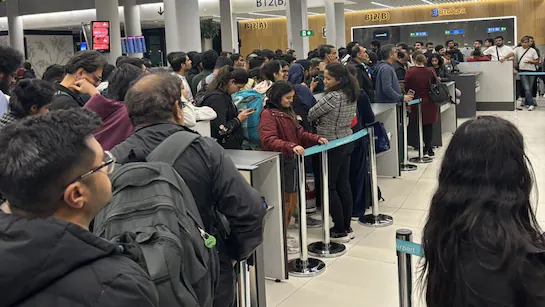
IndiGo entered the fourth day of disruptions on Friday and triggered fresh chaos across major airports. The airline cancelled more than 400 flights by morning and left thousands stranded. The situation worsened in Delhi, Bengaluru and Hyderabad, where cancellations crossed 200, 100 and 100 flights respectively. Long queues, anxious passengers and repeated schedule changes added to the turmoil.
The crisis has now pushed total cancellations past 1,000 in four days. These numbers underline how severe the operational breakdown has become for an airline that controls 60% of India’s domestic market. Even as passengers struggled to rebook or find alternatives, IndiGo issued two apologies. The airline admitted that its systems fell short and that customers suffered heavy inconvenience.
Meanwhile, IndiGo briefed the Directorate General of Civil Aviation (DGCA) about the ongoing disruption. The airline claimed it would fully stabilise operations by February 10 next year. However, this timeline pushed concerns deeper because passengers expected quicker recovery. Despite this, IndiGo insisted that the next few days would still see delays and cancellations.
The background to this crisis offers a clearer picture. On November 1, new Flight Duty Time Limitations (FDTL) norms came into effect. These rules cap the number of hours pilots can fly at night. IndiGo miscalculated the crew strength required under these rules. As a result, it faced a severe shortage of pilot-in-command availability. This mismatch triggered a chain reaction across the network. The airline kept cancelling flights to match available crew numbers, while passenger volume continued to rise.
DGCA responded firmly after reviewing the airline’s explanation. The regulator noted that IndiGo misjudged the manpower needed for Phase 2 of the FDTL norms. The statement highlighted planning gaps and stressed that IndiGo underestimated the operational impact. The regulator asked the carrier to present a clear recovery plan and improve crew rostering.
As the situation escalated, Delhi airport issued a fresh advisory. The airport authority urged passengers to check their flight status before leaving home. It warned that “operational challenges” could cause delays and last-minute cancellations. Similar warnings appeared at other airports as well, adding to the sense of uncertainty.
Even beyond December 8, IndiGo expects reduced services. The airline admitted that it cannot restore full operations before February 10, 2026. This long recovery period signals deeper internal issues. Travel experts believe the airline needs stronger planning and better coordination between crew management and scheduling teams.
Meanwhile, passengers continue to bear the brunt. Many families missed international connections. Students lost exam travel windows. Business travellers scrambled for alternatives. Social media also flooded with complaints, videos and photos of crowded terminals.
As the weekend approaches, the airline faces mounting pressure. It must stabilise operations quickly, communicate clearly and compensate passengers fairly. IndiGo built its reputation on punctuality and scale. Now, it must regain public trust while fixing the largest operational crisis in its history.