Headline: India’s ‘Baahubali’ rocket makes history with heaviest satellite launch
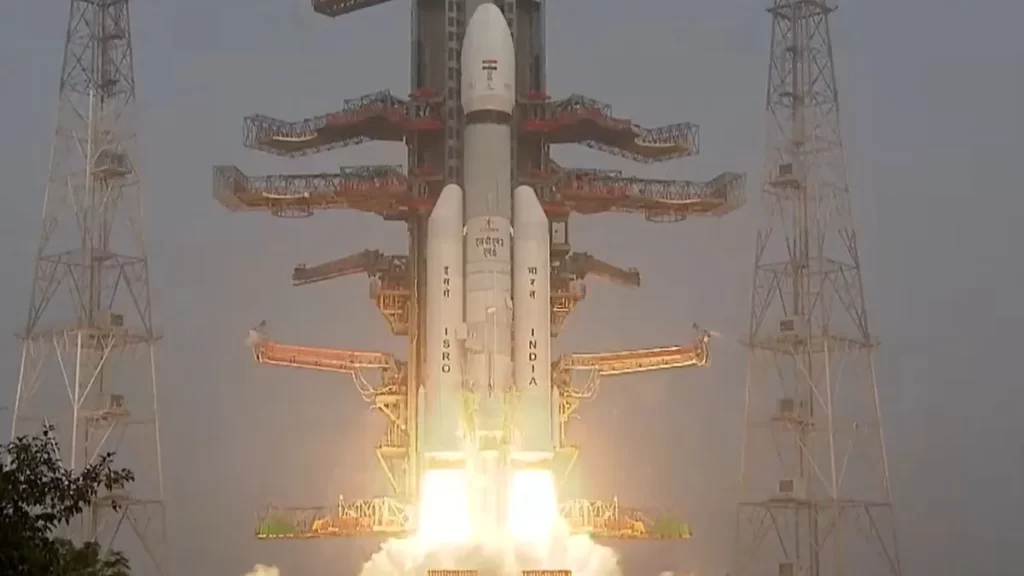
India marked a major milestone in its space journey on Monday as the country’s heavy-lift rocket, LVM3-M6, placed the heaviest-ever satellite launched from Indian soil into orbit. The mission strengthened India’s growing role in the global commercial launch market and highlighted ISRO’s expanding technological reach.
Early in the morning, the Launch Vehicle Mark-3, also known as ‘Baahubali’, lifted off from the second launch pad at the Satish Dhawan Space Centre in Sriharikota. The clock struck 8:55 am when the 43.5-metre-tall rocket roared into the sky. Two powerful S200 solid boosters supported the ascent and delivered a flawless liftoff.
The mission carried BlueBird 6, a next-generation communication satellite developed by US-based AST SpaceMobile. Notably, this payload became the heaviest satellite ever launched using an Indian launcher. The objective of the mission focused on a future-ready goal. The satellite aims to deliver space-based broadband connectivity directly to standard smartphones, without special equipment.
After liftoff, the rocket followed a precise flight path. About 15 minutes later, the BlueBird Block-2 spacecraft separated successfully from the launch vehicle. Soon after, it entered its intended circular orbit at an altitude of nearly 520 kilometres. ISRO confirmed that all mission parameters performed as planned.
ISRO Chairman and Secretary of the Department of Space, Dr V Narayanan, described the mission as a major achievement. He said the LVM3-M6 injected the satellite accurately into its designated orbit. He also highlighted that this marked the third fully commercial mission of the LVM3. According to him, the launch vehicle continues to prove its reliability on the global stage.
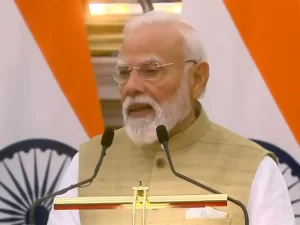
Meanwhile, Prime Minister Narendra Modi hailed the launch as a proud moment for the nation. He said the mission strengthened India’s heavy-lift launch capability and reinforced the country’s growing presence in the commercial space sector. He also noted that the successful placement of a US satellite reflected global trust in Indian launch systems.
However, the launch did not proceed exactly as scheduled. ISRO delayed liftoff by 90 seconds as a precautionary step. The original launch time stood at 8:54 am. Mission teams detected a possible conjunction risk due to space debris or nearby satellites along the flight path. Therefore, ISRO adjusted the timeline to ensure mission safety. Officials explained that such delays have become more common as Earth’s orbital space grows increasingly crowded.
The mission also showcased India’s strong commercial partnerships. NewSpace India Limited, ISRO’s commercial arm, executed the launch under an agreement with AST SpaceMobile. This collaboration underlined India’s appeal as a reliable and cost-effective launch service provider.
Technically, the LVM3 stands as ISRO’s most powerful rocket. It uses a three-stage configuration. Two solid strap-on boosters form the first stage. A liquid core stage follows next. Finally, a cryogenic upper stage completes the mission. The rocket weighs about 640 tonnes at liftoff and can carry up to 4,200 kg to Geosynchronous Transfer Orbit.
Previously, the LVM3 played a key role in India’s flagship missions. It launched Chandrayaan-2 and Chandrayaan-3. It also carried multiple OneWeb satellite batches into space. With the LVM3-M6 mission, the rocket added another success to its record.
Overall, the historic launch signaled India’s steady rise as a major spacefaring nation. As global demand for commercial launches grows, ISRO’s ‘Baahubali’ continues to push boundaries and deliver results with precision.