Government trying to change mindset of Naxals – Jitendra Kumar Yadav
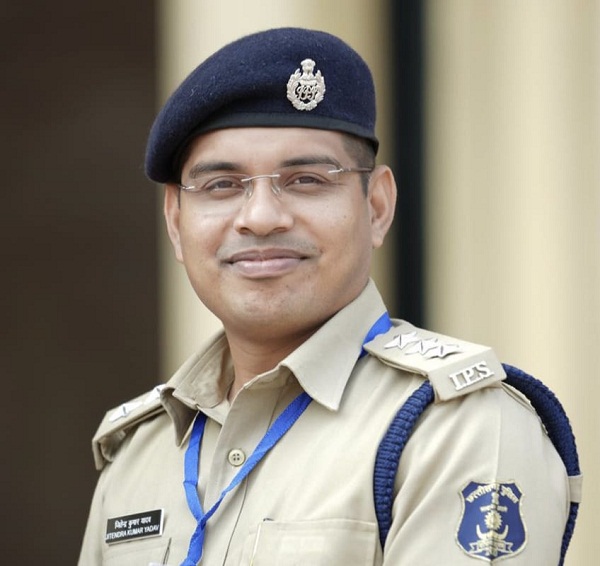
Bijapur SP Jitender Kumar Yadav on Maoist Surrenders: “We are showing people a better life beyond the gun”
Bijapur, Chhattisgarh: In a candid conversation with SP Jitender Kumar Yadav, a 2018-batch IPS officer from the Chhattisgarh cadre, currently plays a key role in the state’s policing and has deep insights into both the local population and the Maoist cadres, the officer opened up about the changing landscape of Maoist activity in the state, the government’s rehabilitation policies, and the evolving role of technology in counter-insurgency operations.
Yadav, who works on the ground in conflict-affected areas, emphasised that his work is rooted in a clear understanding of the people and the unique challenges of the region. “Being from here, I know the social fabric, the aspirations of the people, and even the psychology of the cadres,” he said. “My goal is to create opportunities so that people choose peace over violence.”
Steady Rise in Surrenders
On the surge of Maoist surrenders in recent years, SP Yadav said:
“What you see today is the outcome of collective, sustained work. The police, central forces, district administration and welfare departments are all moving in the same direction with clear objectives. Equally important is the strong backing of the Ministry of Home Affairs, which has ensured adequate resources, operational support and confidence for our teams. This combined effort has created an environment where people feel safer, development reaches deeper pockets of the district, and cadres begin to see a viable future outside the Maoist fold.”
Coordinated Efforts Across Departments
When asked about inter-agency coordination, he noted:
“Our approach today is not limited to neutralising armed cadres. The real objective is to show people that a better life exists beyond the gun. When communities see progress — education, health services, livelihood support — perspectives begin to shift. Most importantly, every department now works in concert — the police, central forces, administration and welfare agencies share information, plan together and follow a common vision. That collective effort has made rehabilitation more credible and the long-term strategy more successful.”
Technology as a Game-Changer
On the role of technology in operations, Yadav explained:
“Technology has become a decisive force multiplier for us. We now use drones extensively for reconnaissance, route planning and real-time assessment. Terrain-mapping applications allow teams to study gradients, hill heights, approach routes and obstacles in advance — improving planning and reducing risks. Modern systems and communication gadgets give teams a tactical edge. Personnel have adapted quickly, making these tools work on the ground, not just in headlines.”
Understanding the Motivation Behind Surrenders
SP Yadav also shed light on why Maoist cadres choose to surrender:
“A common thread runs through most of them: they want to go home. Many come from agrarian families and deeply miss village life. Over time, the isolation of the jungle and constant movement creates fatigue. When they see skill-training and employment options near their villages — masonry, mechanics, mobile repair, JCB and vehicle operations, even traditional metal work — they realise they don’t need a gun to survive. Livelihood, stability and dignity drive the decision to surrender.”
Rehabilitation Policies in Practice
Discussing the effectiveness of government rehabilitation policies, Yadav said:
“On the ground, it isn’t just a policy document — it’s active work. The police and district administration coordinate so that surrendered cadres quickly access housing, financial assistance and counselling. Skill-training is tailored to local economic needs and pays better than casual labour. When people see a steady income and safety, they stop feeling the need to return to the gun. Rehabilitation takes time, but today the system delivers more consistently than ever.”
Ministry of Home Affairs’ Role
Highlighting the MHA’s support, he added:
“The Ministry closely tracks ground realities and provides resources, approvals, and guidance. That clarity, combined with encouragement, keeps the forces motivated and aligned. It shows this is a national priority, not just a district effort, and that makes a real difference.”
Looking Ahead
On future challenges, Yadav remained optimistic:
“The space for Maoists is shrinking. Markets stay open, buses run, villagers refuse shutdown calls. The security ecosystem has matured. From the local police to the Ministry, the message is consistent: finish this problem, and you have full support. The challenge ahead is maintaining momentum, ensuring development reaches every village, and preventing remnants from regrouping. But their capacity to intimidate, recruit, or hold territory has drastically weakened — and they know it.”
SP Jitender Kumar Yadav’s approach reflects a balance of local understanding, operational rigor, and development-focused strategies. Being a native of Chhattisgarh, he leverages his knowledge of the community and Maoist cadres to ensure that the long-term solution is not just security-based, but also social and economic — giving people a real reason to lay down arms.