From Gen-Z revolt to ballot: Sushila Karki leads Nepal’s political reset
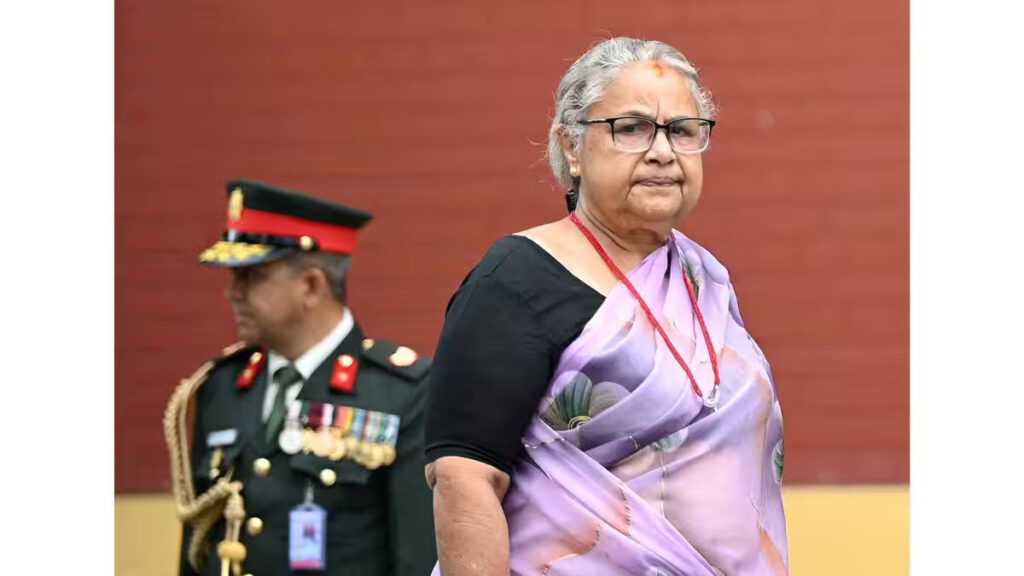
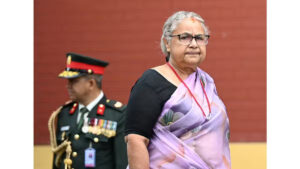
Nepal entered a dramatic political phase in September 2025. Street protests, digital mobilisation, and public anger shook the Himalayan republic. Eventually, the turmoil brought Sushila Karki to power. She became Nepal’s first woman prime minister and promised to guide the country back to elections.
The crisis unfolded quickly. Protests erupted in Kathmandu after the government led by KP Sharma Oli banned several social media platforms. Authorities targeted apps such as Instagram, Facebook, and YouTube under a new digital regulation. However, the ban triggered anger instead of compliance.
Young citizens led the protests. Most participants belonged to Generation Z. They gathered in Kathmandu and marched towards parliament. Protesters raised slogans against corruption, nepotism, and elite privilege. Many criticised political families whose children displayed luxury lifestyles online while ordinary users faced restrictions.
Nepal had already struggled with political instability. Since the abolition of monarchy in 2008, the country had seen frequent government changes. Fourteen governments formed in seventeen years. Meanwhile, youth unemployment stayed high and thousands of young Nepalis left the country each day for overseas jobs. Therefore, frustration had accumulated for years.
Tensions escalated on September 8, 2025. Security forces confronted large crowds in Kathmandu. Gunfire followed the confrontation. Several protesters died and hundreds suffered injuries. Hospitals and morgues in the capital received dozens of bodies within days. Soon after, images and videos of the violence spread across social networks once authorities restored internet access.
The unrest intensified. Protesters targeted major government buildings in Kathmandu. Fires engulfed parliament premises, police stations, and political offices. Damage spread across the city as anger grew.
Meanwhile, the national crisis deepened. The Nepal Army imposed a nationwide curfew on September 10. Reports later estimated more than seventy deaths and over two thousand injuries. Economic losses crossed hundreds of millions of dollars.
Political pressure also mounted on Prime Minister KP Sharma Oli. Eventually, he resigned and sent his letter to Ramchandra Poudel. He cited the extraordinary situation in the country and called for a resolution to the crisis.
However, the protests did not end with the resignation. Instead, a youth-led organisation named “Hami Nepal” organised discussions online. Thousands of Nepalis joined virtual meetings on the communication platform Discord. Participants included students, activists, and members of the global Nepali diaspora.
During these discussions, participants debated possible leaders for a transitional government. The name of Sushila Karki soon gained momentum. Many protesters trusted her reputation for integrity from her judicial career.
Karki had built that reputation over decades. She was born in Biratnagar in 1952 and later studied political science at Banaras Hindu University. She then pursued law in Nepal and began legal practice. In 2016 she made history as the first woman chief justice of Nepal’s Supreme Court.
Her judicial career included confrontations with political power. At one point she opposed a controversial appointment of a police chief. Political leaders attempted impeachment, but public pressure forced them to withdraw the move. This history strengthened her image as a judge who resisted political pressure.
Eventually, political actors and protest leaders reached a compromise. President Ramchandra Poudel accepted Karki’s recommendation to dissolve the parliament. Soon after, he administered the oath of office to her on September 12, 2025.
Karki quickly defined her mission. She announced that her transitional government would organise free and fair elections. Authorities later fixed the election date for March 2026.
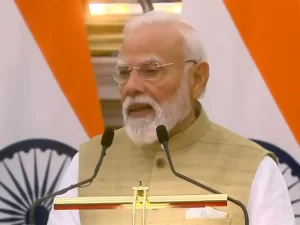
Her leadership received international attention. Narendra Modi congratulated her and described the development as a milestone for women’s empowerment. India and Nepal also reaffirmed their historic cultural ties during diplomatic exchanges.
Back home, Karki launched immediate measures to stabilise the country. She declared those killed in protests as martyrs and visited injured demonstrators in hospitals. Her government also formed a judicial inquiry into the violence and created a reconstruction fund for damaged public infrastructure.
Nevertheless, Nepal still faces a complex political future. Many established leaders remain influential. At the same time, younger figures such as Balen Shah attract growing attention among voters.
Karki therefore emphasised patience and stability. She repeatedly urged political parties to cooperate for credible elections. According to her, lasting change requires peace and democratic participation rather than chaos.
As Nepal approaches the next vote, the country stands at a crucial moment. The Gen-Z protests shook the political system. Now the coming elections will decide whether that uprising leads to lasting democratic renewal.