
Delhi’s air turns toxic again as cloud seeding effort fizzles out
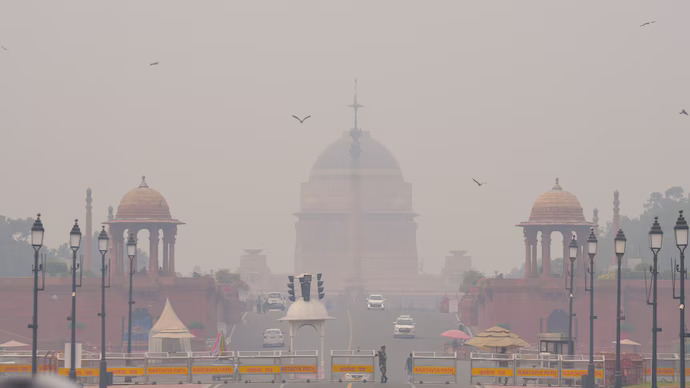
New Delhi – Delhi woke up under a thick blanket of smog on Thursday. The city’s air quality dipped sharply overnight, falling into the “very poor” category. The much-awaited cloud seeding experiment, meant to trigger artificial rain, failed to deliver relief.
According to Central Pollution Control Board (CPCB) data, Delhi’s overall Air Quality Index (AQI) reached 352 — an 80-point jump from Tuesday’s average. The satellite cities of Noida, Ghaziabad, and Gurgaon also reported air quality in the “very poor” range.
Pollution Grips Capital
Out of 38 monitoring stations across Delhi, 32 recorded “very poor” air quality. Some areas even slipped into the “severe” category. Vivek Vihar reported an AQI of 415, while Anand Vihar stood close at 409. Wazirpur followed with an alarming 394.
CPCB defines air quality between 0–50 as “good,” 51–100 as “satisfactory,” 101–200 as “moderate,” 201–300 as “poor,” 301–400 as “very poor,” and 401–500 as “severe.”
The choking smog led to low visibility in several parts of the capital. Commuters struggled through the morning haze, as the city gasped for clean air once again.
Cloud Seeding Falls Flat
Two days ago, the Delhi government partnered with IIT Kanpur for cloud seeding trials. The goal was to produce artificial rain and wash pollutants from the air. But the experiment failed. Not a single drop fell.
IIT Kanpur scientists said the sky lacked enough moisture for seeding to work. The cloud humidity hovered around 10–15%, far below the required 50–60%. Without sufficient moisture, the chemicals sprayed from aircraft could not form rain-bearing clouds.
The project marked Delhi’s first attempt at artificial rainfall in more than five decades. Authorities had hoped it would offer at least temporary relief from toxic air. Instead, pollution levels continued to climb.
Government Tightens Curbs
Over the last two weeks, Delhi’s AQI has stayed between 300 and 400 — about 20 times above the safe limit. In response, the government has already activated Stage II of the Graded Response Action Plan (GRAP).
Under these measures, construction and demolition activities remain restricted. Non-BS-VI compliant commercial vehicles are barred from entering Delhi starting November 1. City officials said enforcement teams are checking entry points and work sites to ensure compliance.
Environment Minister Gopal Rai urged citizens to limit outdoor movement. “The situation is serious. We are taking all emergency steps, but weather and wind direction are not helping,” he said.
Next Steps
Experts warn that if conditions worsen, the government may move to GRAP Stage III, which would halt truck entry, close schools, and further restrict industrial operations.
Meanwhile, IIT Kanpur scientists said they might attempt another cloud seeding round if the weather improves. “Moisture is the key. Once humidity rises, results can be different,” a senior scientist explained.
For now, Delhi remains trapped in a toxic haze — with no rain, no wind, and no respite in sight.