Delhi Police arrest Al Falah University chairman in alleged fraud case
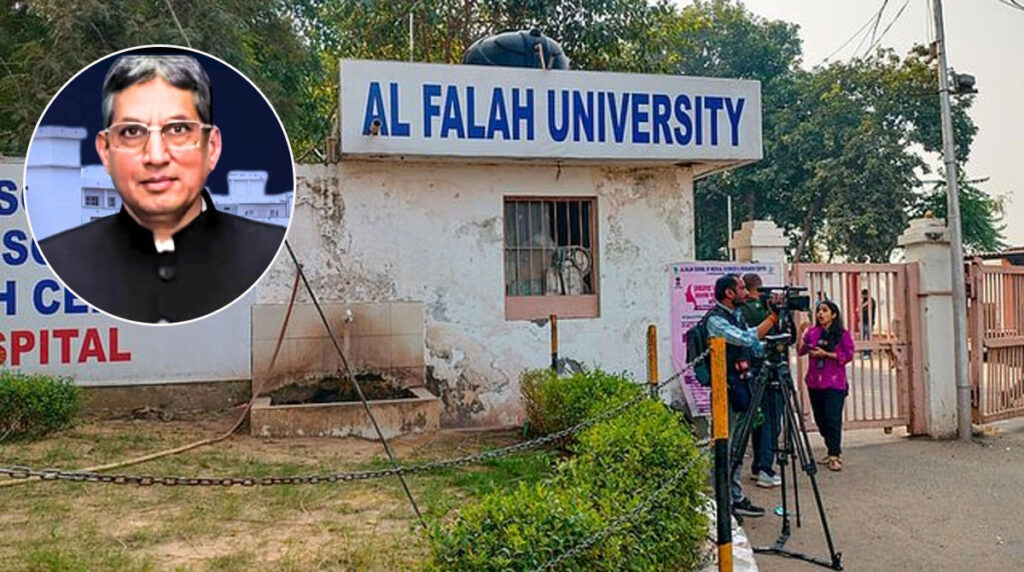
New Delhi witnessed fresh action in an alleged education scam on Wednesday. The Delhi Police Crime Branch arrested Jawad Ahmed Siddiqui, Chairman of Al Falah University. Officials linked the arrest to suspected financial and administrative irregularities.
First, investigators acted on complaints from the University Grants Commission. The UGC had raised concerns about alleged misconduct. It accused the university leadership of violating rules. It also pointed to possible falsification of records.
Therefore, the Crime Branch registered two separate FIRs. These cases named Siddiqui as the main accused. Police cited charges related to fraud and other offences. After completing initial verification, officers moved in for the arrest.
Soon after, police took Siddiqui into custody. They produced him before a Delhi court. The court examined the case file. It then granted four days of police custody. Investigators will now question him in detail.
Meanwhile, officials confirmed that the probe remains at an early stage. They said questioning may reveal more facts. They expect financial records and internal documents to play a key role. They also plan to question university staff.
At the same time, the case connects with earlier enforcement action. The Enforcement Directorate had recently conducted inquiries. It focused on the university’s finances. It also examined funding sources. That move intensified scrutiny on the institution.
In addition, the university had already faced national attention. Earlier reports revealed controversial appointments. Dr Umar Nabi, convicted in the Red Fort blast case, had worked at the university. His presence raised serious security concerns.
Moreover, investigators linked two other staff members to extremist networks. Dr Muzammil Shakeel and Dr Shaheen Shahid had also worked there. Agencies described them as part of a “white-collar” terror network. These links alarmed authorities.
As a result, security agencies increased monitoring. They reviewed hiring practices. They checked background verification procedures. They also examined administrative oversight.
Furthermore, regulatory bodies took action last year. In November, the National Assessment and Accreditation Council issued a show-cause notice. It accused the university of making false accreditation claims. Soon after, the university’s website went offline. Officials viewed this move as an attempt to avoid scrutiny.
Later, the Enforcement Directorate expanded its probe. It announced plans to examine medical staff payments. It also targeted suspicious financial transactions. Investigators began tracing fund flows and bank records.
Now, with Siddiqui’s arrest, the case has entered a new phase. Police believe leadership decisions shaped many alleged violations. They aim to establish responsibility at the top level.
According to sources, investigators will focus on three areas. First, they will study admission and certification records. Second, they will review financial statements. Third, they will analyze links between staff hiring and funding.
Meanwhile, the police stressed that the investigation remains ongoing. They urged people not to speculate. They said facts will emerge through legal procedures.
On the other hand, education experts have raised concerns. They argue that such cases damage public trust. They say strong regulation remains essential. They also call for regular audits of private universities.
Students and parents have also expressed worry. Many seek clarity about degrees and recognition. Authorities have assured them of protection. Officials said valid students will not suffer.
In conclusion, the arrest reflects growing scrutiny of private institutions. It shows stronger coordination between agencies. It also highlights the role of regulators.
As the probe continues, authorities expect more disclosures. The case may set a precedent. It may also push reforms in higher education oversight.