Delhi-NCR chokes as government enforces GRAP Stage III to tackle severe air pollution
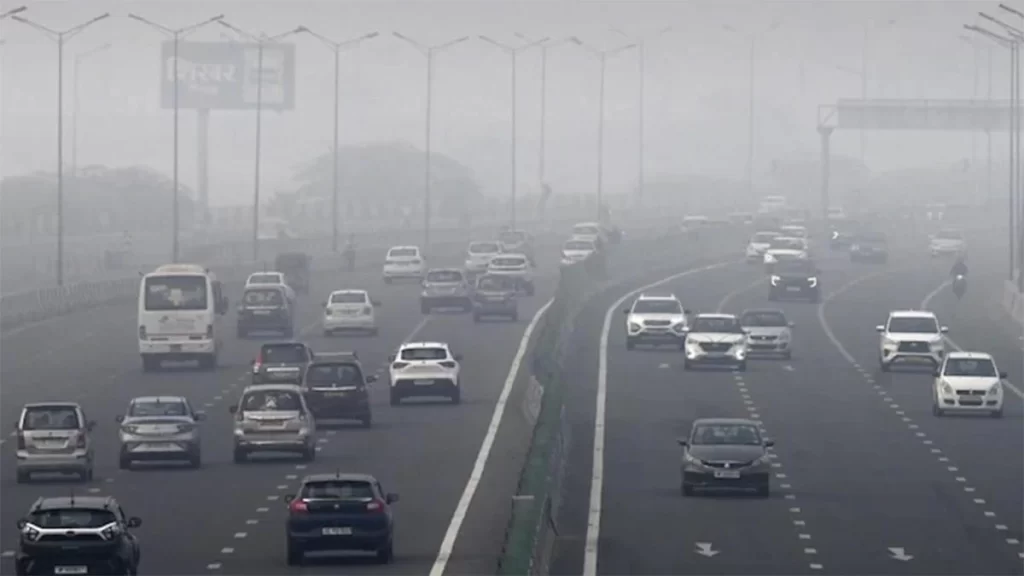
New Delhi: The central government on Tuesday intensified its fight against air pollution across the Delhi-NCR region by enforcing Stage III of the Graded Response Action Plan (GRAP). The decision followed a sharp rise in the city’s air quality index, which entered the ‘severe’ category for the first time this month.
The Commission for Air Quality Management (CAQM) announced the move after Delhi’s average AQI surged from 362 on Monday to 425 on Tuesday morning. Officials said calm winds, low temperatures, and stagnant atmospheric conditions trapped pollutants close to the surface, worsening the smog blanket over the city.
Government Steps In as Air Turns Toxic
The central government decided to act swiftly after pollution levels crossed dangerous thresholds across multiple NCR districts, including Gurugram, Noida, and Ghaziabad. The Stage III restrictions aim to prevent further deterioration while building on the measures already in force under Stages I and II.
The CAQM directed all agencies to implement curbs immediately. Delhi, already reeling under thick smog for the past few days, recorded visibility below 500 metres in several parts on Tuesday morning.
Key Restrictions Under Stage III
1. Construction Ban:
The government ordered a complete ban on non-essential construction and demolition across Delhi-NCR. All stone crushers, mining operations, and related industrial activities must remain closed until further notice. Only projects of national importance, such as railways, metro expansion, and hospitals, can continue with strict dust control measures.
2. Vehicle Curbs:
Authorities imposed restrictions on BS-III petrol and BS-IV diesel four-wheelers in Delhi, Gurugram, Faridabad, Noida, and Ghaziabad. These vehicles cannot ply until air quality improves. However, vehicles used by persons with disabilities are exempt from the rule.
3. Education Measures:
Schools across the NCR were asked to shift classes up to Grade 5 to hybrid or online mode, giving parents the option to keep children indoors. Several schools in South and East Delhi switched to online classes immediately to protect younger students from prolonged exposure to polluted air.
What GRAP Means
The Graded Response Action Plan (GRAP), launched by the Environment Ministry in 2017, serves as Delhi-NCR’s main winter air pollution control framework. It includes four escalating stages — Stage I (Poor, AQI 201–300), Stage II (Very Poor, AQI 301–400), Stage III (Severe, AQI 401–450), and Stage IV (Severe Plus, AQI above 450). Each stage introduces stricter actions depending on pollution levels.
Experts Warn of Health Risks
Health experts warned that prolonged exposure to air with AQI above 400 can cause respiratory illness even among healthy individuals. Doctors at the All India Institute of Medical Sciences (AIIMS) reported a rise in patients with asthma, chronic cough, and eye irritation over the past week.
Dr. Randeep Guleria, former AIIMS director, said, “The air quality has reached levels where it can damage lungs even in young people. Limiting outdoor activity and wearing N95 masks can help reduce risks.”
Why Pollution Persists
Experts link Delhi’s recurring winter pollution to multiple causes — stagnant weather, high vehicle emissions, stubble burning in Punjab and Haryana, and firecracker use during festivals. Calm winds and temperature inversion prevent pollutants from dispersing, trapping toxic air close to the ground.
Satellite images show active fire spots across northern states, contributing to the haze over Delhi. Officials also noted that Diwali celebrations worsened the situation, with firecracker smoke adding to the already polluted air.
Way Forward
Authorities will continue Stage III measures until sustained improvement in air quality appears. The CAQM said it may invoke Stage IV restrictions if pollution levels exceed an AQI of 450 for two consecutive days. Stage IV includes a complete ban on truck entry, school closures, and shutdown of non-essential industrial activities.
Meanwhile, Delhi Chief Minister Arvind Kejriwal urged citizens to cooperate. “We all must act together. Avoid private vehicles, reduce outdoor exposure, and help control dust pollution,” he said during a press briefing.
Outlook
As the smog thickens, Delhi’s residents brace for another week of poor visibility and health warnings. The CAQM will review the air quality daily to decide whether the current curbs should continue or escalate.
For now, Delhi-NCR remains on high alert, and the city once again struggles to breathe under a dense, toxic haze.