Delhi chokes as AQI hits 727, stubble fires and weak winds worsen pollution
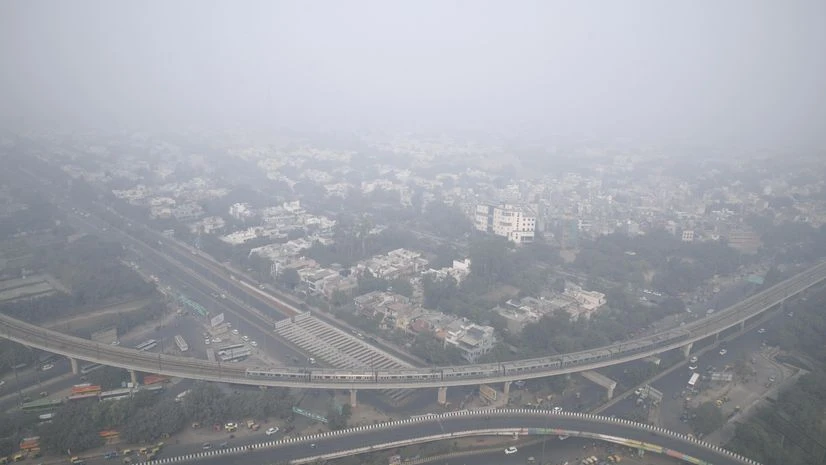
New Delhi – Delhi woke up to a toxic haze on Friday morning as the city’s air quality dropped to the “hazardous” category. Swiss monitoring agency IQAir recorded an overall Air Quality Index (AQI) of 727 — one of the highest levels this season. Thick smog blanketed roads, schools delayed morning assemblies, and health experts advised residents to stay indoors.
The capital’s air quality has deteriorated sharply since Diwali. Firecracker emissions, stubble burning in neighbouring states, and stagnant wind flow have combined to trap pollutants over the city. Although officials expect slight improvement later in the day with stronger winds, the air remains unsafe to breathe.
Delhi Among Most Polluted Cities
On Thursday, the Central Pollution Control Board (CPCB) placed Delhi in the “very poor” category with an average AQI of 311 at 4 p.m. Among 254 Indian cities, Delhi ranked fourth in pollution levels. Rohtak topped the list with an AQI of 348. PM2.5 remained the dominant pollutant across Delhi, with 32 of 38 monitoring stations showing readings above 300.
Experts warned that continuous exposure to such air could cause severe respiratory problems, especially in children and the elderly. Hospitals reported a rise in complaints of breathlessness and irritation in eyes and throat.
Stubble Burning Drives the Spike
The Air Quality Early Warning System attributed most of the spike to crop residue burning in Punjab, Haryana, and western Uttar Pradesh. Its latest analysis showed that stubble fires contributed 21.5% to Delhi’s PM2.5 levels on Thursday. The share rose to 36.9% on Friday and is likely to remain above 30% through the weekend.
Satellite images detected 94 farm fire incidents in Punjab, 13 in Haryana, and 74 in Uttar Pradesh on Wednesday. The thick plume of smoke drifted toward Delhi, worsening the existing smog. Transport emissions contributed another 11–16% to the city’s pollution load, according to the data system.
Protests Over Government Inaction
As pollution soared, public anger grew. On Thursday, over 80 students, scientists, and activists protested at Jantar Mantar. They accused both the central and Delhi governments of failing to curb the climate and pollution crisis. Groups such as Scientists for Society, Campaign for Right to Public Health, Naujawan Bharat Sabha, and Disha Students’ Organisation joined the demonstration.
Protesters carried placards reading “We Deserve Clean Air” and “Stop Blaming Farmers, Act Now.” They demanded stronger enforcement of crop residue management schemes, public transport upgrades, and emergency health advisories.
Authorities Monitor the Situation
Officials from the Delhi Pollution Control Committee (DPCC) said they are coordinating with neighbouring states to reduce stubble burning. The Delhi government also continued restrictions under the Graded Response Action Plan (GRAP) Stage IV, which includes a ban on construction, diesel vehicles, and industrial activities using dirty fuels.
Despite these curbs, the city remains blanketed by smog. Experts said only sustained northwesterly winds and rain could bring meaningful relief. Until then, Delhi continues to breathe under a toxic cloud, reminding residents that winter in the capital now begins with masks—not scarves.